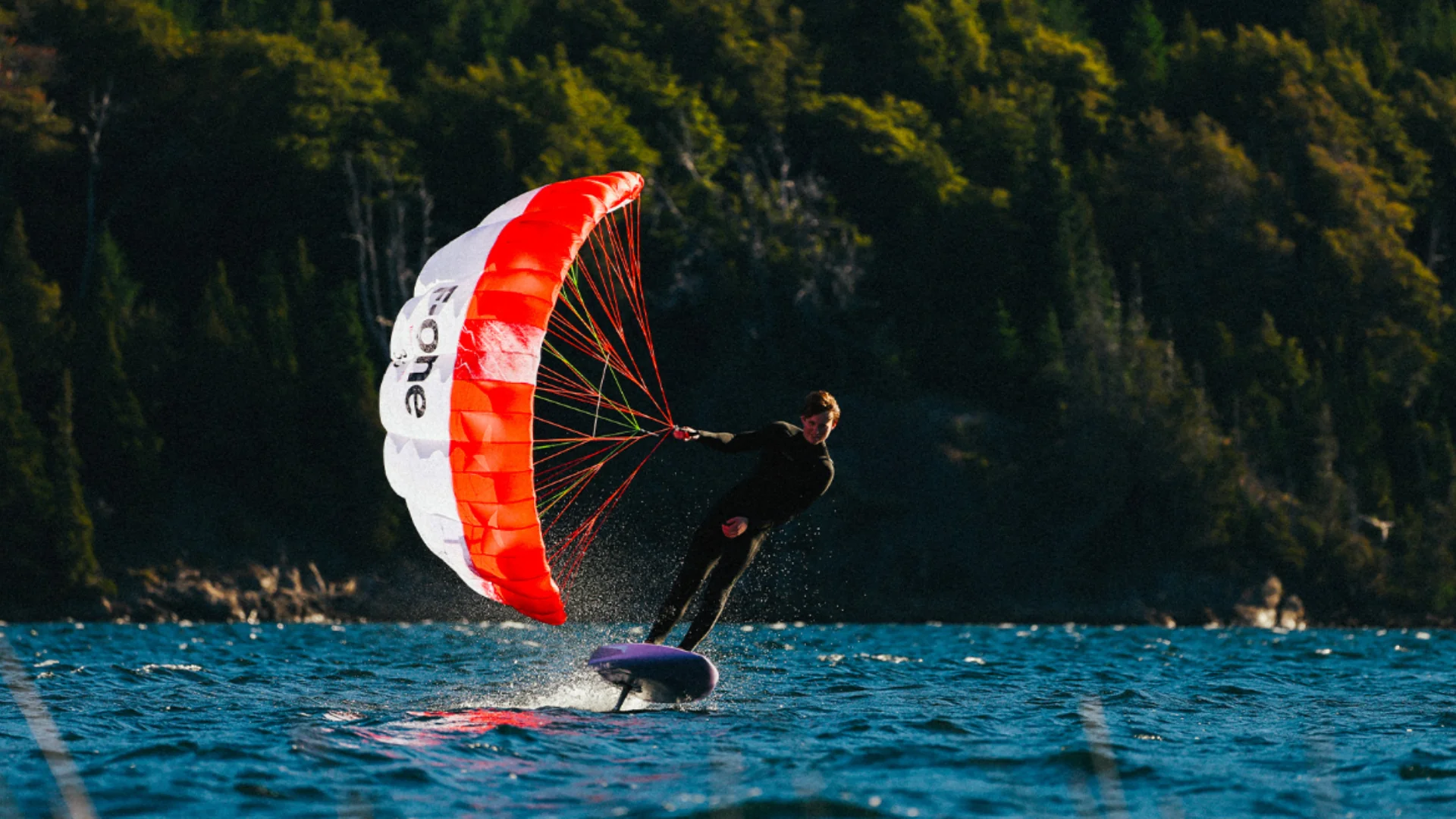
F-One designed the Quest to make parawing accessible to as many riders as possible. Hydro Gav put it through its paces in varied conditions, from light, gusty breezes to over 30-knot gusts. His verdict is clear: the Quest is probably the easiest parawing to use to date. The trade-off? It sacrifices VMG, or upwind performance, to achieve this. We'll break down these compromises and clarify who this wing is truly for.
Thanks to Hydro Gav for his rigorous field test.
The F-One Quest 2026 is a 2-lines pocket wing (parawing) designed for accessibility and downwind riding.
With an asymmetric bar (max 35 cm), a 2-lines system, impeccable stability, an ultra-simple stash, and a wide wind range, every detail is designed to simplify your experience. Its only real drawback is that the VMG lags behind the Frigate: the upwind angle is good, but the speed isn't there.
Who is the F-One Quest for?
According to Hydro Gav's test, the Quest is primarily for riders who want an easy, stable, and predictable parawing:
- You're starting out in pocket wing / parawing: this is the most accessible entry on the market at this level of finish.
- You're progressing: the wing handles itself, so you can focus on your foil technique.
- You do downwind or Surf: stability, quick stash, and a wide wind range tick all the boxes.
- You ride in gusty conditions: the wing won't surprise you.
- You want a complementary wing to the Frigate: it's ideal for sessions where VMG isn't the priority.
Conversely, riders focused on pure performance and fast upwind performance will prefer the F-One Frigate.
F-One Quest technical specifications
| Feature | F-One Quest 2026 |
|---|---|
| Type | Parawing / Pocket wing, 2 lines |
| System | 2 direct lines (no intermediate parts) |
| Max bar | 35 cm, asymmetrical |
| Harness line | Supplied as standard |
| Size tested | 3.6 m² |
| Tester | Hydro Gav |
| Main Use | Beginner, progression, downwind, Surf |
Our detailed F-One Quest review
The best bar in its segment
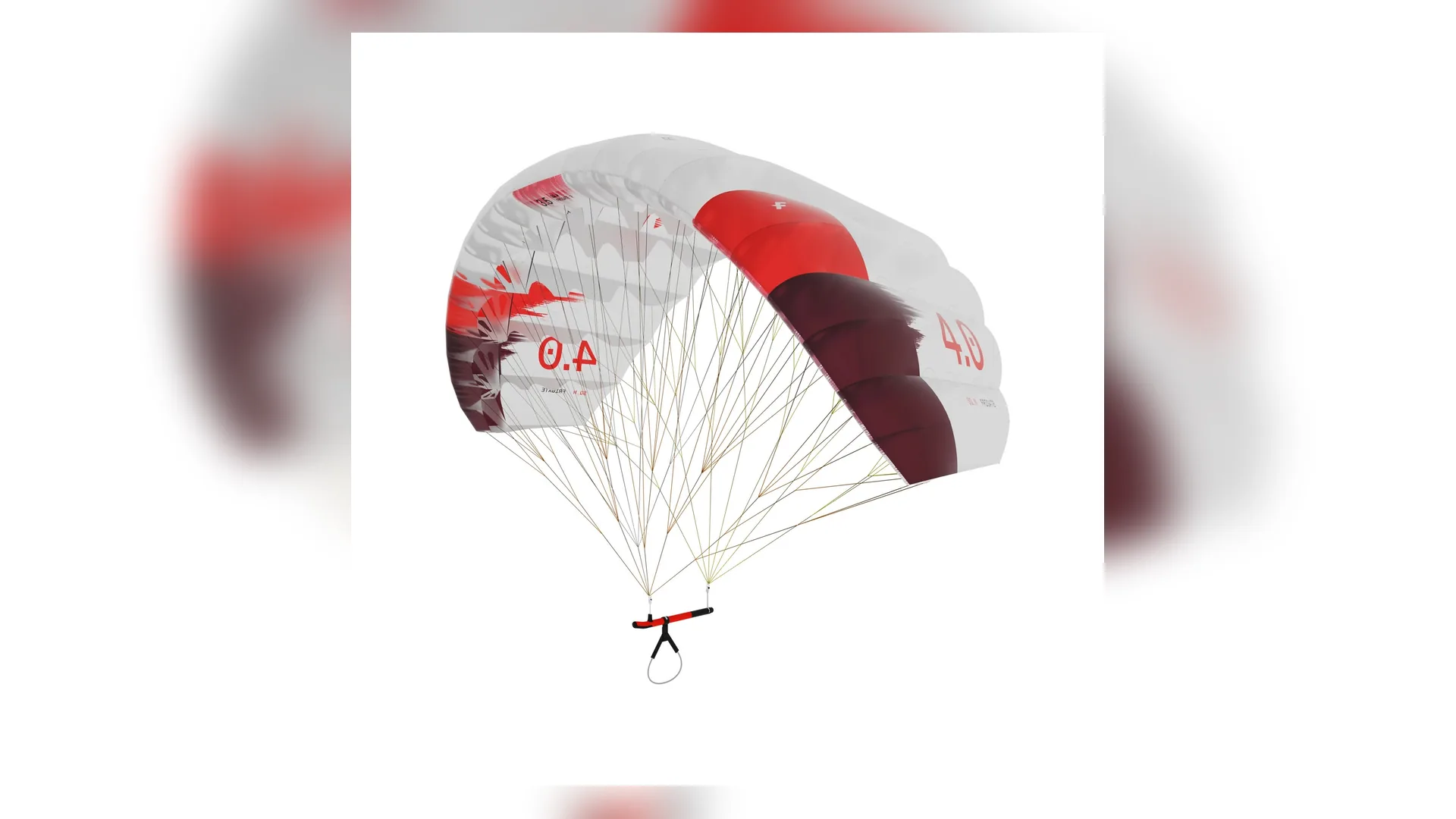
This 35 cm max bar is lightweight and features a refined finish. The asymmetrical design truly makes a difference in everyday use: you can instantly read the orientation without searching for markers, which is invaluable when you're tired at the end of a session or need a quick redeployment. The asymmetrical extension also solves a recurring problem: its angle allows the lines to slide if they get snagged. The connection zone, with its molded plastic covers, guides the lines neatly. The included harness line is just rigid enough to attach to your harness with one hand.
2 lines: a deliberate choice
This 2-line system has no intermediate parts between the bar and the lines. The direct consequences are a clear bar, virtually eliminated tangles, and dampened steering. This last point is intentional; it slows everything down and makes the wing predictable, which is an advantage for progression. For riders seeking pure responsiveness, it's a compromise. For example, to completely stall in downwind, a simple wrist twist isn't enough; you need to change your hand position to get enough input into the back lines.
On the water: stability and steering
The Quest performs flawlessly across its entire wind range. You won't experience any flutter or noise; the wing stays exactly where you position it, effortlessly. Its vertical stability and sweep across the window are remarkable. It naturally positions itself far forward in the window, which genuinely helps with upwind performance. The stash system is equally impressive: the centered white A-lines allow the wing to disappear immediately, even during powerful riding. When it comes to the canopy, packing it away is straightforward, and the material compresses very well.
Wind range
The 3.6 m² remained controllable in gusts exceeding 30 knots, staying stable in the window with no surge or collapse on the front lines. In light wind, the wing stays in the window without stalling. This allows for takeoff in marginal conditions. This extended wind range in both directions directly stems from the Quest's philosophy: you need fewer perfect conditions to ride.
VMG and upwind performance
The VMG (Velocity Made Good) refers to the actual speed you gain upwind. A wing can have a good upwind angle but move slowly, resulting in low VMG. This is precisely the case with the Quest.
The angle is frankly impressive, much better than what the shape suggested. The wing naturally positions itself at the front of the window and pulls the rider in the right direction without effort. The raw speed isn't there: you go upwind well, but slowly. This is the main reason Hydro Gav keeps the Frigate for 90% of his sessions. It's not a flaw; it's a deliberate design compromise.
Our opinion on the F-One Quest
F-One achieved exactly what it set out to do with the Quest. This isn't a wing trying to beat the Frigate; it's a complementary tool for a different riding style. For progressing riders and downwinders, it's probably the best entry into parawing at this level of finish. Surf enthusiasts will also find it ideal.
Highlights
- Asymmetrical bar, a segment benchmark
- Impeccable stability in the window
- Particularly efficient stash system
- Very wide wind range
- Compact canopy, quick storage
Consider this
- Reduced VMG compared to the Frigate
- Dampened steering: not well-suited for technical freestyle
- Slightly abrasive lines at the ends

FAQ: F-One Quest 2026
Who is the F-One Quest 2026 for?
It is for beginners and progressing riders. It also suits downwind and surf enthusiasts. Its stability, 2-lines system, and wide wind range make it a wing suitable for all levels. Riders focused on performance and fast upwind performance will prefer the Frigate.
Quest vs Frigate: what are the differences?
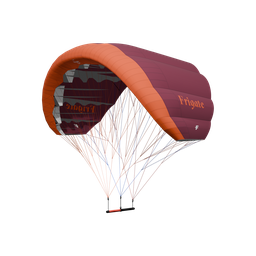
The Quest prioritizes accessibility: damped steering, maximum stability, easy stash, and an extended wind range. The Frigate is more reactive and faster, with better VMG. The two wings are complementary in the F-One range.
What is VMG in parawing?
VMG (Velocity Made Good) measures the actual speed gained upwind. A wing can have a good upwind angle but move slowly, so its VMG will be low. The Quest has an excellent angle, but its raw speed is limited: you go upwind well, but slowly.
Is the Quest good for downwind?
Yes, it is one of its highlights. Window stability, quick stash, and wide wind range make it an excellent downwind and Surf parawing.
Let us help you choose
No need to be local: call us or book a phone or video appointment with one of our team riders. We'll give you remote advice to help you choose between the Quest and the Frigate, based on your level, your spot, and your riding style.
Make an appointmentCall usEmail us
Sources: field test by Hydro Gav (F-One Quest 2026, 3.6 m²), original YouTube video. Adapted and summarized by GlissEvolution, without distorting the tester's comments. Hydro Gav Channel.
 F-ONE