Flysurfer POW 2 2026: parawing test and review (Hadou Brunner review)
Hadou Brunner reviewed the original POW last year. He gave it high marks but also a precise list of areas for improvement. Flysurfer addressed almost every point. Almost: the V2's depower in the high wind range was reduced. Hadou himself discovered a fix for about ten euros.
Huge thanks to Hadou Brunner for his Flysurfer POW V2 review, published on his YouTube channel on September 25, 2026.
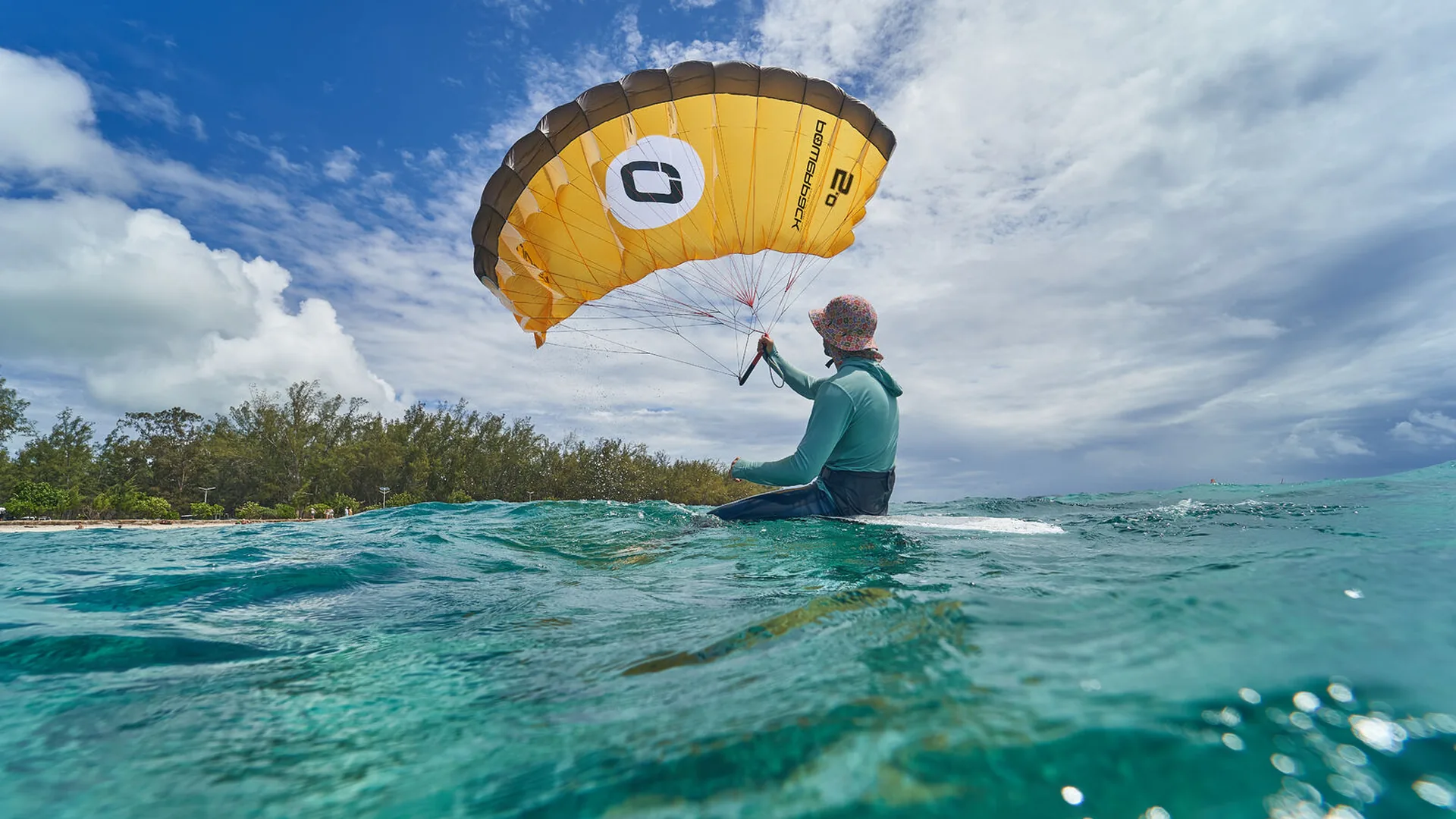
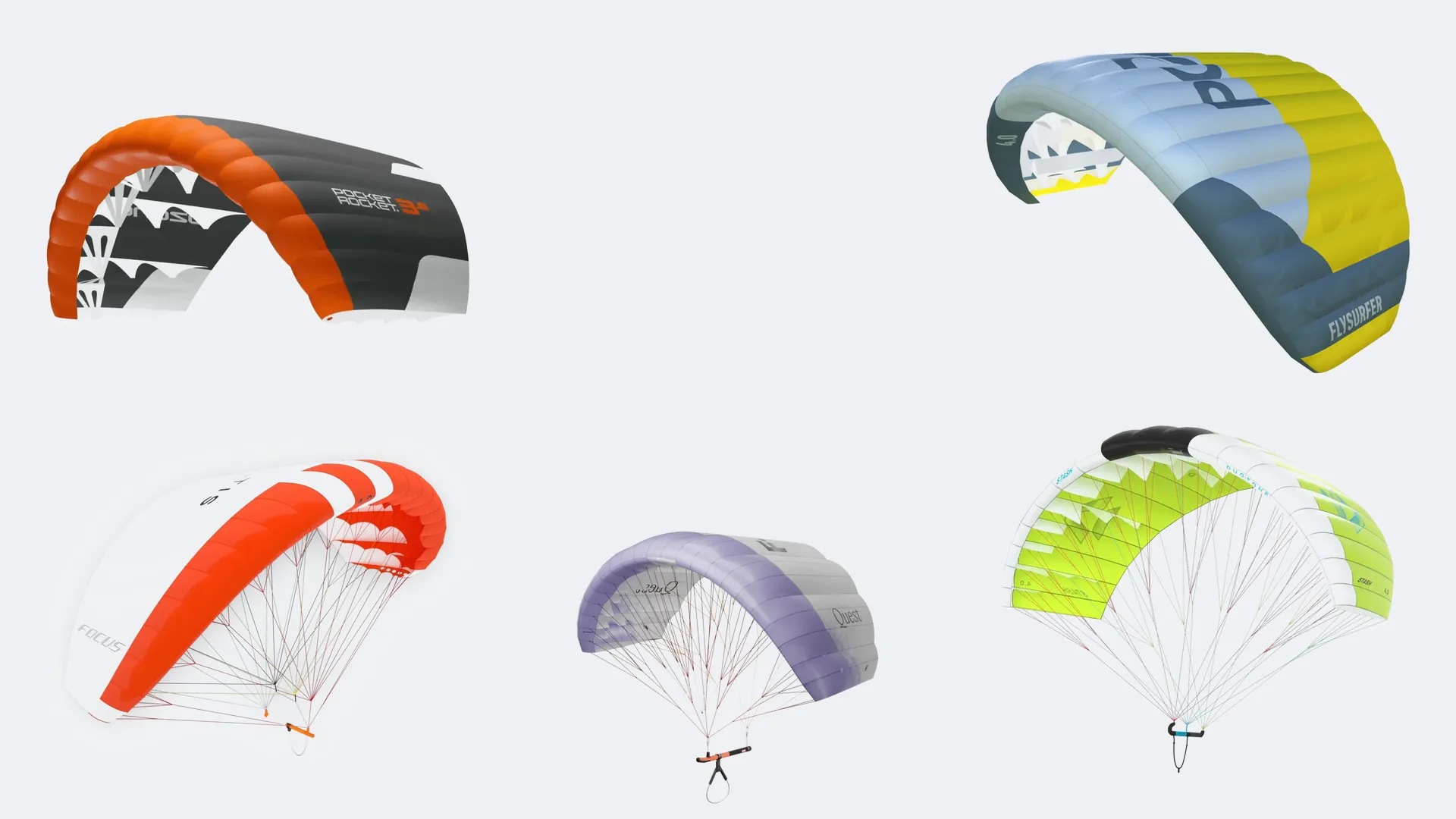
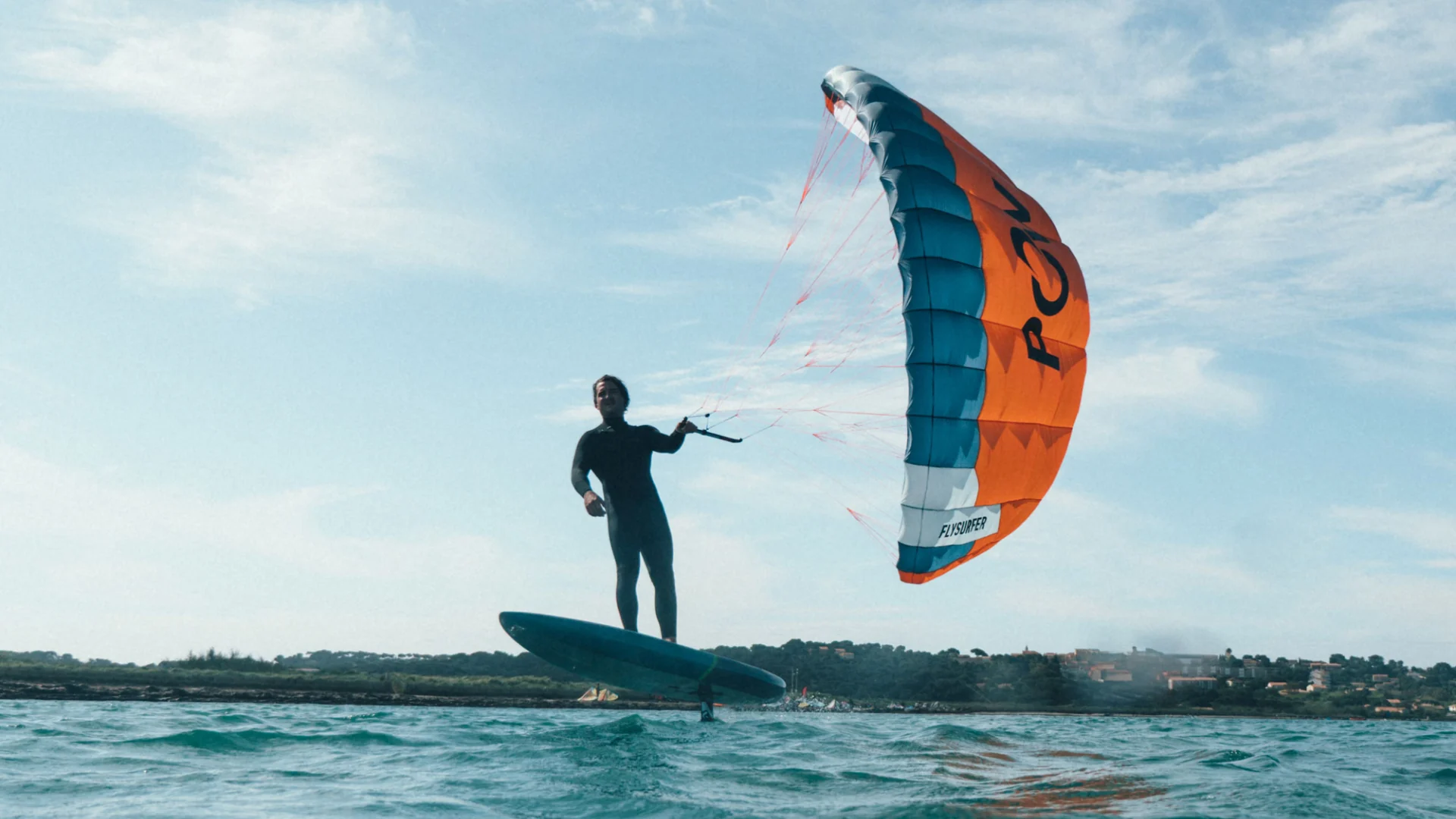
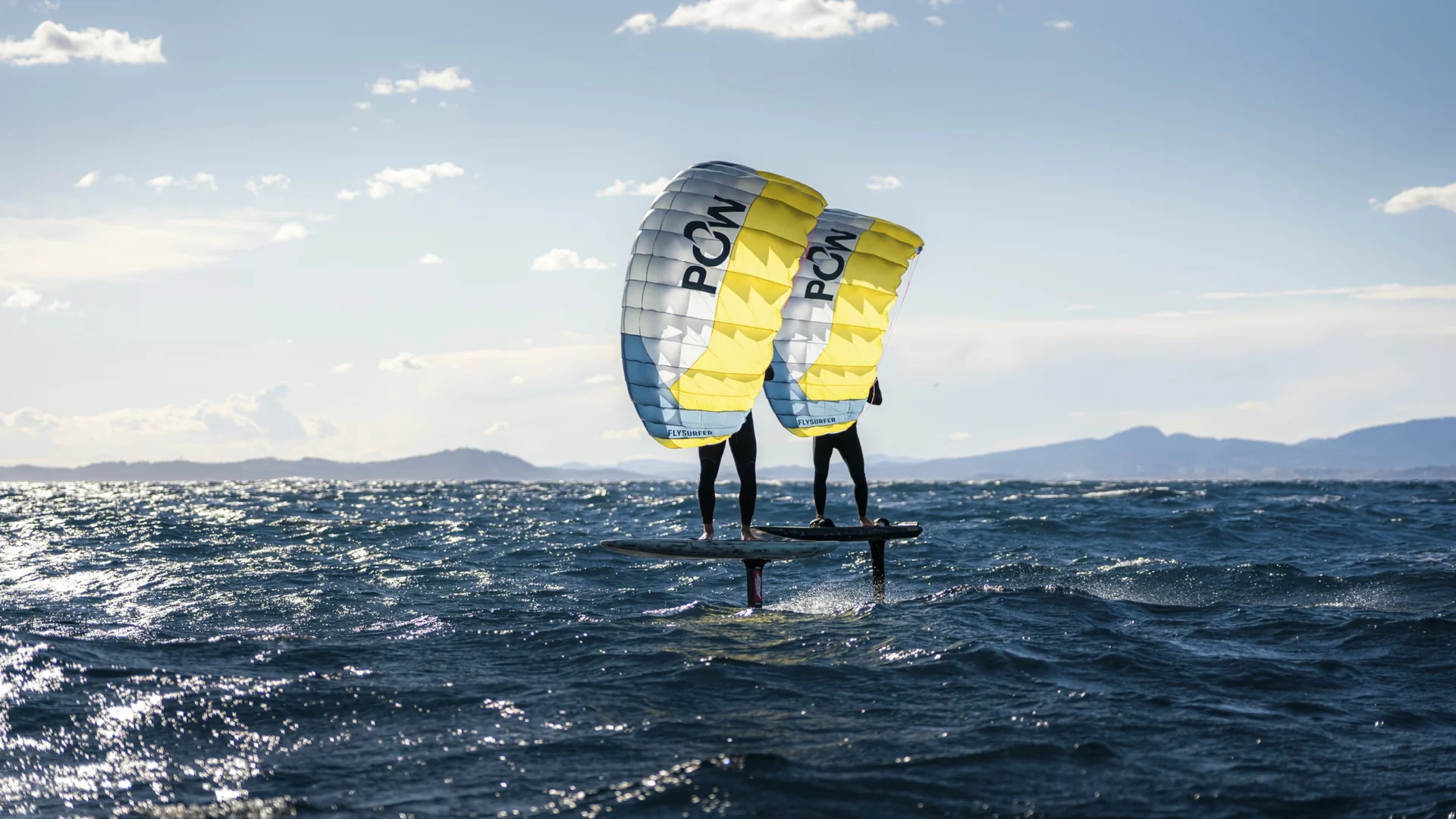
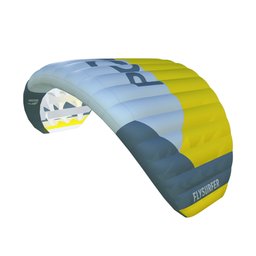
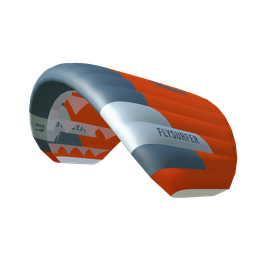
The Flysurfer POW 2 2026 is a single-skin parawing, the second generation of the POW. It's available in five sizes, from 1.7 to 5.5 m², priced between €729 and €1,049, including tax.
The kite comes with its curved carbon bar, a pre-mounted harness line on the bar, an 18 L backpack that's water-friendly, and a repair kit. The Escape storage belt is sold separately. Prices were accurate in our catalog on October 8, 2026.
The tester's takeaways
- Short lines on sizes up to 4 m², so you can pack them in one armful.
- This kite is far less sensitive to hand placement than the V1.
- Finally, a continuous size range, now including 2.3 and 3 m².
- The original depower is reduced compared to the V1, but a small bridle modification corrects this.
Who tested it, and what sizes?
Hadou Brunner is one of France's most respected parawing testers. He rode the POW 2 in 2.3, 3, and 4 m², and also tested the Zap, Flysurfer's double-skin version, in 3 m². He didn't get to try the 1.7 m².
We haven't had a chance to ride the POW 2 yet. All information regarding the kite's behavior comes from Hadou's review. Pricing and pack contents are from our catalog and Flysurfer.
Review by Hadou Brunner, published September 25, 2026, 22 min duration.
What's new compared to the original POW
The V1 was initially available in 1.7, 2.5, and 4 m², with a 5 m² added later in the year. The gap between 1.7 and 2.5 was already significant, and between 2.5 and 4, it was huge. The V2 now offers 1.7, 2.3, 3, 4, and 5.5 m². Hadou highlights the 3 m² as the critically missing size, noting its impressive power for its surface area and how compactly it packs down.
We've simplified the bridle, ditching the V1 pulley for a cleaner setup. The front lines are now clearly marked, with the Leading Edge and wingtips easily distinguishable. Plus, at the bar, you'll find three distinct colors instead of all-orange lines. This makes a huge difference when you're just starting out and untangling a mess of lines in the water.
The lines: the number one topic
The V1's 4 m² kite had 2.10 m lines, requiring a two-stage packing process. While manageable with practice, Hadou identified this as its main drawback last year. On the V2, the lines are short across the 2.3 to 4 m² range, and the bridle has very few knots, which means less friction in your hands when packing.
The direct result: you can pack a 4 m² as quickly as a smaller size. Hadou takes it out in as little as 12 to 13 knots, paired with a board and foil optimized for light wind.
On the water: a forgiving kite
The V1 demanded precise hand placement within the bar's elbow. If your hand was too far back, the kite would brake and drift back in the window. Compensating by moving your hand forward would send it abruptly towards the edge of the window. In strong, gusty wind, especially on smaller sizes, these sudden movements destabilized many riders.
Hadou reports that this issue is virtually eliminated on the V2. A beginner kneeling on their board can now place their hands less precisely without being penalized. Advanced riders also benefit, particularly towards the end of a session when fatigue sets in.
The curved bar
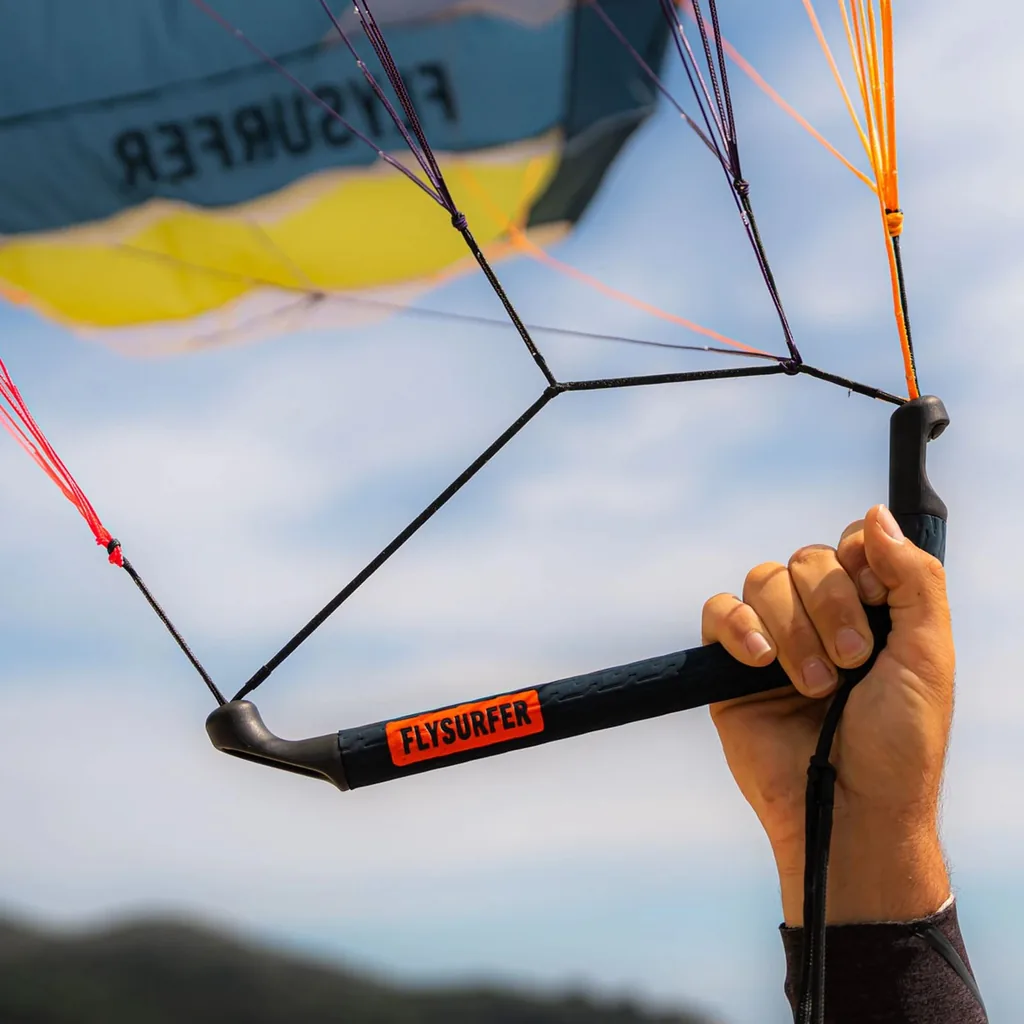
This is a polarizing feature. While some riders dislike the POW bar's shape, Hadou defends it. It's been shortened, and the upward curve lets you place your thumb at the bar's end, where the lines and front lines begin, for precise depower control. When packing, placing your hand over the bar effectively shortens the lines by almost 10 cm. He notes that several brands, like ALTIS and F-One with their Quest bar, have since added extensions to the front of their straight bars, indicating this design addresses a common need.
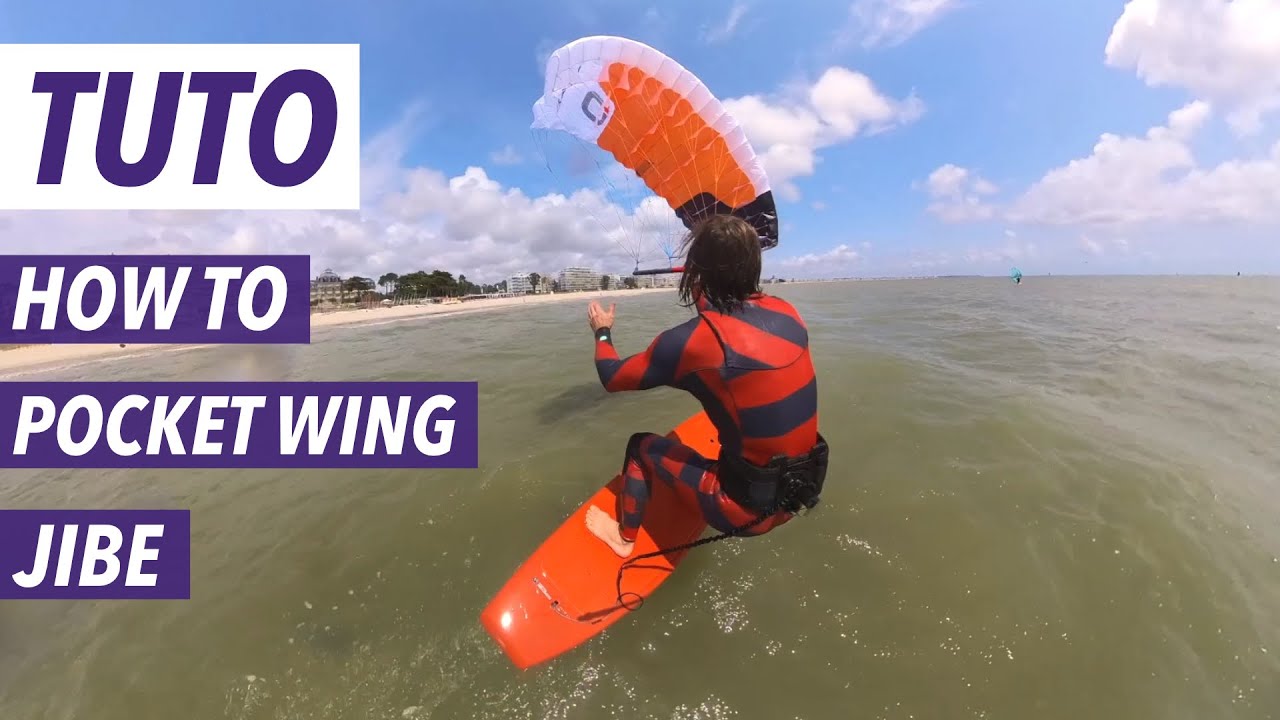
He finds it incredibly easy to maneuver. During a jibe, with your front hand in the curve of the elbow, you maintain power and can adjust sheeting and depower with just one hand. In light wind, with short lines, a kite that falls can be relaunched with a simple arm movement.
Packing
This is the strongest point he repeatedly emphasizes. You grab the front lines, pull, and the kite comes in effortlessly, even when it's sideways with the lines under tension. With many parawings, you have to bear away to pack without resistance. Hadou calls this the POW effect: you grab everything without thinking, and the kite folds without any struggle.
The weak point: depower at the top end
Hadou was thrilled after his first session on the 4 m² in steady wind and sun, noting its rigid profile and excellent upwind performance. A few days later, in stronger, gustier conditions, he found himself with his hands fully forward on the bar, unable to hold on. He rides without a harness, which he considers the ultimate test of depower. His friends who also tried it reported the same observation.
Hadou's verdict is clear: the depower has regressed compared to V1. Flysurfer, however, claims the opposite on its product page, promising more depower for upwind performance and better control in gusts. We're reporting both perspectives; you can decide for yourself. The trade-off is that the profile remains locked, the kite never collapses, and Hadou compares its stability to that of a hybrid.
Bridle modification: C-lines on a pulley
The solution came from a friend of Hadou's who spends a lot of time parawing in Cotentin. They initially shifted the C-lines a few centimeters by hand, then mounted them on a small pulley, similar to those used on windsurf wishbones for race. The stated cost was about ten euros, and it took only four to five minutes.
With the C-lines now sliding, the bridle becomes dynamic. When you depower, the C-lines move back, the kite depowers, advances in the wind window, and gains upwind performance. When you sheet in, they return to contact with the B-lines, preventing the kite from being oversheeted. According to Hadou, this modification doesn't compromise handling or increase flapping, and he has since been riding with all his modified sizes.
Hadou isn't the only one who's discovered this. Glenn Bartlett, another parawing rider, filmed the step-by-step modification on a POW 2 and reached the same conclusion: the C-lines don't release enough to let the kite depower, and it struggles to fly on its front lines. His video demonstrates both variants: the fixed point moved back a few centimeters and the pulley version, followed by an on-water test of sheeting in and depowering.
Bridle modification filmed by Glenn Bartlett, published September 5, 2026, duration 12 min 44.
Here's what you need to know before you start. The tools fit in your pocket: a flat-head screwdriver, needle-nose pliers, a piece of kite line to use as a threader, a bridle pulley, and something to tie a stopper knot. The tricky part isn't the pulley; it's reassembling the stainless steel pin that secures the lines in the bar, and Glenn shows himself trying several times on camera. One last useful tip: the fixed-point version provides the same depower on the water; the pulley only changes the handling of the canopy when sheeted in.
He raises a valid point. This modification isn't exotic, and Flysurfer could offer it as standard. All it would take is a yoke line with three or four pre-drilled positions. Riders could then choose based on their riding style. Until the brand implements this, riders will need to handle the DIY modifications themselves.
We have not tested this modification, and we do not sell modified kites. Modifying the bridle of a new kite means deviating from the original setup, which has implications for your warranty and safety if the reassembly is not done correctly. Call us first: we'll discuss your specific use and give you our honest opinion.
The bag: a truly pleasant surprise
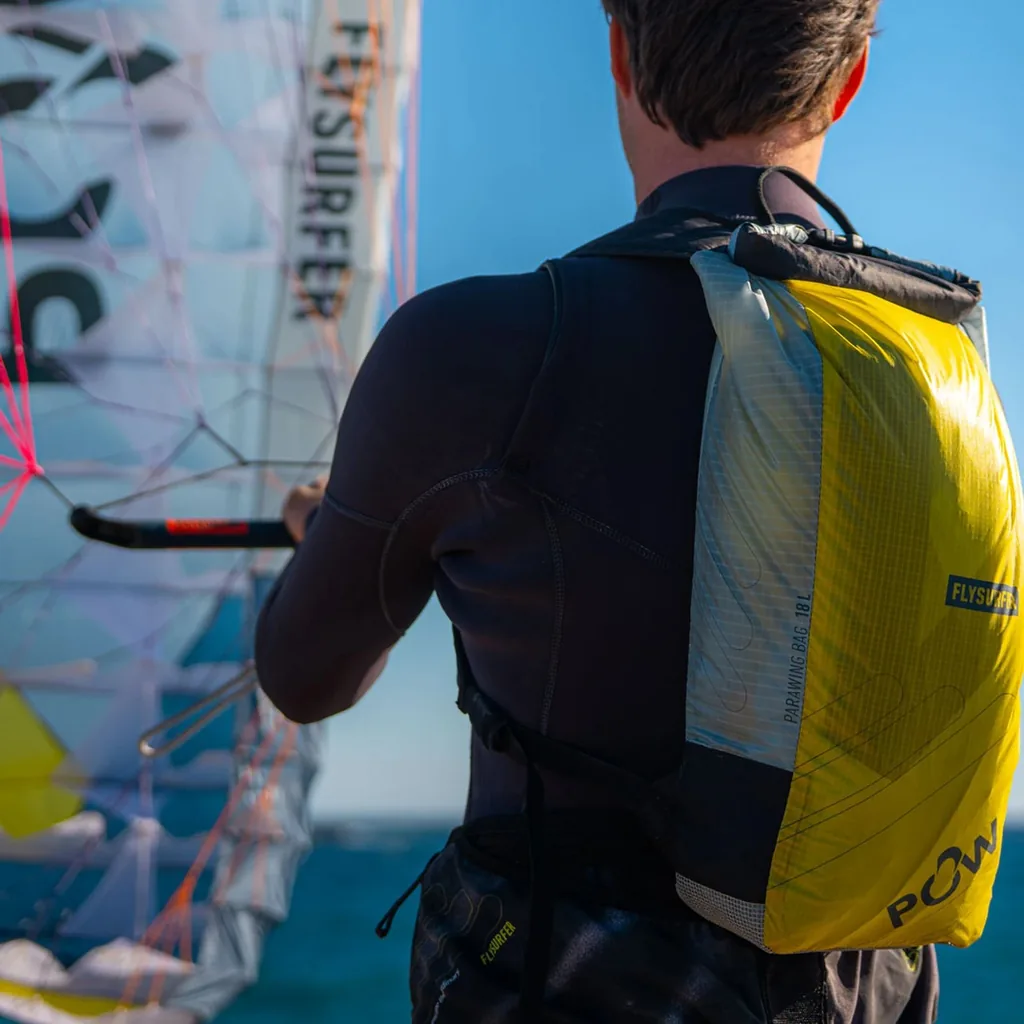
This 18 L backpack rolls up and closes with a clip, not a zip. A waist strap keeps it secure when you're pumping. When rolled properly and with the air expelled, water barely gets in, even though it's not fully waterproof. You can even slip a second parawing in as a backup. Hadou ranks it among the best bags he's owned, just behind ALTIS's, which includes a chest strap.
The harness line is included and already installed. It's thin and flexible enough that you'll barely notice it, even when it's caught between the bar and your hand. Hadou rarely uses it, but it's there at no extra cost.
What about the Zap?
Hadou picked up the 3 m² and offers a brief aside in his review. This is Flysurfer's double-skin kite, designed for a more free race program. On take-off, it feels like a truck compared to the 3 m² POW. On the water, the profile is inflated and rigid, and the upwind performance particularly surprised him: for the first time, he felt like he was going too far upwind. With 1.70 m lines on the 3 m², it packs into one armful, but you have to empty the air, which takes time.
For surfing with quick packing between waves, the POW 2 is much better. For going far upwind and then doing a long downwind, the Zap accomplishes in two tacks what a single-skin kite does in four.
Who's it for?
This kite is perfect for riders who want a light parawing that's easy to pack and redeploy, whether for surfing, freeflying, or downwind. It's also great for beginners, much more so than the V1, as the kite tolerates approximate hand placement. Flysurfer presents it as suitable for all skill levels.
For heavier riders or those who frequently ride in the upper wind range of each size, the question of depower becomes important. You can either size down earlier or consider the modification described above.
Sizes and prices
| Size | Price incl. tax | What the tester says |
|---|---|---|
| 1.7 m² | €729 | Not tested in V2. In V1, Hadou rode it up to 30 to 35 knots. |
| 2.3 m² | €799 | New size, tested |
| 3 m² | €899 | The missing size, with a lot of power for its surface area |
| 4 m² | €929 | Tested in light wind, from 12 to 13 knots with appropriate board and foil. |
| 5.5 m² | €1,049 | Not tested |
Prices noted in our catalog on October 8, 2026. The first POW remains on sale at a 40% discount, and we have the 4 m² in stock for €659, with its longer lines and a more sensitive bar, but with depower that Hadou judged better.
Specifications
| Feature | Flysurfer POW 2 2026 |
|---|---|
| Type | Single-skin parawing |
| Sizes | 1.7, 2.3, 3, 4 and 5.5 m² |
| Intended Program | Downwind, surf, drift |
| Bridle | Shortened on all sizes, sleeved, color-coded, pulley-free |
| Bar | Bent, carbon, shortened compared to V1 |
| Weight of the 4 m² | Approximately 700 g, weighed by the tester on a kitchen scale |
| Delivered with | Bar, harness line, 18 L backpack, safety guide, repair kit |
| Optional | Escape Storage Belt |
Things to consider before buying.
If you loved the V1 for its depower and didn't mind the long lines on the 4 m², the V2 isn't a necessary upgrade, especially with the V1 currently at a 40% discount. If you're looking for a parawing that's ready to ride in strong wind without any adjustments, note that our tester modified all his sizes. For riders whose program involves going far upwind for long downwinds, the Zap is more efficient, though it packs up slower.
The full range is here: parawings and pocket wings, and all wingfoil gear.
Frequently Asked Questions about the Flysurfer POW 2 2026
What's new between the POW V1 and POW 2?
There are two new sizes, 2.3 m² and 3 m², and a 5.5 m² replaces the 5 m². It features a simplified, color-coded bridle without pulleys, with short lines up to the 4 m² size. The bar is shorter. The kite is also much less sensitive to hand placement. According to Hadou Brunner, high-end depower has decreased.
Is the Flysurfer POW 2 suitable for a beginner?
Yes, it's better than the V1. It tolerates imprecise hand placement without stalling or backing up in the window. Its short lines make it easy to pack. Flysurfer markets it for all skill levels.
Which POW 2 size to choose?
Hadou Brunner rode the 4 m² in 12 to 13 knots with light wind gear. He describes the 3 m² as very powerful for its size. The best choice depends on your weight and board. It also depends on your foil and spot. Call us or visit the shop.
Should the POW 2 bridle be modified?
It's not mandatory. Hadou Brunner added small pulleys to the C-lines to regain high-end depower. He has since modified all his kite sizes. Glenn Bartlett's video, included in the article, shows the step-by-step process for both fixed-point and pulley versions. We have not tested this modification. A modified kite is outside the original assembly, and this includes the warranty. Talk to us before you alter the bridle of a new kite.
POW 2 or Zap: which should you choose?
Choose the POW 2 for Surf and freefly, with quick packing. The double-skin Zap is for going far upwind before a long downwind: it points higher but folds slower.
Does the POW 2 come with a harness line?
Yes. It comes pre-mounted on the bar, along with an 18 L backpack and a repair kit. Only the Escape storage belt is sold separately.
Unsure about the size or modification?
We sell parawings all year round in Pornichet. A quick call is often enough to decide between two sizes, or between the POW 2 and the Zap.
Book an appointment09 62 64 74 77Email us
Test source: video review by Hadou Brunner, published on September 25, 2026. Stated features: Flysurfer POW² product page, consulted on September 30, 2026. Prices, sizes, and stock noted in our catalog on October 8, 2026.
 Flysurfer