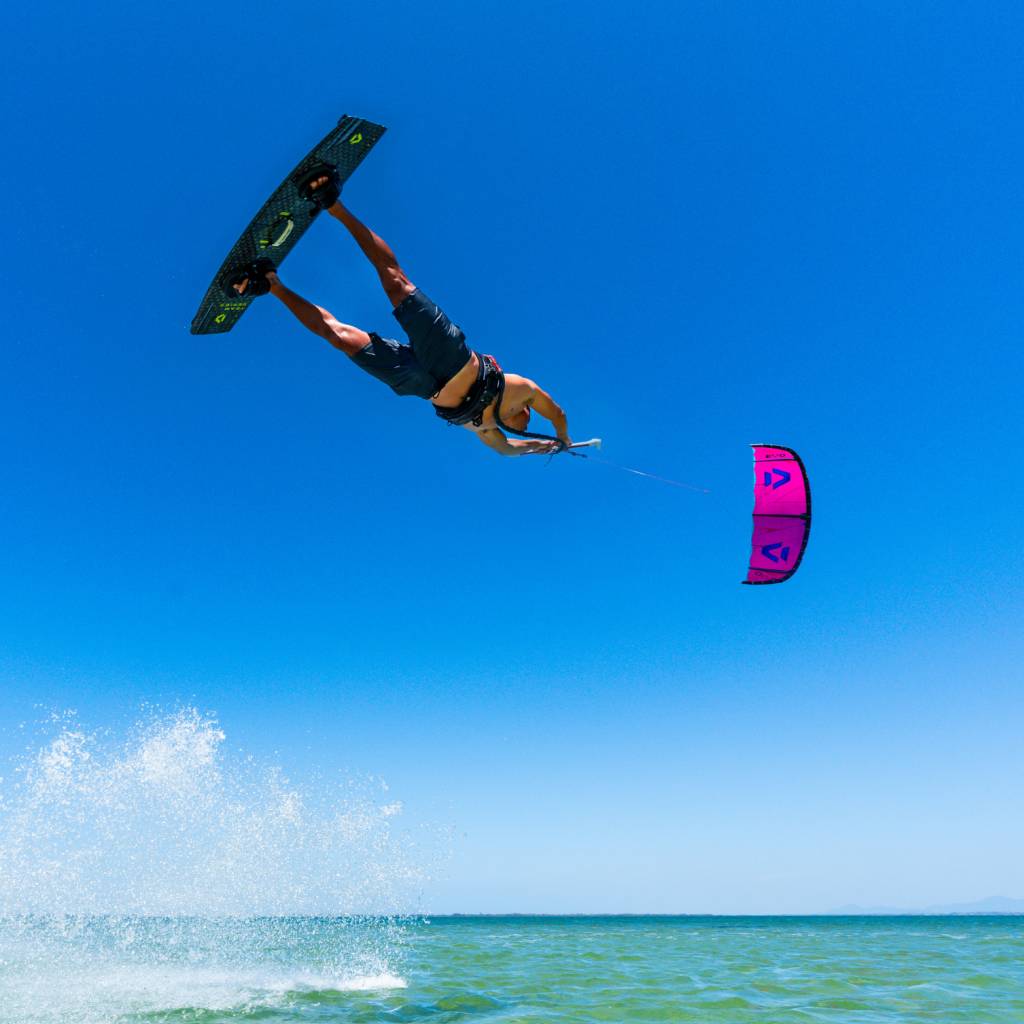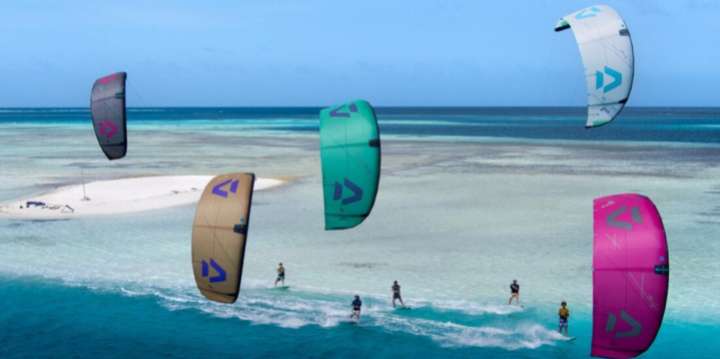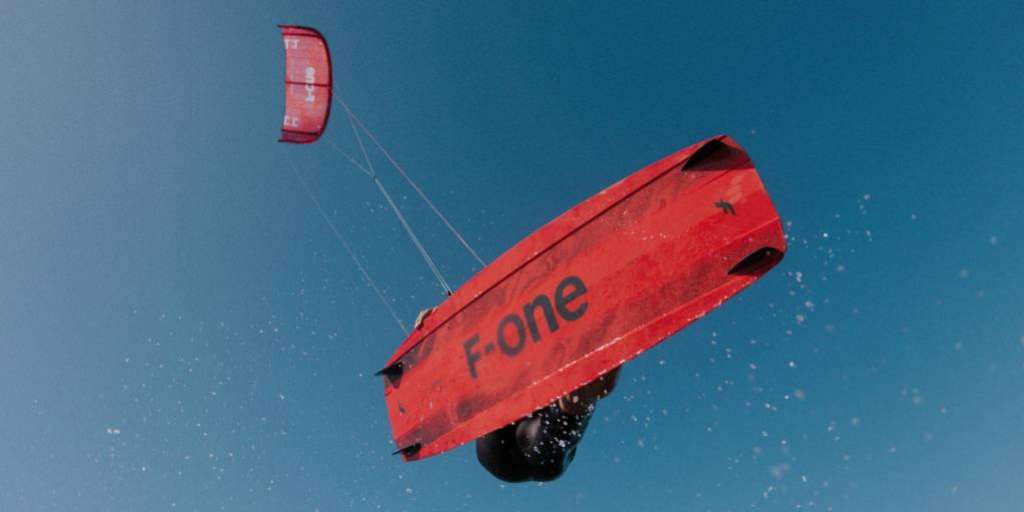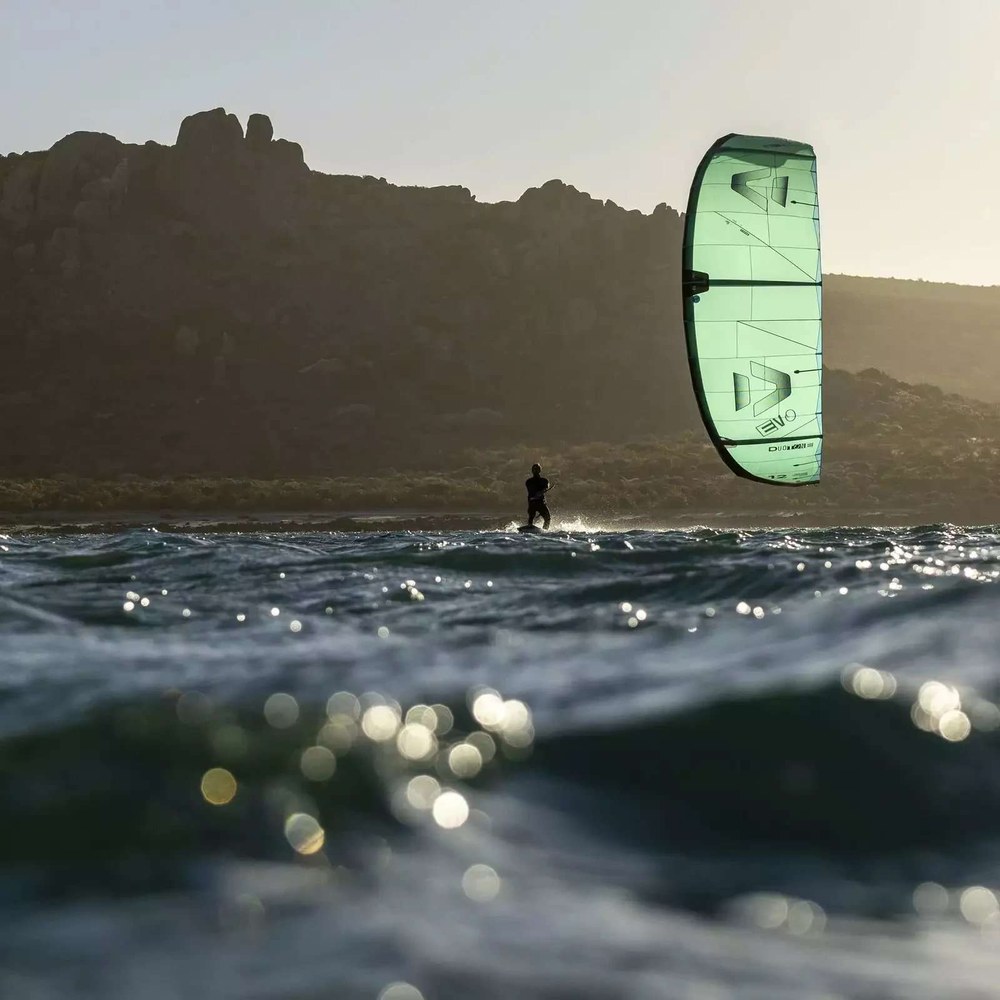
Kitesurf is a watersport where you glide across the water, pulled by a Kite connected to your harness via a control bar. First appearing in the 1990s, it's now one of the most popular watersports in the world. Its appeal lies in the thrilling ride feel, the ability to jump and surf waves, and a passionate community. Kite and wing equipment is in our Kitesurf and Wing Foil worlds.
What gear should you choose? What budget do you need? How can you progress quickly and safely? At GlissEvolution in Pornichet, we've been equipping beginners for 21 years. Here's our complete guide to getting started, from choosing your kite to your first upwind runs.
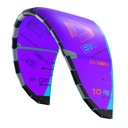
Kitesurfing requires a remotely piloted kite, a control bar, and a board.
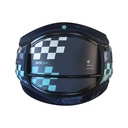
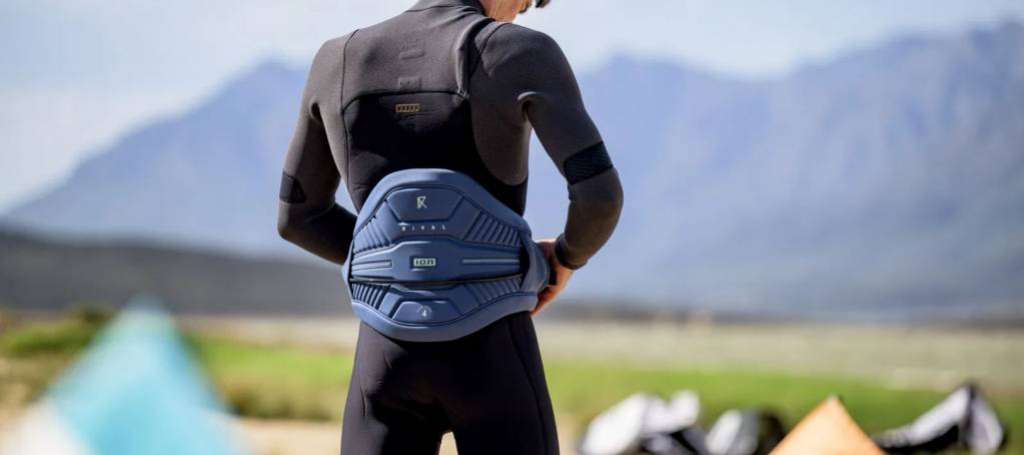
To start, you'll need an allround kite of 10-12 m², a twintip board, a harness, a wetsuit, and most importantly, 10 to 15 hours of mandatory lessons with a certified instructor. The full budget, including training, ranges from €2,500 to €4,600. Our recommended pack is the F-One Bandit + Linx Bar. This guide was written by the GlissEvolution team, with 21 years of watersports expertise in Pornichet.
In 30 seconds: where to begin?
- Basic gear: a 10-12 m² kite, a compatible bar, a twintip board, a harness, and a wetsuit.
- Learning: 10 to 15 hours of mandatory lessons, riding in 5 to 10 sessions.
- Ideal wind for beginners: 15 to 22 knots, side or side-on shore, never offshore.
- Full budget: €2,500 to €4,600, including training.
- Recommended pack: F-One Bandit 17 TEC + Linx Bar, starting from €1,455.
What is kitesurfing?
Kitesurfing combines three elements:
- A kite, inflatable with struts (LEI, for Leading Edge Inflatable), connected to the rider by 4 or 5 lines, 20 to 25 m long.
- A control bar, used to steer the kite and manage its power.
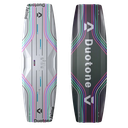
- A board, either a twintip (bidirectional) for beginners, or a surfkite for wave riding.
Unlike wingfoil, where you hold the wing in your hand, in kitesurfing the kite flies at a distance. This setup allows it to generate more power for jumping, surfing, and reaching high speeds.
Why is kitesurfing so appealing?
- Unique sensations: experience jumps, rotations, and wave surfing.
- Versatility: enjoy freeride, freestyle, waves, and foil disciplines.
- Fast progression: you can be riding in just 5 to 10 sessions with proper lessons.
- Community: connect with other riders at spots, on trips, and in competitions.
How to choose your gear
The kite: size according to your weight and the wind
For kitesurfing, you'll eventually need 2 to 3 kite sizes to cover different wind conditions. To start, a single allround kite is enough.
| Your weight | Light wind (12-16 kts) | Medium wind (16-22 kts) | Strong wind (22-30 kts) |
|---|---|---|---|
| < 65 kg | 10-12 m² | 8-10 m² | 6-8 m² |
| 65-80 kg | 12-14 m² | 10-12 m² | 8-10 m² |
| 80-95 kg | 14-17 m² | 12-14 m² | 9-12 m² |
| > 95 kg | 17-21 m² | 14-17 m² | 11-14 m² |
For beginners: a 10-12 m² kite offers the best compromise for an average weight rider (70-85 kg) in 15-22 knots of wind.
All our kitesurf kites · Read also: How to choose your kitesurf kite
Your bar: ensuring kite compatibility
Your bar absolutely must be compatible with your kite. If you're looking to mix and match kites and bars from different brands, check out our compatibility guide or ask our team for advice.
| Kite brand | Recommended bar | Price |
|---|---|---|
| F-One | Linx Bar | €639 |
| Duotone | Trust Bar or Click Bar | 549-€759 |
| Core | Sensor 4 | €749 |
| Eleveight | CS Auto Bar | €649 |
| Flysurfer | Connect V3 | €499 |
| Slingshot | Sentry V3 | €629 |
All our kite bars · Read also: Compatibility between bars and kites
The board: a twintip for beginners
- Twintip, bidirectional, ideal for learning (135-145 cm depending on your weight).
- A surfkite is a directional board for waves, ideal once you're riding independently.
- A foilboard is what you'll need for kitefoil, an advanced discipline.
Greg's take, 21 years in watersports
“In kitesurfing, taking lessons is essential. It's a technical sport where safety comes first. The F-One Bandit + Linx Bar pack is my recommendation for beginners: the kite is stable, forgiving of steering errors, and you'll keep it for a long time. Come to the shop, I'll show you how it works.”
Your 4 steps to getting started
- Learn safety: this includes release systems, right-of-way rules, and spot analysis. This crucial step happens in lessons with a certified instructor.
- Steering the kite: first on the beach with a small kite, then in the water. Goal: make smooth "8"s and manage power with the bar.
- The waterstart: the technique to get up on the board from the water. This is the key moment: board perpendicular, kite at 45°, and you're off.
- Riding upwind: Learn to sail "close-hauled" to return to your starting point. This is true range; you will no longer have any fins.
Lessons are mandatory
Kitesurfing isn't something you can learn on your own. Plan for a minimum of 10 to 15 hours of lessons to become independent and ride safely. Our partner schools offer courses for all levels. This is your most important investment, even before buying your gear.
The 5 mistakes that make people quit
- Skipping lessons: this is the number one mistake. Kitesurfing demands a solid technical foundation.
- Buying overly technical gear: get an allround and forgiving kite, not a competition kite.
- Riding in too strong wind: stick to 15 to 20 knots maximum when learning. Anything beyond that is dangerous.
- Ignoring weather conditions: wind direction, tide, currents, everything matters.
- Getting discouraged after 3 sessions: the first 10 hours are tough. After that, it's pure magic.
Kitesurf or wingfoil: which one should you choose?
The two sports are complementary, but they have significant differences:
| Criterion | Kitesurf | Wingfoil |
|---|---|---|
| Minimum wind | 15-18 knots | 10-12 knots |
| Learning curve | 10-15 hours of mandatory lessons | 3-5 sessions to get flying |
| Safety | Long lines, technical take-off | No lines, just pure simplicity. |
| Feel | Experience speed and jumps, along with pure adrenaline. | Silent flight, pure glide. |
| Versatility | Freestyle, waves, foil, big air. | Freeride, downwind, Surf. |
| Beginner Budget | €1,500-€2,500 + lessons | €1,800-€2,500 |
Our advice: Wingfoil is easier to learn on your own. Kitesurf offers more thrills and possibilities, like jumps and waves. It also provides freestyle. Many riders enjoy both sports.
Also read: Getting started with wingfoil
What's the budget to start kitesurfing?
| Item | Budget | Detail |
|---|---|---|
| Lessons (mandatory) | 400-€800 | 10-15 hours of instruction at a school. |
| New kite + bar complete set | €1,500-€2,500 | An allround kite with a compatible bar. |
| Twintip board | 300-€600 | New or second-hand. |
| Harness | 150-€350 | Waist or seat harness, depending on your preference. |
| Wetsuit | 150-€400 | 3/2 or 5/4, depending on the season. |
| Total | €2,500-€4,600 | Complete gear + training. |
Budget tip: Start with lessons using school equipment. Once you're riding independently, then buy your own gear. You'll have a much better idea of what suits you best.
Where and when can you go kiteboarding?
Ideal conditions for beginners.
- Wind: 15-22 knots, side or side-on shore, never offshore.
- Water conditions: Flat water or small chop, with a large, clear beach.
- Temperature: Plan for an appropriate wetsuit (3/2 in summer, 5/4 in winter on the Atlantic coast).
Our local spots.
Our team regularly rides these local spots, which are perfect for improving your skills:
- La Baule, a large bay with summer restrictions (marked channel in summer).
- Pont Mahé (Assérac Bay), a flat and consistent spot, ideal for progression.
- Les Rochelets (Saint-Brevin), an exposed spot with waves in westerly swells.
All spots in 44 · La Baule / Pornichet spots · Kite channel regulations
Our 2026 beginner selection
We've helped hundreds of beginners get set up at the shop. Here are our top recommendations.
Recommended complete set: F-One Bandit 17 TEC + Linx Bar (from €1,455)
F-One Bandit 17 TEC + Linx Bar: The Bandit kite has been the allround benchmark for 15 years. The Linx bar is reliable and ergonomic, with safety built in. This kite has taught more beginners worldwide than any other. It is stable, forgiving of steering errors, and progressive for skill development. Budget option: F-One Addikt Pack + Linx Bar, from €1,371, excellent for schools and progression.
Complete sets (kite + board + bar)
- Eleveight RS V9 + Process C+ + Vary Bar Pack: Starting from €2,107, this pack delivers performance and versatility.
- The Duotone Evo + Gonzales + Trust Bar 2025 Pack starts at €2,075. This premium kit is incredibly allround.
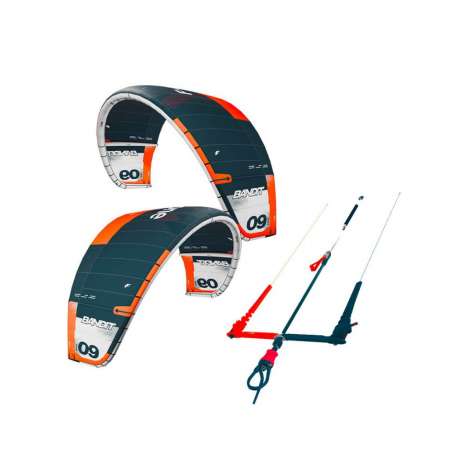
F-One Bandit + Linx complete set
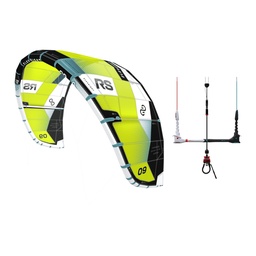
Eleveight RS V9 2025 + CS+ Vary Bar V5 Kitesurf Pack
1,898.00 € -35% 1,233.00 €
Go further
Our guides for choosing the right gear
Our kite tests
- Duotone Evo SLS 2025 Test: the allround benchmark
- F-One Addikt TEC Test: ideal for progression
- Eleveight RS V8 Test: versatile and high-performance
- Slingshot Code NXT Test: Accessible Freestyle
- Flysurfer Sonic 5 Test: foil and light wind
Frequently Asked Questions
Can you learn kitesurfing alone?
No, it's strongly advised against and dangerous. Kitesurfing requires 10 to 15 hours of lessons with a certified instructor. This ensures you master safety and steering, as well as navigation rules.
How long does it take to become independent?
Plan for 10 to 15 hours of lessons, or a 3 to 5-day course, to ride alone, go upwind, and handle safety situations.
What kite size should a beginner use?
For an adult weighing 70 to 85 kg, a 10 to 12 m² kite is perfect for average conditions (15 to 22 knots). This is the most versatile size.
Should you buy new or second-hand?
Both are solid options. New gear comes with a warranty and total peace of mind. Second-hand can save you 30% to 40%, which is great if the equipment has been thoroughly checked. Just be careful with kites that are too worn out.
What's the total budget to get started?
Plan for €2,500 to €4,600 all-inclusive. This covers lessons (400 to €800), kite and bar (from €1,371), board (300 to €600), and harness and wetsuit (300 to €700).
Why buy from GlissEvolution?
We bring 21 years of expertise to the table, with a team of riders who test all the gear right here in La Baule and Pornichet. You get responsive after-sales support in France, a 2-year warranty, and free shipping on orders over €150 (via the most economical delivery method).
Need personalized advice?
We help you choose the right equipment for your level, your weight, and your budget. Come see us in our shop in Pornichet or make an appointment remotely.
Make an appointment Call us See kitesurf packs
Sources and limitations of these guidelines
Our progression and safety advice comes from GlissEvolution's real-world feedback and the official IKO beginner guide. The learning times, wind range, and kite sizes we provide are estimates. They can change based on your weight, the weather, the spot, your equipment, and the instruction you receive. This guide doesn't replace a lesson with a qualified instructor or their on-site equipment recommendations.
This advice comes from the GlissEvolution team, with 21 years of expertise in Pornichet. All prices are indicative for 2026 and may change. Kitesurfing is a high-risk sport, so training at a certified school is essential before you hit the water.