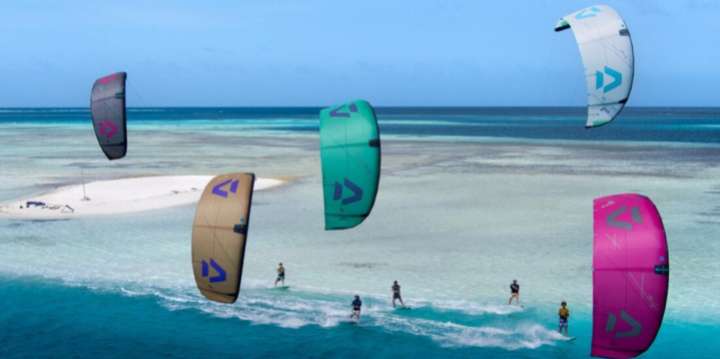
Choosing a kite comes down to four key questions: your skill level, your weight, your board, and the actual wind conditions at your spot. Brand and construction are secondary considerations. The models mentioned are in stock in the shop's kitesurf kites section.
The GlissEvolution team in Pornichet, who have been advising riders online and in-store since 2005, maintains this guide. The 2027 ranges have been arriving since summer, including the Duotone Neo, Rebel SLS, Dice SLS, F-One Bandit and Addikt, and Slingshot Code V3 and UFO V4. Our selections blend these new products with 2026 models that are still available.
Quick Answer
To learn or progress, grab a freeride kite. It relaunches easily and is forgiving of steering errors. Then, choose the right size within the wind range the manufacturer publishes for that specific model, considering your weight, your board, and the actual wind at your spot. If you're between two sizes, ask a school or the shop for advice before buying. You'll find all models in our kite section.
Quick Specs
Type: kitesurf kite with inflatable struts, or foil kite for some light wind kites · Disciplines: freeride, surfkite, big air, freestyle, light wind, and foil · Before buying, check: the model's wind range, rider's weight, board, skill level, bar width, line length, and safety system.
What type of kite for your riding style?
Before comparing brands, figure out where you stand. First, your skill level: beginner, intermediate, or advanced. Next, consider the dominant wind at your main spot. Finally, what do you plan to do on the water: freeride, waves, big air, freestyle, or foil?
Manufacturers categorize their kites by discipline, and that's your first filter. A big air kite isn't for learning. A forgiving freeride kite will lack responsiveness when you're ready to link tricks.
Freeride kites: for learning and progressing
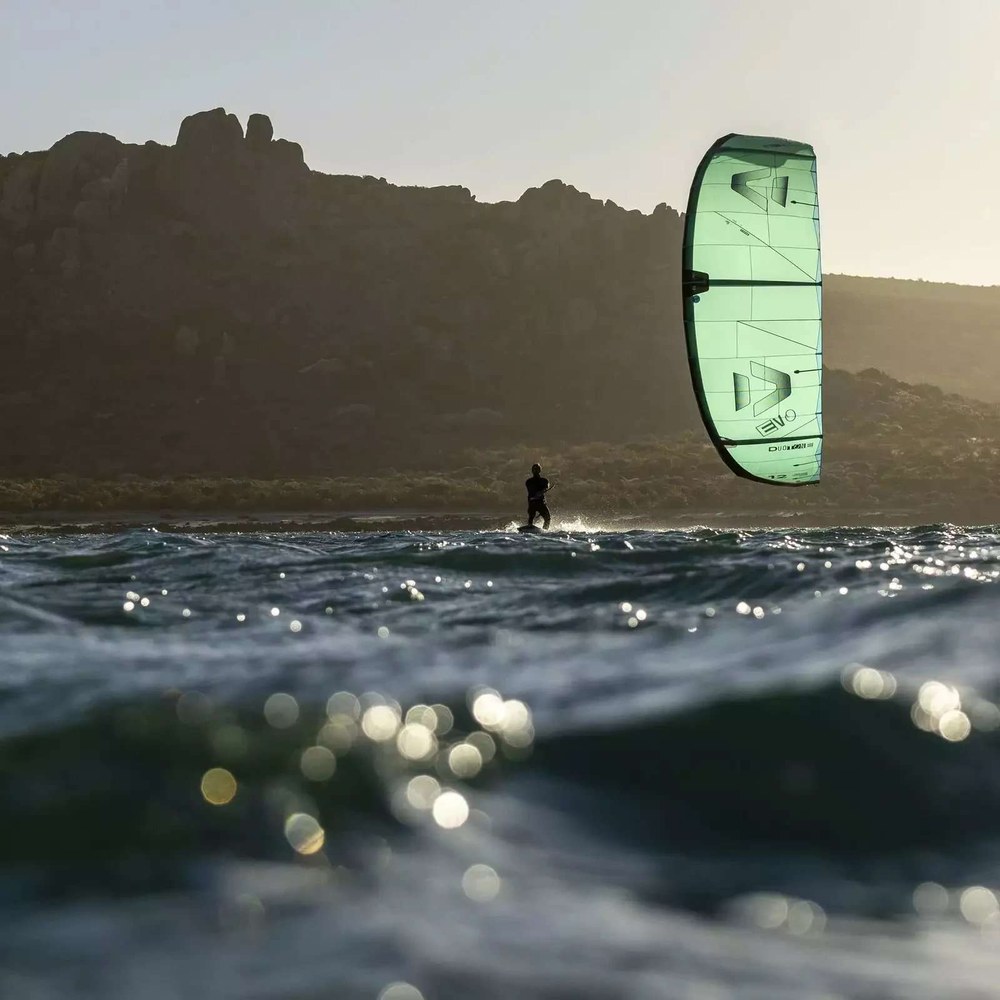
A freeride kite holds its position well at the zenith and relaunches without a struggle. It remains predictable in gusts. This is the kite that will take a rider from their first run to their first jumps, whether on flat water or in chop.
GlissEvolution's opinion: If you're unsure what to get, go for a freeride kite. The F-One Bandit 2027 perfectly illustrates the trend: F-One announces an eighteenth version that's easier to steer than its predecessor, with a slower flight speed. At Duotone, the Evo remains the benchmark model; we tested its Evo SLS 2025 version.
Our selection of freeride kites
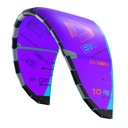
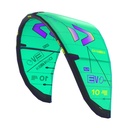
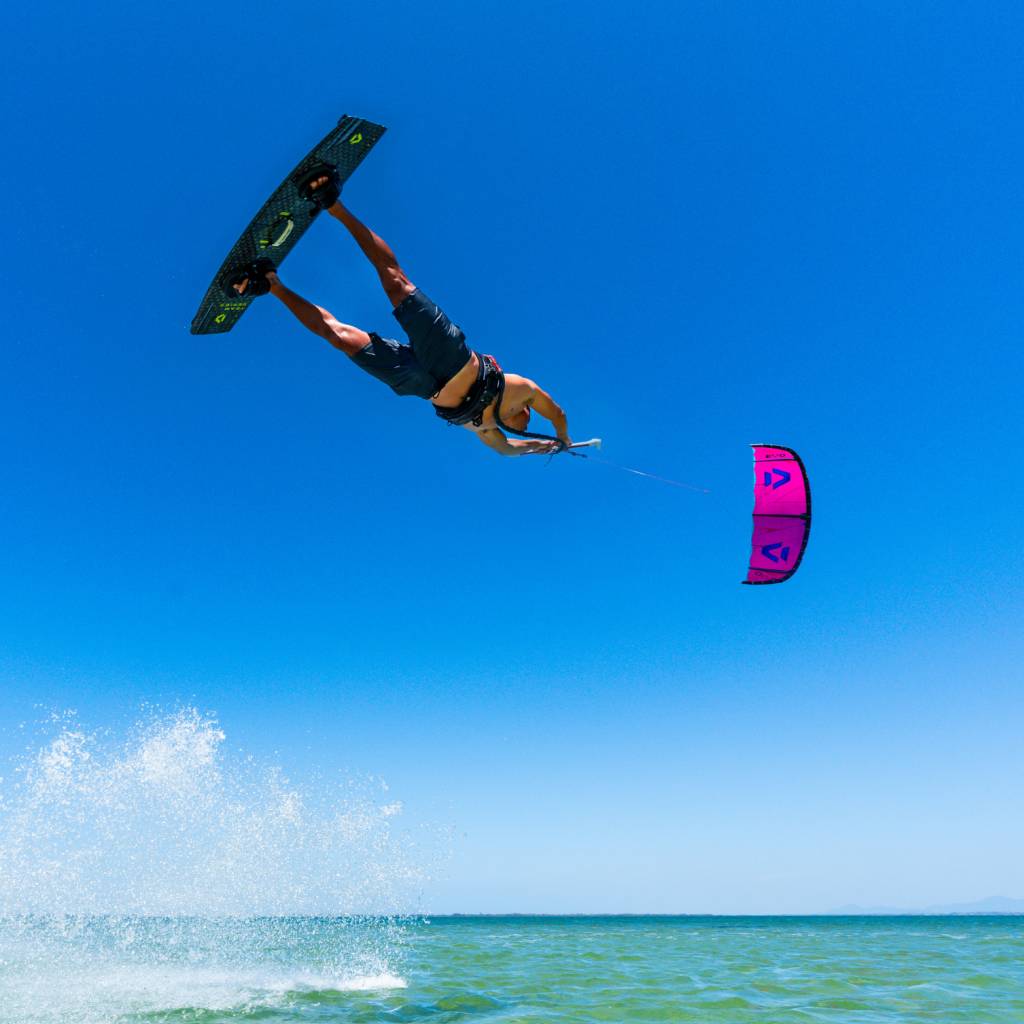
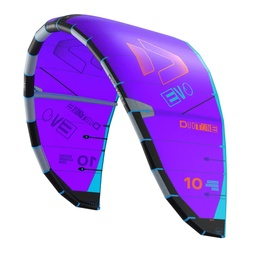 Duotone Evo 2026
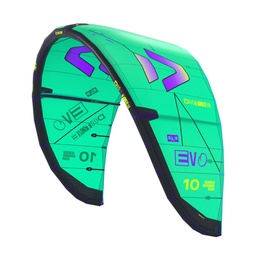 Duotone Evo SLS 2026
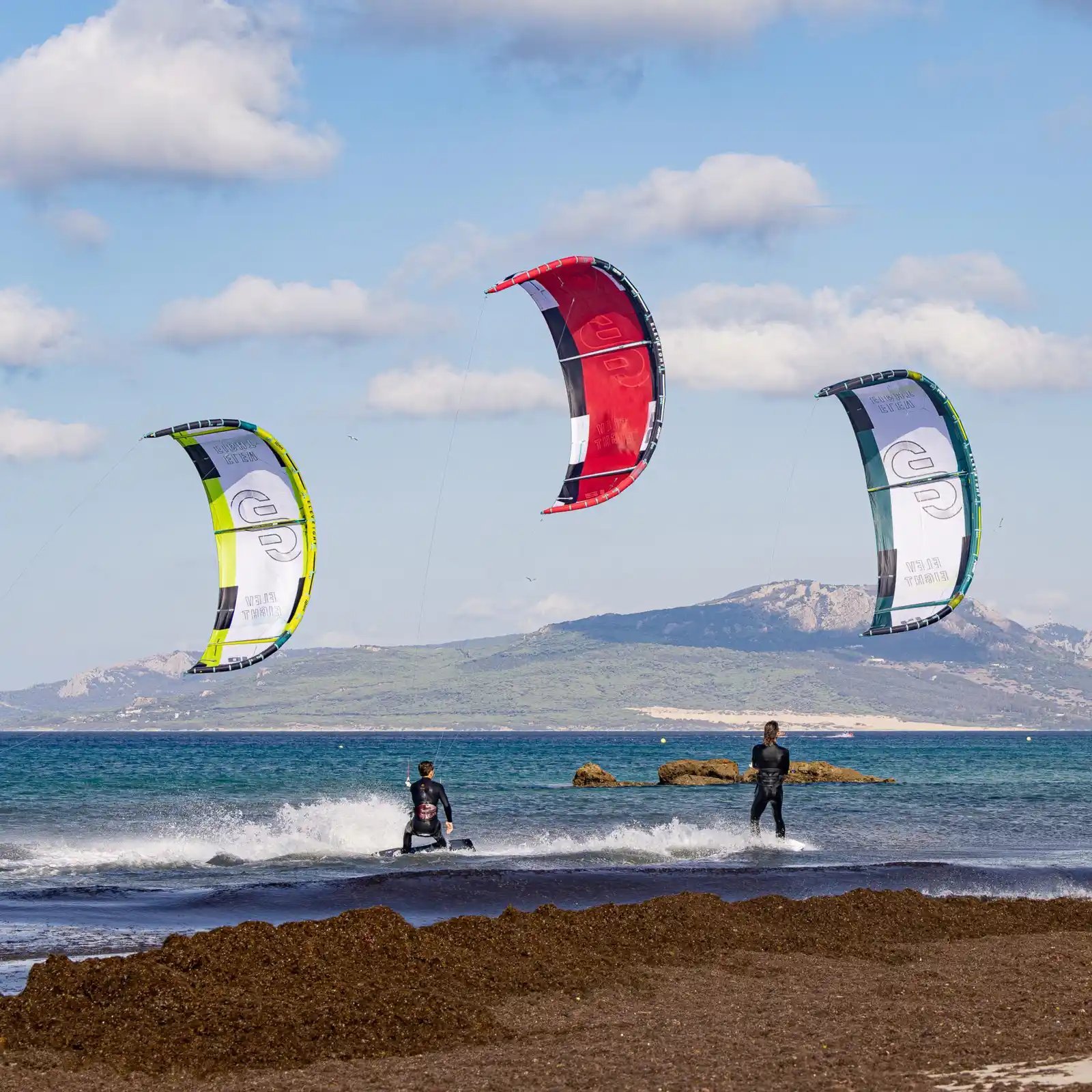
 Eleveight RS V10 2026
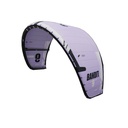
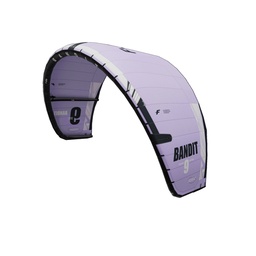 F-One Bandit 2027
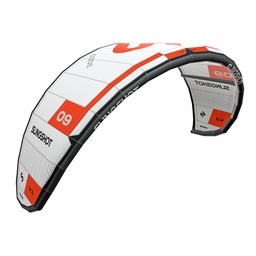 Slingshot Code V3 2027
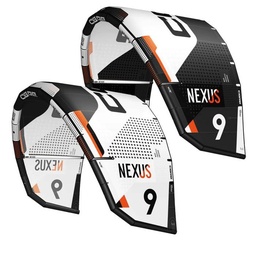 Core Nexus V4
Surfkites: for riding waves
A wave kite should be easy to forget. Its key asset is drift: when you send it to the edge of the wind window, it moves back with you without pulling, so you can surf the wave without being ripped off by the traction. It also needs precise steering to quickly reposition it when you exit the turn.
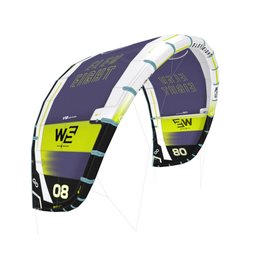
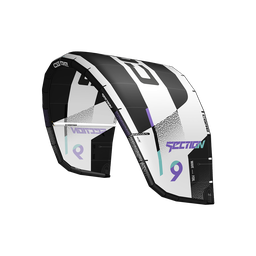
GlissEvolution's opinion: If you primarily ride strapless in waves, this is the kite family to explore. If waves are only part of your sessions, a freeride kite will serve you better the rest of the time. Each brand has its dedicated model: the Neo from Duotone, the Addikt from F-One, the WS from Eleveight, and the Section from Core.
Our Selection of Surfkites
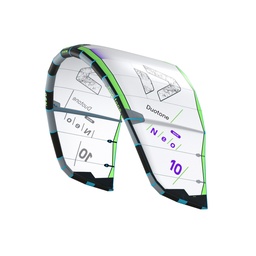
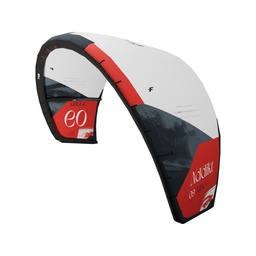
Big air kites: for high and long jumps
These kites are designed for lift and hangtime: they pull the rider off the water and then let them descend slowly. They handle strong wind and kiteloops. On the other hand, they demand precise steering and are less forgiving than a freeride kite.
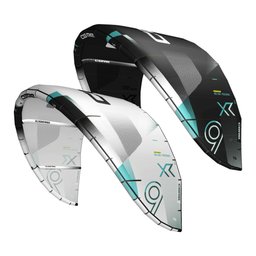
GlissEvolution's opinion: Don't try these until you're comfortable jumping on a freeride kite. Big air models often have more struts to maintain their shape under heavy load (five on the Core XR X, according to Core). For a high-end example, read our article on the Slingshot Code NXT V2.
Our Selection of Big Air Kites

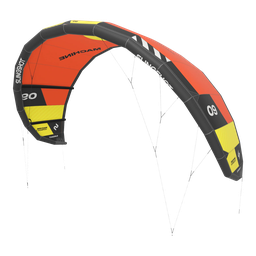
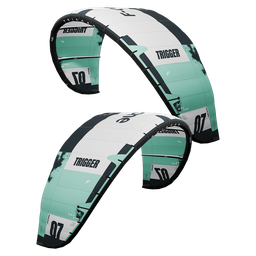
Freestyle and wakestyle kites: for unhooked tricks
Freestyle demands pop and clear slack when you unhook from the harness. An advanced rider finds precision here; a beginner mostly finds a nervous kite.
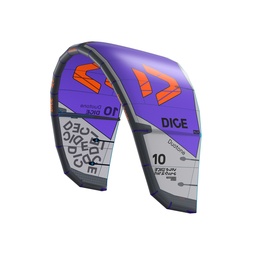
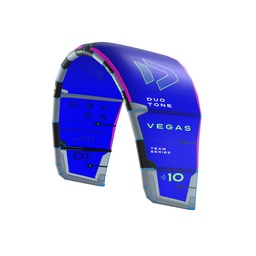
GlissEvolution's opinion: These are best reserved for riders who can already land unhooked tricks. The Duotone Vegas targets pure wakestyle, while the Dice SLS covers both freestyle and wave riding.
Our Selection of Freestyle Kites
Foil and Light Wind Kites: Prioritize Stability and Relaunch
In light wind, a lightweight construction helps the kite stay airborne. The low-end limit depends heavily on the kite model, its surface area, rider weight, board, wind consistency, and your technical skill. A single knot value does not apply to all kites.
Two constructions exist. On one side, there are lightweight inflatable kites, with few or no struts (the Slingshot UFO V4 has none, according to Slingshot). On the other, there are foil kites like the Flysurfer Soul 4, with no strut to inflate. They have their own rules for take-off and packing. We detail them in our guide to foil kites.
GlissEvolution's opinion: For foil or light wind, compare the wind ranges and recommended bar on the official product sheet for each size. Don't just consider the advertised surface area. Stability at the zenith and behavior in lulls are just as important.
Our selection of light wind and foil kites
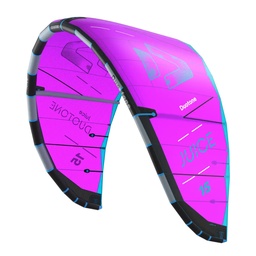 Duotone Juice 2026
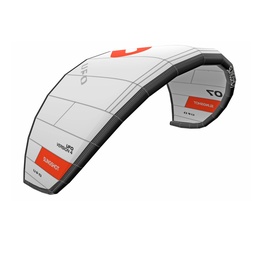 Slingshot UFO V4 2027
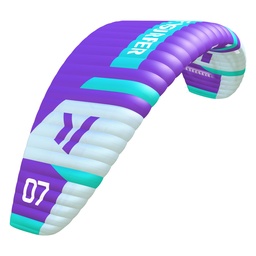 Flysurfer Soul 4 2027
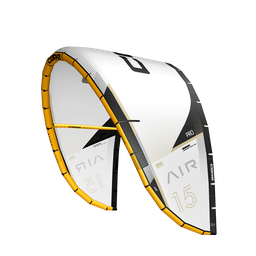 Core Air Pro 2025
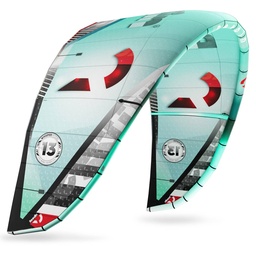 Reedin Whispermodel 2025
What kite size should you choose based on your weight and the wind?
You can't determine kite size from weight and wind speed alone. Two kites with the same surface area can have different wind ranges. Your board, rider level, wind quality, current, and water conditions also influence your choice. Always refer to the manufacturer's wind range chart for the specific model and year.
| Criterion | Why your weight matters | To check |
|---|---|---|
| Rider weight | It influences the power you need. | Manufacturer's recommended wind range for your weight |
| Actual wind | Average wind, as well as gusts and lulls, do not provide the same pressure. | Local measurement and forecast |
| Board and discipline | Twintip and surfkite do not offer the same lift as a foil. | Column or range dedicated by the manufacturer |
| Level and spot | A beginner needs margin and a suitable environment. | Advice from your school or a local expert who knows the spot |
Concrete example
For a 75 kg rider in Pornichet or La Baule, the commonly mentioned surface areas are just a starting point. You need to check the official wind range for your specific kite, consider your board, gusts, tide, and skill level, and always leave a safety margin.
Wind Ranges by Size: What Manufacturers Publish
As of October 2, 2026, this table details the wind ranges by size published by four top brands for their flagship freeride kites. You'll find these ranges reflected on our product pages for the Duotone Evo 2026, F-One Bandit 2027, Eleveight RS V10 2026, and Core XR X. All values are in knots. It's worth noting that none of these four product pages specify the rider's weight used to establish these ranges. These figures are intended for each kite's primary use; a freestyle, Surf, or light wind kite will have its own specific wind range, which you can find on its dedicated product page.
| Size (m²) | Duotone Evo 2026 kite | F-One Bandit 2027 | Eleveight RS V10 2026 kite | Core XR X |
|---|---|---|---|---|
| 5 | 28 to 45 | 26 to 42 | 22 to 42 | |
| 6 | 25 to 40 | 30 and up | 23 to 38 | 20 to 38 |
| 7 | 22 to 36 | 25 and up | 20 to 34 | 17 to 35 |
| 8 | 19 to 33 | 20 to 35 | 18 to 31 | 15 to 33 |
| 9 | 17 to 30 | 15 to 30 | 16 to 28 | 13 to 30 |
| 10 | 15 to 27 | 12 to 26 | 14 to 26 | 12 to 28 |
| 11 | 13 to 24 | 11 to 26 | ||
| 12 | 12 to 22 | 11 to 24 | 10 to 24 | |
| 13 | 11 to 20 | |||
| 13.5 | 9 to 22 | |||
| 14 | 8 to 18 | 10 to 19 | ||
| 17 | 8 to 16 |
What size kite for your wind?
These are the sizes whose published wind range covers the specified wind, with the best-centered option listed first: m². The corresponding cells are highlighted in the table.
According to the published wind range, no size of this model covers this wind. Consider a light wind kite or a foil if you need less power, or a smaller kite or a different model if you need more.
What about rider weight?
The published wind ranges don't account for rider weight, which is the main limitation of any table. The core principle remains: for the same wind, a heavier rider needs more surface area, or they'll need to wait for the wind to hit the upper end of their kite's wind range. A lighter rider will be comfortable sooner and will need to depower faster when the wind picks up. If you're torn between two sizes for the same wind, your weight is the deciding factor: if you're above average body size, go for the larger kite; if you're lighter, choose the smaller one. Duotone offers a selector on their website that factors in weight, wind, and board type (twintip, directional, foil). For other brands, the product sheet's wind range, your board, and your skill level will guide your decision. At our Pornichet shop, we cross-reference these ranges with your weight and your local spot conditions to recommend the perfect size. You can also get personalized advice by calling us at 09 62 64 74 77.
GlissEvolution Tip
If you're a beginner, don't build a quiver from a generic chart. A school can match your body size and gear to the manufacturer's recommendations, taking local conditions into account. Our list of partner schools is online. For your bar, board, and harness, check out the kitesurf equipment guide.
Things to Consider
Wind ranges and size charts are guidelines. Your weight, board, skill level, wind consistency, and kite model all affect the ideal size. Always check the manufacturer's wind range for your chosen model. If you're a beginner, have your quiver validated.
Which kite is best for light wind?
Light wind is anything under 12 knots. A classic 12 m² kite will either stay on the ground or fly without traction. Three answers exist, from the simplest to the most radical: a large, lightweight kite with struts, a foil kite, or kitefoil, which takes off with a normal-sized kite.
Lightweight inflatable kite. To cut down on weight, manufacturers reduce the number of struts and use lighter fabrics. A three-strut kite remains versatile. It offers a wide wind range. A single-strut kite is even lighter; its central strut stiffens the kite in flight and during relaunch. As of September 29, 2026, we have in stock: the Duotone Juice 2026 (€2,319), its Juice D/LAB 2026 version with Aluula fabric (€3,399), the single-strut Duotone Mono 2026 (€1,149), and the Core XR X (€1,849). Our Juice D/LAB test details the difference it makes on the water.
Foil kite. Without struts, a foil kite weighs significantly less than an inflatable kite of the same surface area. It can fly in winds where nothing else will, though it comes with a more delicate water relaunch and a shorter wind range. Check out the Flysurfer Soul 4 2027 (€1,799) and Sonic 5 (€2,199) for traction, or the Peak V6 (€599) single-skin for snowkiting and foil. Our article on foil kites covers their advantages and limitations in detail.
Kitefoil. This is the most effective way to get on the water frequently. With a kitefoil, a 9 to 12 m² kite is enough in just 8 to 10 knots, and you can still use your main kite. Our guide to choosing your kitefoil explains how to get started.
If you only ride a few light wind days a year, a large, lightweight kite is the simplest choice. If light wind is the norm at your spot, you should definitely look into foil first.
Which kitesurf kite brand should you choose?
The five brands below are our most stocked in the shop, and we provide after-sales support for all of them. They all make excellent kites. The differences are felt under the bar and reflected in the price tag. Our selection includes kites from Flysurfer and Ozone. We also carry kites from Reedin.
Duotone: a kite for every riding discipline
Duotone took over from North Kiteboarding. Their range covers every riding style: the Evo for freeride, Rebel for big air, Neo for wave, Dice for freestyle, Juice for light wind, and Vegas for wakestyle. Most models come in several constructions: standard, Concept Blue, SLS, and D/LAB, depending on the model.
GlissEvolution's opinion: The Evo is our top recommendation for anyone who wants a single kite. The SLS and D/LAB versions cost significantly more. They are justified for advanced riders who can feel the difference in weight and responsiveness, but rarely for a beginner.
Eleveight: exceptional value for money
Eleveight keeps its range concise: the PS for schools and progression, RS for freeride, RS+ for more advanced freeride, RS Pro for big air, WS for wave, and FS for freestyle. We tested the Eleveight RS V10 2026.
GlissEvolution's opinion: When budget is a factor, this is the brand we recommend first, especially when compared to the standard ranges of more established brands.
F-One: the Montpellier brand
F-One was founded in 1994 near Montpellier by Raphaël Salles, a former professional windsurfer. The Bandit, their freeride kite, will reach its eighteenth version in 2027. The Trigger for big air, Addikt for wave, and Breeze for light wind and foil complete the range.
GlissEvolution's opinion: The Bandit is one of the easiest kites to recommend to an intermediate rider. And for those who care, F-One designs its products in France.
Core: German Precision
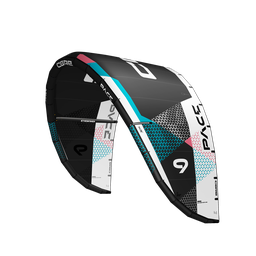
Core Kiteboarding is a German brand with a focused range: the Nexus for freeride, XR and Pace for big air, Section for wave, and Air for light wind. Core states that their recent kites combine CoreTex 2 fabric and ExoTex Dacron. The Air Pro features an Aluula frame.
GlissEvolution's opinion: These are expensive, very well-finished kites that appeal most to advanced riders. Core offers a six-year warranty on parts for certain models; check the product sheet before buying.
Slingshot: the Hood River school
Slingshot was founded in 1999 in Hood River, Oregon, by brothers Jeff and Tony Logosz. The Code covers big air and freeride, the Machine handles big air, and the Ghost and UFO are for foil. The Code NXT V2 is the high-end version of the Code.
GlissEvolution's opinion: If you're torn between freeride and jumping, check out the Code V3 2027. Slingshot presents it as a more accessible Code NXT V2, built with Dacron. Our take on the NXT V2 is in our article on the Code NXT V2.
Kite and Bar Compatibility: Should You Stick to the Same Brand?
A cross-brand bar is only compatible if all parameters match. These include the number of lines, their length and equalization, bar width, V position, connection polarity, depower throw, and the quick release function on a front line. The brand name alone isn't enough to guarantee compatibility.
The simplest choice is always the bar explicitly recommended by the kite manufacturer. Some recent bars claim extended compatibility, but only with a precise configuration. Always consult both the kite manual and the bar manual. If you're in doubt, do not connect the equipment; have the setup checked by an expert.
| Check point | Risks of Incompatibility |
|---|---|
| Bar Width | Steering too fast or too slow |
| V, lengths, and lines adjustment | Modified kite profile or trim |
| Polarity and number of lines | Incorrect connection |
| Safety line travel | Insufficient depower after release |
Line length and bar width must follow the configuration published for the kite. Shorter lines reduce the size of the wind window and the power generated during kite movement. This is not a universal recommendation for a given discipline.
Settings to check on your kite
A poorly adjusted kite steers less effectively and can become less safe. Here's what to check.
The Four Key Adjustments
- Length of the lines: check equalization according to the manufacturer's procedure. A discrepancy can alter the trim and behavior, but the observed symptom alone does not identify the line at fault.
- Bridle and attachment points: Always use the positions detailed in your model's manual. The effect of these points varies significantly by design; never assume a rule from one kite applies to another. Our guide on adjusting your bridles has all the specifics.
- Inflation pressure: Always follow the value indicated on your kite or in its manual. This can vary significantly by model, size, and construction, so a generic range is never a substitute for specific instructions.
- Pre-session check: Inspect your lines, test your quick release, and check the one-pump system and valves. When not riding, keep your kite out of direct sunlight.
Safety, care, and best practices
Make these checks before and after every session.
Before every session
- Check your lines: make sure they are straight, free of knots, and show no signs of wear.
- Test your quick release system: it should activate effortlessly and reconnect easily.
- Inspect the valves and the one-pump system: listen for any hissing or air leaks.
- Verify the prescribed pressure for your kite model. Always monitor your spot for wind conditions and obstacles. Pay attention to the tide and other riders.
On the water and after your session
- Maintain a safety distance from other kitesurfers. Always choose a kite size appropriate for the day's wind conditions.
- Never go out without a kite leash. If you crash, release the bar before you attempt to relaunch.
- Dry your kite in the shade. Store it dry, away from heat, and ensure no sand is in the valves. For more details, check our guide on Maintaining your kitesurf kite.
Sources and limitations of this guide
- Duotone Kiteboarding: choice of bars and lengths of lines
- F-One: LINX BAR configurations and settings
- IKO: how bar safety systems work
- Duotone: choosing kite size based on weight and wind
- IKO: kitesurfer safety equipment
- F-One: brand history
- Slingshot: brand presentation
Wind ranges and pressure settings change with each model. Compatibilities also vary by size and year. The model characteristics we cite reflect manufacturer data published on our product sheets, recorded on 09/25/2026. Keep in mind that ranges and availabilities can change during the season. This guide helps you ask the right questions. It does not replace the manufacturer's manual, professional school training, or your own assessment of on-spot conditions.
Frequently Asked Questions
Which kitesurf kite for beginners?
A freeride kite relaunches easily and forgives steering errors. Examples include the Duotone Evo, Eleveight RS, or F-One Bandit. Avoid big air and freestyle kites until you can ride upwind effortlessly.
What kite size for a 75 kg rider?
There is no universal answer. Use the specific model's wind range chart. Then adjust based on the board, your skill level, gusts, and the spot. The values given for 75 kg by some manufacturers are specific to each kite.
How many kites do you need to cover various conditions?
The number and size difference depend on the spot, your weight, your board, and the specific wind ranges of the models. Start with the kite that matches your most frequent conditions before completing your quiver.
What is the difference between a standard Duotone, SLS, or D/LAB kite?
These constructions are progressively lighter and stiffer. This makes the kite more responsive. The price increases accordingly. For learning, the standard version is sufficient.
Where can I buy a kitesurf kite with expert advice?
At the GlissEvolution store in Pornichet, Tuesday to Saturday (10 AM-1 PM, 3 PM-7 PM), or remotely at 09 62 64 74 77. We help you choose the model and size based on your weight and board, as well as your spot.
Need personalized advice?
The team at our shop will help you choose the right model and size for your body size and local spots, whether you visit us in Pornichet or connect remotely.
View all kitesContact usCall us