Guide: Choosing your first strapless surfkite board
Switching from a twintip to a strapless surfkite unlocks a completely different riding experience. You'll get more glide, a better feel for the wave, and a much more critical need for precise foot placement. The board you pick for your first strapless sessions will largely dictate how much fun you have. This guide breaks down the key factors: length and volume. It also covers shape. We'll then show you how to match those to your skill level, body size, and local spot. Surf kites and twintips are in the Kiteboards section of the shop.
A strapless surfkite board is a directional board, inspired by traditional surfing, that you ride without straps. You stay on the board purely through foot pressure and the kite's traction.
For your first board, focus on volume and length. These features are forgiving of foot placement errors and let you get planing without being overpowered.
In summary
- Length: Look for 5'4 to 6'4 in a strapless board. Longer boards provide more lift in light wind and bigger waves.
- Volume: Aim for 20 to 30 liters. As a beginner, you'll want to choose the higher end of that range.
- Shape: There are two main families: compact and classic.
- Fins: Start with 3 or 4 fins for added stability.
- A classic surfboard isn't designed for kiteboarding; the deck quickly sinks under pressure.
- The exact model's specifications always take precedence over general rules based on feet or liters.
Surfkite vs. Twintip: What's Different?
A twintip is symmetrical, letting you ride in both directions without changing your stance. A surfkite is a directional board: you'll jibe, switch your feet, and learn to read the wave. It's more challenging at first, but far more rewarding once you've nailed the basics. If you're still on the fence, check out our kitesurf twintip guide. This guide focuses exclusively on strapless surfkite.
The Three Deciding Parameters
| Parameter | Typical Range | What It Changes |
|---|---|---|
| Length | 5'4 to 6'4 | Longer boards offer more lift in light wind and big waves. Shorter boards provide better handling in the wave. |
| Volume | 20 to 30 liters | More volume means increased flotation and easier planing, though it comes at the cost of a little speed. |
| Shape | Compact or Classic | This determines the board's true purpose, much more than length alone. |
Two boards with identical volume can behave completely differently. That's why a general rule like "get a board a little smaller than you" doesn't mean much in surfkite.
Compact or Classic Shape?
| Family | What it Looks Like | Who it's For, and its Limitations |
|---|---|---|
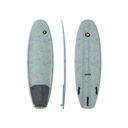
| Compact, also known as Noseless | It is shorter and wider. It is also thicker. Examples include the Duotone Whip, Eleveight Escape, and HB Anti. | Easy to handle and confidence-inspiring for beginners, it reaches its limit when waves exceed 1 to 2 meters. |
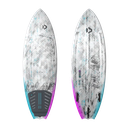
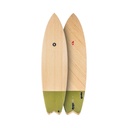
| Classic Shape | Closer to a traditional paddle surfboard. Examples include the Duotone Wam, Duotone Pro Session, Eleveight Curl, and HB Decade. | More versatile in big waves, but more demanding in terms of positioning. |
If you're coming from a twintip, a wider, flatter board will feel familiar and steer much like what you already know. If you're a surfer, a classic outline will immediately resonate with your style.
Details That Change Board Handling
| Component | Key Features |
|---|---|
| Rocker | The longitudinal curve. A flat rocker offers better planing and more speed in turns. A pronounced rocker delivers tighter turns at the top and bottom of the wave. |
| Rails | Thick rails provide more flotation. This helps the board maintain its speed. Thin rails let you carve deeper into the water. This makes turns more incisive. |
| Concave | It channels the flow under the board, changing the ride feel in both chop and waves. |
| Fins | Three or four fins are perfect for your first strapless runs. A four-fin setup adds stability. |
| Construction | Classic PU foam and fiberglass surfboards wear out quickly under kite pressure. Dedicated boards use harder foam and reinforcements. This makes them heavier but much more durable. |
Choosing Based on Your Skill Level
If you're transitioning from a twintip, grab a wider, flatter board. It handles more like what you're used to and gets planing without demanding a surfer's technique. If you already surf, go for a classic shape. You'll quickly find your footing and progress further in the waves from your very first sessions.
A standard PU foam surfboard can work in flat water or small waves, but the deck quickly sags under foot pressure. A classic surfboard does not withstand the constant pull of a kite, especially when going upwind.
Choosing Based on Your Body Size
The heavier you are, the more volume you need to get planing and stay stable at lower speeds. A quad fin setup delivers the flotation and hold you need to find your position in all conditions. Lighter riders, however, will benefit from staying at the lower end of the range: the board responds faster and is easier to position in the wave.
Be careful, though: size, volume, and weight correspondences change from one shape to another and from one model year to another, even within the same range. Always refer to the exact model's chart you're considering, not a general rule.
Choosing Based on Your Spot
| Conditions | What to Aim For |
|---|---|
| Flat sea, chop, or small waves under 1 m, with wind around 15 knots. | A voluminous, wide board with thick rails, a wide tail, and 3 or 4 fins. The planing compensates for the kite's lack of power. |
| Strong wind and big waves. | A thinner board with rocker cuts through chop better and maintains control. |
| Onshore or side-on spot. | More volume and a straighter shape compensate for the difficulty of generating speed with the kite high in the window. |
| Sideshore spot. | The kite works better, so you can go for a thinner, more surf-oriented board with a more pronounced rocker. |
| Heavy swell and light wind, like the Landes region. | This isn't the same choice as moderate swell with sustained wind, like the Mediterranean. The reference spot matters as much as your skill level. |
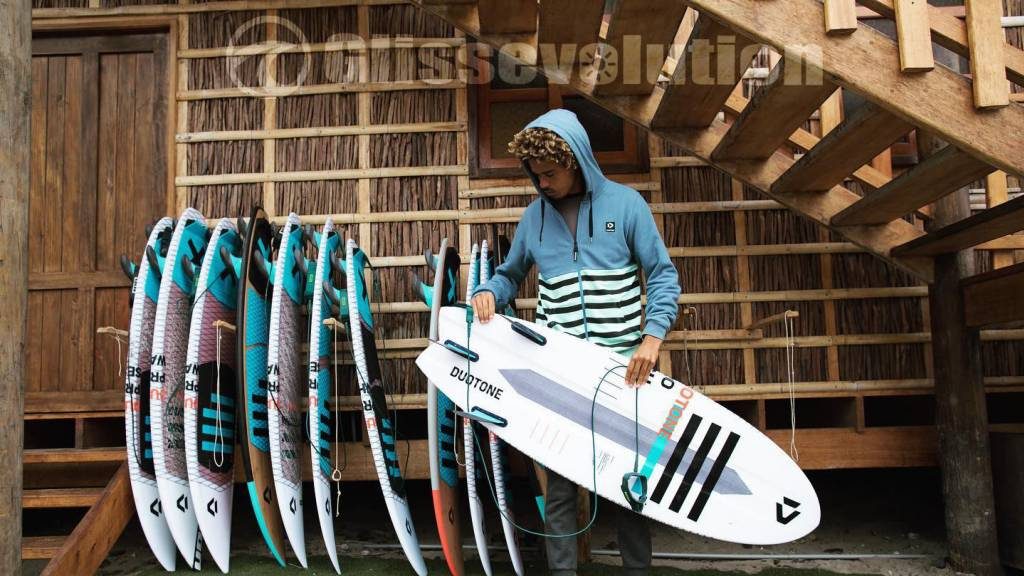
Spot-by-spot benchmarks shared by GlissEvolution ambassador Arnaud Chasset.
Our 2025 to 2027 Selection
The models below are the most recent available in store at the time of this update.
View all in-stock surfkites, and find the models mentioned in this guide at the bottom of the page, with their current prices.
What Budget Should You Plan For?
For new surfkites we have in stock at the time of this update, prices range from €1,049 to €1,399 depending on the shape and construction. D/LAB and carbon constructions are at the top of this range, while SLS models and simpler constructions are at the bottom.
Going with second-hand gear lets you start at a lower price point. Just make sure to check the condition of the deck, rails, and inserts. We inspect every directional board before it goes back on sale; you can see our selection in our second-hand kitesurf gear.
Common Mistakes to Avoid
- Choosing a directional board that's too small just because it looks good: without enough volume, you won't get planing, and your progression will stall.
- Using a standard, unreinforced surf board: the deck will dent after just a few sessions.
- Choosing based solely on length: the shape and the model's intended use matter more.
- Forgetting the fins: a three or four fin configuration changes the stability of your first runs.
- Ignoring your spot: a directional board that's perfect for Les Landes won't be suitable for the Mediterranean.
Sources and limitations of these guidelines
This guide draws on our field experience and manufacturer guidelines, especially Duotone for rider body size, volume, and weight ratios, and F-One for the impact of rocker and outline. Length and volume offer only an initial guide. Your weight, wind conditions, chop, shape, and construction can all influence your final choice. Ranges evolve every year, so always check the product sheet for the specific model and vintage you're considering.
FAQ: Strapless directional board
What size strapless directional board should you choose to start?
Strapless directional boards typically range from 5'4 to 6'4, with 20 to 30 liters of volume. For your first directional board, aim for the higher end of the volume range, then confirm with the weight and size chart for the exact model you're considering.
Is volume enough to choose your board?
No. Volume should be considered alongside length, width, rocker, outline, and construction. Two directional boards with similar volumes can behave very differently.
Compact shape or classic shape to start?
The compact shape makes it easier to get planing and improves handling. The classic outline prioritizes riding in the wave. If you're coming from twintip, the compact will feel more reassuring. If you already surf, the classic will immediately feel familiar.
Can you use a classic surfboard for strapless kitesurfing?
It's possible on flat water or in small waves, but its construction isn't designed for kite use. The deck sinks under pressure, and the directional board wears out quickly. Dedicated directional boards include reinforcements in pressure areas and on the rails.
How many fins to start strapless?
Three or four. Four fins provide a bit more perceived buoyancy and stability, which helps you find your stance during your first sessions.
Do you need pads, wax, or straps?
This is a complete equipment choice, covered in our dedicated guide: straps or strapless, pads or wax.
We'll help you choose your first directional board
No need to live in the region. Call us or make an appointment with a team rider, by phone or video call. We'll determine the length, volume, and shape best suited to your body size, skill level, and usual spot.
Make an appointment Call us View surfkitesGlissEvolution editorial guide. We sell and ride these directional boards daily. Prices and availability are indicative and subject to change.