Should you switch from wing to parawing? What changes, for whom, at what price
Updated October 15, 2026 · by GlissEvolution · 12 min read
Every week, we get the same question in two versions at the shop. Beginners wonder which to choose to get started. Experienced wingfoilers, who have been flying for two seasons, ask if a parawing will replace their current wing. The answer isn't always the same. Here, we break down the real differences, based on what we sell in Pornichet as of October 15, 2026, and the rider profile each option suits best.
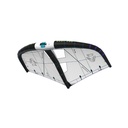
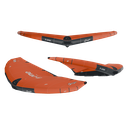
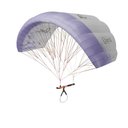
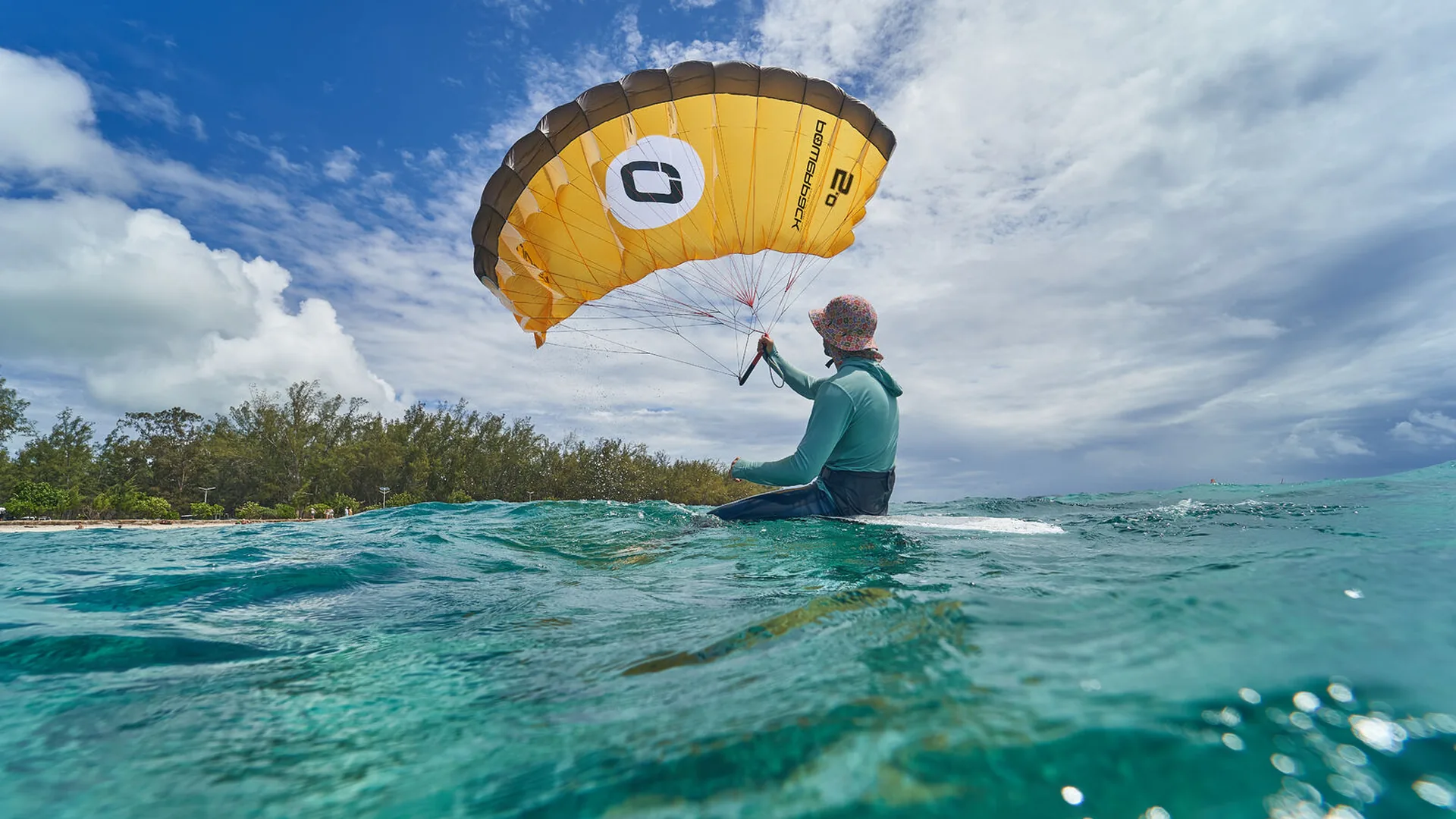
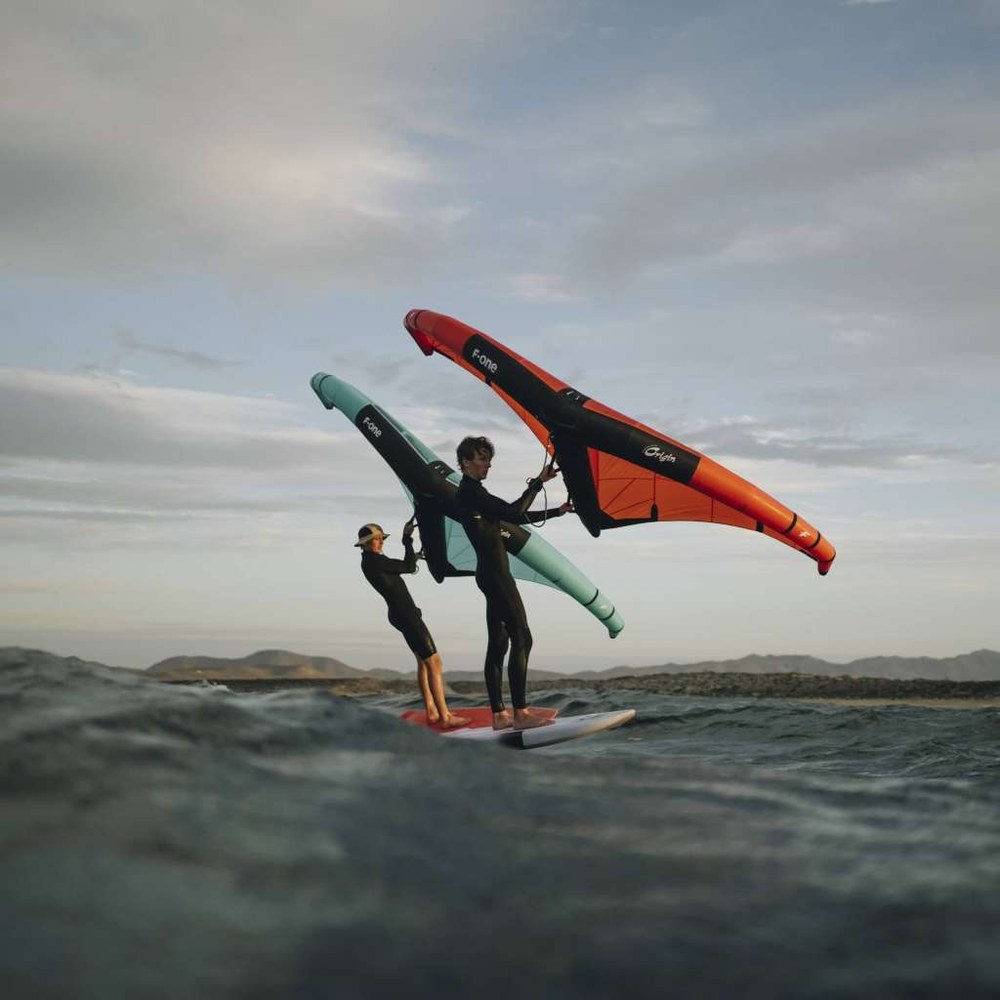
A wing is an inflatable wing you hold at arm's length. It provides lift, pulls you along, and acts as both support and a float. A parawing (or pocket wing) has no strut or pump. It's a flexible sail on short lines with a small bar. Once you're up on the foil, you can fold it into a pocket for hands-free gliding. Both are ridden on a foil board. Only the wing allows you to learn from scratch.
Quick Guidelines
- If you don't know how to foil yet, the wing is the clear choice. You can learn the parawing later; it won't replace the initial foil learning curve.
- If you're already flying and constantly dreaming of swell, downwind runs, or riding waves with the wing released, then the parawing is for you. You can even keep your current board and foil to start.
- At 4 m², an F-One Quest parawing weighs 0.65 kg, including the bar. In contrast, an F-One Strike V6 wing weighs 2.25 kg. With no pump and no strut, the parawing fits easily into a belt pocket.
- On paper, the wind ranges appear similar (Strike V6 5 m²: 14 to 25 knots; Quest 5 m²: 13 to 21 knots). On the water, the wing maintains a power reserve. The parawing simply doesn't have this.
- As of October 15, the budget for the wing alone ranges from €449 to €2,299 in stock. Parawings range from €575 to €1,729 in stock. The rest of your gear remains the same.
Table of Contents
- Wing vs. Parawing: What Really Changes
- New to Foiling? Go for the Wing, No Question.
- Already Flying? When the Parawing Becomes Interesting.
- Wind Range and Power
- Weight, Bulk, and Inflation
- Safety: What the Wing Offers, What the Parawing Takes Away
- The Budget: Wing Only vs. Complete Gear
- Can You Keep the Same Board and Foil?
- Things to Consider Before Choosing
Wing vs. Parawing: What Really Changes
Both wings will get a foil flying with the wind. Everything else differs: how you hold the wing, what it does once in flight, and what happens when things go wrong. The table below summarizes what we'll elaborate on, using figures from two F-One wings of the same size for a fair comparison.
| Criterion | Wing (F-One Strike V6 2026) | Parawing (F-One Quest 2026) |
|---|---|---|
| Handling | Handles or boom, the wing always in your hands | Short bar and lines, the wing folds in flight |
| Weight in 4 m² | 2.25 kg | 0.65 kg including bar |
| Wind range for 5 m² | 14 to 25 knots | 13 to 21 knots |
| Wind range for 6 m² | 10 to 20 knots | 11 to 19 knots |
| Inflation | The inflatable Leading Edge and strut require a pump. | None, the wing simply unfolds. |
| Learning | From scratch, expect 3 to 5 sessions to get flying. | You need to already be comfortable flying on foil, then allow 2 or 3 adaptation sessions. |
| When you lose speed. | You lean on the wing, and it brings you back. | You have to relaunch the kite and pump again. |
| Jumps | Yes | No |
| Waves and downwind with the kite released. | Possible in freefly, the kite stays in hand. | That's its purpose: nothing in your hands. |
| Catalog price for the 4 m². | €1,189 | €1,049 |
New to foil? Go with the wing, no hesitation.
This is the crucial point everyone overlooks when comparing the two in videos. The parawing doesn't provide lift. It pulls on take-off, less than a wing. Your legs are responsible for getting the foil up. Then it stows away, leaving you alone on your foil. No manufacturer sells it to non-foilers: Flysurfer's "beginner to pro" claim for the POW 2 refers to a parawing beginner who already knows how to fly. Our guide How to start parawing? lists the four essential skills you need before your first session. All of these are developed through wing, kitefoil, or surf foil.
The wing, however, is designed for learning from scratch. With a forgiving 5 to 6 m² wing, a board of at least 120 liters, and a large Front Wing foil, you can expect 3 to 5 sessions to stand up and start flying in 12 to 18 knots. The wing acts as a float when kneeling. It provides support when standing. It serves as an emergency engine if the foil drops. Our beginner's guide to wingfoiling details the steps and complete set options. These range from €1,959 to €2,498 as of October 5, 2026.
If you're torn between the two for starting, the answer is clear: wing first, then parawing in a season or two. Every hour of wing flying will benefit your parawing skills.
Already flying? Here's when parawing becomes interesting.
Riders who make the switch typically have one or two seasons of wing experience, can jibe, and already surf in freefly with the wing neutralized in one hand. They're looking to refine their surfing even further. For them, parawing transforms the session. They ride upwind with the wing, fold it, and then ride the swell or surf waves with nothing in their hands, just like a surf foiler who doesn't need a boat or a paddle for take-off. Downwinders and surf foilers are drawn to it for the same reason.
It doesn't necessarily replace the wing. Yann Rifflet, in his review of the Duotone Paradox SLS on our blog, uses the same board with a parawing on swell days and a wing when the wind is very light or the wave is good. Hydro Gav reaches the same conclusion with the Armstrong Midlength MKII: a board that excels with a parawing almost always works well with a wing. This is what we see in the shop: one board, two wings, and the choice is made each morning based on the wind and sea conditions.
There are three scenarios where parawing offers no advantage: if you want to jump (parawing doesn't jump), if you're riding on flat water with no swell to ride down (a folded wing is useless if nothing is carrying you), or if your spot frequently has winds below 12 knots (see the next section).
Wind range and power
Comparing F-One specifications, the wind range for both almost overlaps: 14 to 25 knots for a 5 m² Strike V6, and 13 to 21 knots for a 5 m² Quest. For 6 m², it's 10 to 20 knots versus 11 to 19 knots. One might conclude that both wings deliver similar traction. On the water, it's a different story. Manufacturers agree: Duotone designed a dedicated board, the Paradox SLS, precisely because, by their own admission, the parawing provides less power than a wing. This requires take-off with minimal traction.
The key difference lies in reserve power. You can pump a wing with your arms, sheet it in, and brace it against the wind. This allows you to demand extra power when the foil drops. A parawing delivers a fixed amount of pull. The foil must do the rest. As a result, at the bottom of the wind range, a 4 m² parawing will have you pumping from 13 or 14 knots. Below 12 knots, you'll need a large body size, a long board, and a high-lift foil. With a wing, 10 to 12 knots are manageable with a 5 to 6 m² wing and a voluminous board.
For sizes, both disciplines align: for riders between 70 and 85 kg in 15 to 25 knots, plan on a 4 m² parawing and a 4 to 5 m² wings. Detailed model information is available in our parawing comparison and the wing guide.
Weight, bulk, inflation.
This is where the difference is most striking. It's confirmed on the scale. A 4 m² F-One Quest weighs 0.52 kg bare and 0.65 kg with its bar. A 4 m² F-One Strike V6 weighs 2.25 kg, and 2.58 kg for the 5 m². In 2 m², the Quest drops to 0.46 kg including the bar. A folded parawing fits into the pocket of a dedicated belt, like the Ozone Stash Belt or the Manera Pocket Wing Belt. This is its main advantage: once stowed, it won't interfere with pumping or surfing.
No pump is needed either. A wing is inflated on the beach, both the Leading Edge and strut, using a pump from our store, priced between 54 and €74. A parawing unfolds on the sand, with color-coded lines. It is flown before you enter the water. For packing away, it's the same story: a deflated wing fits in its travel bag. A parawing stows in its belt pocket.
There is a trade-off. The lines can tangle, especially after a fall during your first sessions, as our ambassador Damien noted with the Ozone PowerPack. A coiled board leash, the kind used for winging, gets caught in the lines as soon as you fold the wing. We recommend a straight retractable leash, such as the Ride Engine Tractable Reel Leash.
Safety: what the wing provides, and what the parawing takes away.
With a wing, your wing acts as both a float and a support. If you lose speed, you can lean on it to restart on your knees or by moving. When you're tired, you can sheet in the wing and ride flat on your board back to shore. Even if your foil breaks, the wing will still get you back.
When your parawing is folded, you have nothing in your hands. If you can't relaunch your wing, your session ends with a swim. A wing relaunched in dropped wind won't get you anywhere. That's why you need to be an independent foiler: know how to take off cleanly, fall far from the foil, get back on your board in deep water, and read the wind. Navigation rules apply to a folded wing just as they do to an open one. Keep your distance from swimmers and kiters, lines included.
Always wear a helmet with either. With a parawing, there's the added risk of the wing unexpectedly reopening while your foil is coming up.
Budget: wing only vs. complete kit
For wings alone, the price ranges largely overlap. As of October 15, 2026, in-stock wings range from €449 (Core XC 2024) to €2,299. In-stock parawings range from €575 (Ozone Pocket Rocket 2025 at -40%) to €1,729. The real difference is in the surrounding gear you'll need.
| Item | Wing | Parawing |
|---|---|---|
| Kite | €449 to €2,299 in stock; top all-rounders start from €989 (F-One Strike V6) and €999 (Duotone Unit 2027) | €575 to €1,729 in stock; single-skin wings for beginners from €685 (ALTIS Focus) to €1,199 |
| Board | Beginner: your weight + 30 to 50 L, starting from €380 in stock | Start with your wing foil board. Then, consider a midlength board from your weight to your weight + 15 L, ranging from €1,349 to €2,999. |
| Foil | A large Front Wing is best for learning. Complete kits start from €1,339 (on order as of October 15). | Your wing foil, ideally with a high aspect ratio Front Wing. |
| Pump | €54 to €74 | None |
| Leash | Wing leash and board leash, coiled is fine. | Straight retractable board leash, €89 to €129. No wing leash needed. |
| Harness | Optional | Belt with a pocket to store the wing, €119.99 to €179, essential once you start folding it in flight. |
| New complete set to get started | €1,959 to €2,498 (wing, board, and foil) | No complete set needed: just the wing if you're coming from wingfoiling, €694 to €1,258 with the belt. |
Here's the simple breakdown. For a beginner, a wing costs the same as a complete set. For an equipped wingfoiler, a parawing costs about the same as a wing, and often less than a second wing. These are our current catalog prices, including sales. They change with every sale.
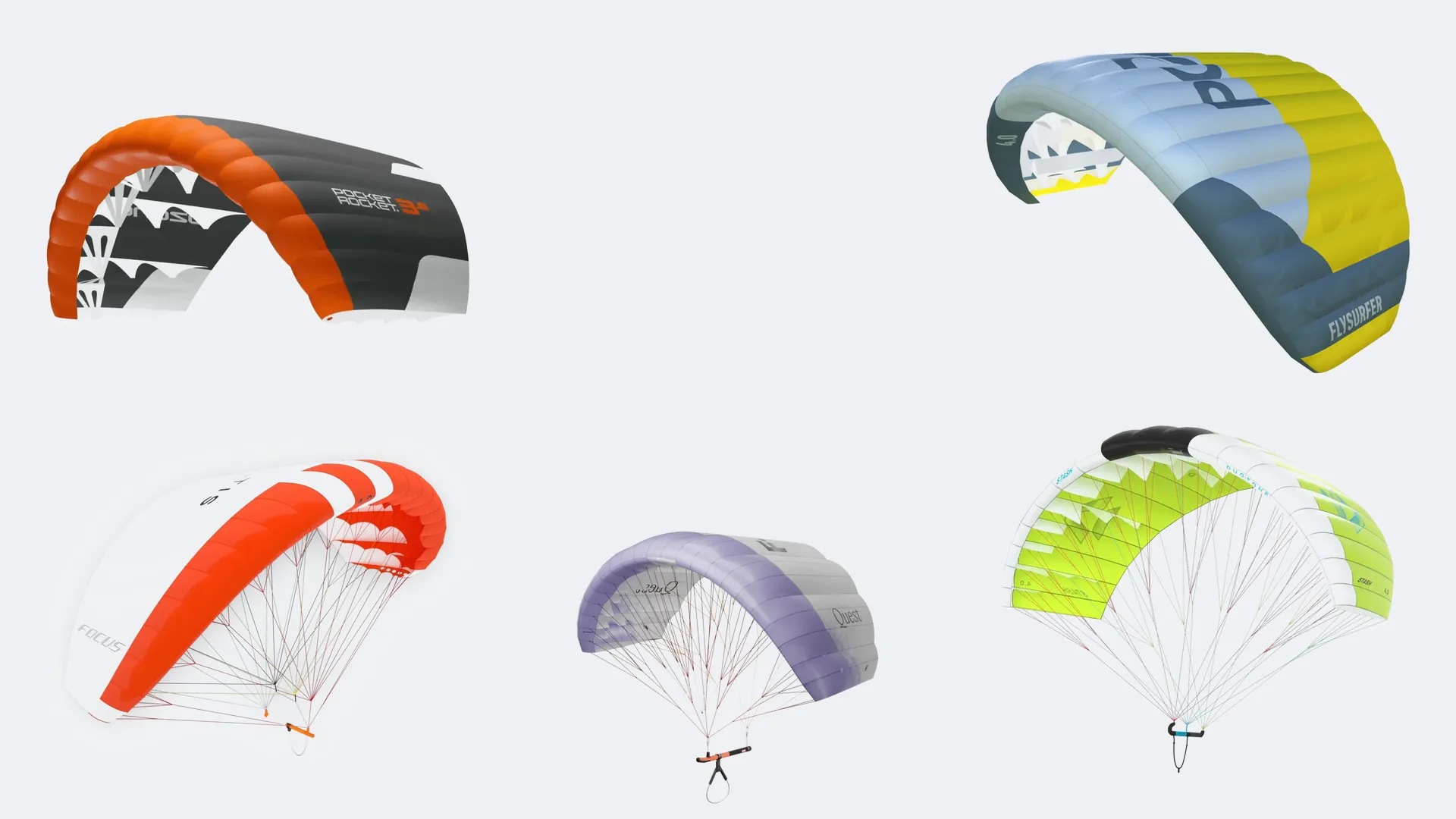
Our selection: wing and parawing
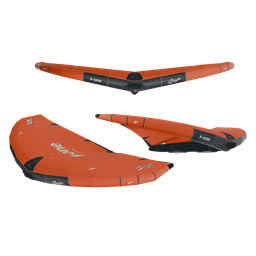 F-One Origin V2
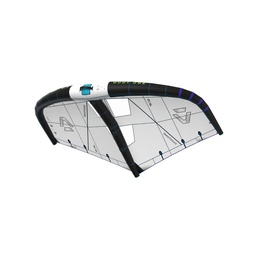 Duotone Unit 2027
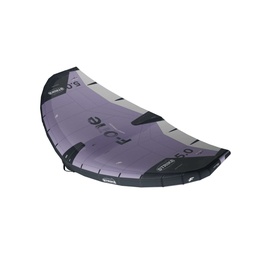 F-One Strike V6 2026
 Ozone Pocket Rocket V2
 F-One Quest 2026
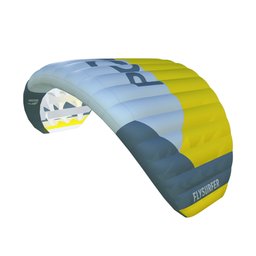 Flysurfer POW 2 2026
Can you use the same board and foil?
Yes, and that's our advice for everyone coming from wingfoiling. Your wing foil board will work for learning parawing if it has enough volume. Ideally, you'll want a light wind board, like a midlength. Your wing foil will also work, provided its Front Wing generates lift at low speeds. It is responsible for all the glide once the parawing is in your pocket. When you're ready for a dedicated long, narrow board, our guide Which board to choose for parawing? compares midlengths, downwind boards, and surfboards from our shop.
It works the other way too. Duotone announced its Skybrid SLS 2027 for wing, parawing, and Foil Assist. It features foil tracks long enough to move the foil forward for parawing and back for wing. One board, two wings, two riding styles.
Things to consider before choosing
The wind ranges cited are F-One's for its two wings, for a rider whose weight isn't specified. Other brands publish wider or narrower ranges for the same size. Always compare two specific models, not two families.
Parawing is a new discipline. The bars, bridles, and fabrics change from one year to the next (Ozone revised the Pocket Rocket V2 bar, F-One added battens to the Frigate V2). You can find previous vintages at -40%. They fly just as well as last year's. Wing ranges have been stable for several seasons. Our second-hand wing foil section offers a dozen checked items, from €250 to €1,149 as of October 15.
Finally, no one needs to make a permanent choice. Most parawingers we equip keep their wing. They choose one or the other based on the day's wind and sea conditions.
FAQ: wing or parawing
Can you learn to foil directly with a parawing?
No. A parawing doesn't provide lift and folds in flight. You need to already know how to take off, fly on both tacks, and get back on your board in deep water. Learn to foil with a wing, kitefoil, or surf foil first. Then transition to a parawing in just two or three adaptation sessions.
What's the weight difference between a wing and a parawing?
At 4 m², an F-One Quest weighs 0.65 kg with its bar. An F-One Strike V6 comes in at 2.25 kg, according to F-One specifications. A folded parawing fits easily into a belt pocket. In contrast, a wing requires inflation and stores in a travel bag.
Does a parawing pull as much as a wing?
No. While the published wind ranges overlap (Strike V6 5 m²: 14 to 25 knots; Quest 5 m²: 13 to 21), a wing can be pumped and sheeted in for extra power. A parawing, however, delivers its set traction. The foil handles the rest. Duotone confirms that a parawing develops less power than a wing.
How much does it cost to switch from wing to parawing?
The price of a wing ranges from €575 to €1,729 in stock as of October 15, 2026. You'll also need a straight coiled board leash (€89 to €129). For in-flight folding, add a pocket belt (€119.99 to €179). Your existing wing foil board and foil will work fine to start.
Can you jump with a parawing?
No, parawings are not designed for jumping. Parawing boards are not jumping boards. For jumps and freestyle, stick with a wing.
Do you need a different board for parawing?
Not initially. Your current wing foil board will work if it has enough volume. A midlength light wind board is ideal. Later, consider a dedicated board, longer and narrower. Choose one between your weight and your weight + 15 L. Prices range from €1,349 to €2,999 in our department.
Still undecided?
Tell us your foil level, your spot, and what you want to do on the water. We'll help you determine if a wing or a parawing is right for you, and which specific model.
View parawing section View wings Call us
Sources and limitations: weights and wind ranges are taken from F-One manufacturer specifications for the Strike V6 2026 and the Quest 2026 as listed on our product sheets; on-water behavior is derived from tests published on this blog (Yann Rifflet on the Paradox SLS, Hydro Gav on the Midlength MKII, Damien on the Ozone PowerPack) and the Duotone Paradox SLS product sheet; learning benchmarks for wing are from our beginner's guide to wingfoiling; catalog prices, sale, and GlissEvolution stock were recorded on 10/15/2026 (wing packs on 10/5/2026). Wind ranges depend on rider weight, board, and foil. Availability changes quickly.