Which board to choose for parawing? Midlength, downwind, or wing foil board
Last updated October 15, 2026 · by GlissEvolution · 14 min read
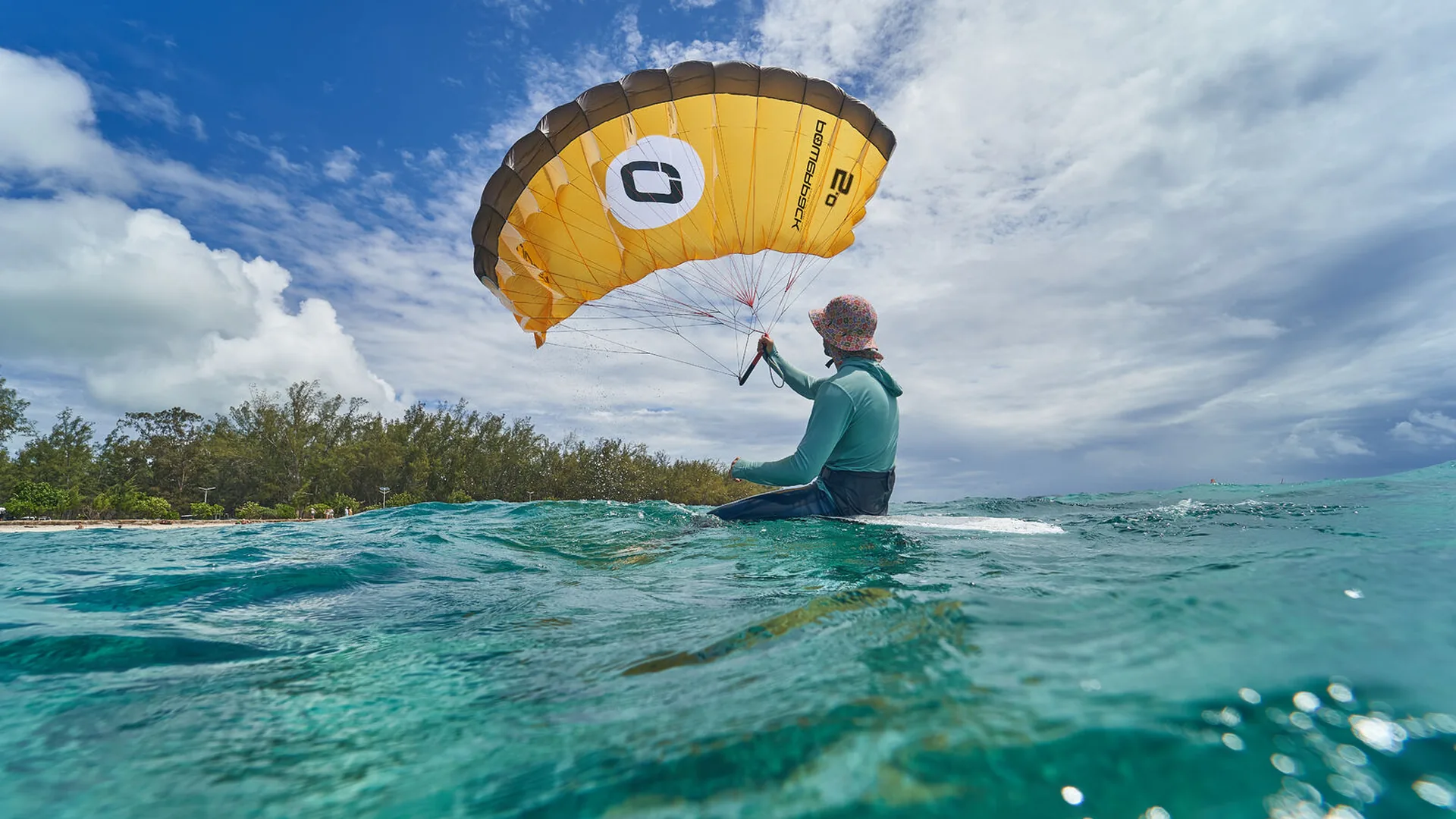
When parawing, your board is key to a successful take-off. A 4 m² wing pulls less than a wing, and once it's packed away, it provides no pull at all. That's why your board, paired with the foil, needs to get you flying early and pumping far. Here's how to choose the perfect one from the ranges we stock at our Pornichet shop, with models in this guide priced from €1,349 to €2,999 as of October 15, 2026.
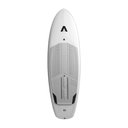
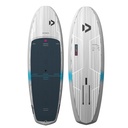
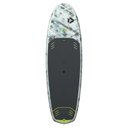
A parawing board is a foil board that's longer and narrower than a classic wing foil board, with its volume concentrated towards the nose. This design allows it to glide early on the water and take off with minimal traction. It also remains stable when the wing is stowed. Manufacturers refer to these as midlength (Armstrong, Duotone, F-One), downwind (F-One, Duotone), or simply parawing boards at Slingshot. These versatile boards are also perfect for wing freefly, surf foil, and Foil Assist setups.
Quick Guidelines
- For your initial sessions, your light wind midlength board is ideal, if you already own one. A compact wing board with at least your weight + 10 L of volume can also work for learning, though it will be more challenging. Focus on mastering the basics with what you have, then upgrade your board later.
- The ideal parawing board is long (6'0 to 7'0 for riders weighing 70 to 90 kg) and narrow (48 to 54 cm, or 19 to 21.5"), but not necessarily high in volume.
- For midlength or downwind boards, aim for a volume between your body weight and your body weight + 15 L. If you're still learning parawing, opt for the higher end of the manufacturer's recommended range.
- We stock three main board families: versatile midlength (Duotone Skybrid, Armstrong Midlength), long downwind (F-One Rocket Free Downwind), and narrow surf (F-One Rocket Free Surf, Duotone Paradox, Slingshot Project Drag).
- Don't miss out on our current deal: the Duotone Skybrid SLS 2026, available in 80, 100, 115, and 130 L. Get yours for €1,574 to €1,609 instead of €2,249 to €2,299, a massive 30% discount!
Table of Contents
- Is your wing board sufficient to get started?
- Why parawing boards are long and narrow
- What volume and length should you choose based on your weight?
- Midlength, downwind, or surf: three distinct families
- A comparison of our in stock parawing boards
- Which board suits your rider profile?
- What about the foil?
- Things to Consider Before Buying
Is your current wing board enough to start parawing?
Yes, in most cases. Parawing starts with you kneeling on the board, wing above your head, then you stand up and pump. If you have a light wind midlength board, it's perfect for beginners. A compact, high-volume wing board can also work, but take-off will be more challenging. Either way, stick with your current board for the first two or three sessions. This will give you time to learn how to fold and relaunch the wing. Our guide How to start parawing? provides detailed steps.
Yann Rifflet, whose Duotone Paradox SLS test is summarized on our blog, took his first parawing runs in Dakhla on a Skybrid 80 L. This midlength board, primarily designed by Duotone for winging, worked well, though take-off was trickier in light wind. The difference is even more noticeable with a compact, short, and wide wing board. While it takes off well when the wing has power, if the wind drops or the sea gets rough, you'll need to pump longer. A parawing simply won't give you the extra power an inflatable wing would.
It's time to upgrade your board when you consistently find yourself in these situations: riding in under 15 knots with a 4 m² wing, wanting to do downwinders and link bumps with the wing packed away, or taking off in chop and experiencing nose-diving with your current wing board.
Why parawing boards are long and narrow
Every manufacturer in our range echoes the same sentiment, albeit in their own words. F-One suggests pairing their pocket wings with longer, narrower boards for easier take-offs. Duotone recognized that parawing generates less power than winging. This necessitated a board capable of early take-offs with minimal traction. The Paradox SLS was specifically designed for parawing. Hydro Gav, who reviewed the Armstrong Midlength MKII, explains the mechanics: a longer outline, an efficient hull shape, and volume distributed towards the nose facilitate underpowered take-offs. You can lean on the nose, let the board glide, and employ a technique similar to SUP downwinding.
Three key differences set parawing boards apart from wing boards.
- Length. A classic 90 to 95 L wing board, like the Duotone Sky Style, F-One Rocket Wing ASC, or Armstrong Wing FG, measures 5'4-inch to 5'5-inch (163 to 165 cm). In contrast, a parawing board of the same volume spans 5'11-inch to 6'8-inch (180 to 203 cm). This increased waterline translates to earlier glide and more effective pumping.
- Width. Parawing boards typically measure 48 to 54 cm (19 to 21.5"), while a Duotone Sky Style 95 L is 64 cm (25.25"). This narrower profile reduces wetted surface and drag. It allows the nose to clear quickly during touchdowns. The trade-off, as Yann Rifflet notes, is less stability at rest; the Paradox, for example, demands more balance on your knees than the Skybrid.
- Volume towards the nose. This design allows you to lean on the nose during take-off without sinking it. Armstrong, Duotone, and F-One all feature volume distribution specifically calibrated for this purpose.
To illustrate the difference, here are the dimensions of several boards around 85 to 95 L, as published by their manufacturers.
| Board | Volume | Length | Width | Family |
|---|---|---|---|---|
| Duotone Skybrid SLS 2027 | 90 L | 5'11-inch (180 cm) | 54.5 cm (21.5") | Versatile wing, also announced for parawing |
| Duotone Paradox SLS 2026 | 90 L | 6'2-inch (188 cm) | 53 cm (20.9") | Parawing, surf outline |
| Armstrong Midlength MKII | 85 L | 6'4-inch (193 cm) | 54.3 cm (21.4") | Versatile midlength |
| F-One Rocket Free Surf 2026 | 85 L | 6'8 (203 cm) | 48.9 cm (19.25") | Surf, pocket wing |
| F-One Rocket Free Downwind 2026 | 95 L | 6'8 (203 cm) | 49.5 cm (19.5") | Downwind |
| Slingshot Project Drag Board | 95 L | 6'4-inch (193 cm) | 54.6 cm (21.5") | Parawing, downwind |
What volume and length are right for your weight?
When you're learning to wingfoil, aim for a wing foil board with your body weight plus 30 to 50 L of volume. Intermediate riders can drop down to their body weight plus 10 to 20 L. Parawing, however, follows a different logic, as the board's length contributes significantly to its float, effectively replacing some of the volume. The recommendations are consistent across the board: our product sheet for the Rocket Free Downwind suggests "a volume close to or greater than your weight." Duotone recommends the Paradox 75 L for riders under 85 kg and the 90 L for those under 100 kg. For the Skybrid SLS 2027, we advise choosing the upper end of Duotone's suggested weight range for parawing. For example, Yann Rifflet, who weighs 75 kg, rides the Paradox 75 L for both parawing and wingfoiling.
Our in-store guideline for a midlength or downwind board is to choose a volume from your body weight up to your body weight plus 15 L. If you're still new to parawing, or if your local spot often sees winds under 15 knots, opt for the higher end of this range. If you prefer a classic, shorter wing foil board, you'll need more volume: at least your body weight plus 10 to 20 L.
| Rider weight | Midlength or downwind | Examples in stock | Kept wing foil board |
|---|---|---|---|
| 55 to 65 kg | 60 to 75 L, 5'5-inch to 6'0 | Paradox 60 L, Skybrid SLS 2027 60 or 70 L, Rocket Free Surf 63 or 71 L, Midlength MKII 65 L | 70 to 85 L |
| 65 to 80 kg | 75 to 90 L, 5'9-inch to 6'4 | Paradox 75 L, Skybrid SLS 2027 80 L, Rocket Free Downwind 85 L, Rocket Free Surf 79 L, Midlength MKII 85 L | 85 to 100 L |
| 80 to 95 kg | 90 to 105 L, 6'1-inch to 7'0 | Paradox 90 L, Skybrid SLS 2027 90 or 100 L, Rocket Free Downwind 95 or 104 L, Midlength MKII 100 L, Project Drag 95 L | 100 to 115 L |
| 95 kg and up | 105 to 125 L, 6'7-inch to 7'8 | Paradox 105 L, Rocket Free Downwind 114 or 124 L, Skybrid SLS 2026 115 or 130 L, Project Drag 114 L | 115 L and up |
These ranges assume you're using a buoyant foil, typically with a Front Wing around 900 to 1.200 cm² for riders weighing 70 to 90 kg. If you're riding with a smaller surf foil wing, consider going up one size in board volume.
Midlength, Downwind, or Surf: Three Board Families
Our parawing boards category features three distinct designs. Each is for a different purpose.
The Versatile Midlength: Your First Parawing Board
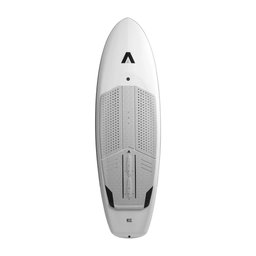
These boards bridge the gap between compact wing foil boards and dedicated downwind boards. You'll find models like the Duotone Skybrid (2026, SLS 2027, D/LAB 2027) and the Armstrong Midlength MKII in this versatile family. They offer early take-off and remain stable when you're stopped, thanks to their generous nose width. They perform equally well for both winging and parawing. Duotone describes the Skybrid SLS as primarily a wing foil board that adapts beautifully to parawing. It features extended foil rails to position the foil further forward for parawing. Hydro Gav rates the Midlength MKII among the top production parawing boards. He notes that an excellent parawing board almost always makes an excellent wing foil board. If you're looking for one board to do it all, this is your category.
The Downwind: Long for Early Take-Off and Distance
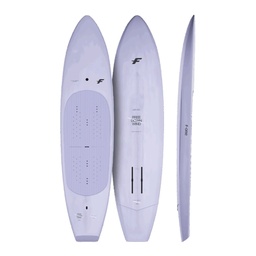
Take the F-One Rocket Free Downwind, available in bambou or carbone. Ranging from 6'4 to 7'8, it's built for early planing and maintaining speed in a straight line on the swell, even with your wing stowed. Kevin put it to the test in Dakhla for our channel's video review. F-One's product sheet highlights its significantly greater stability compared to the Rocket Free Surf, with increased volume and thickness for easy, consistent take-offs, even in chop. The trade-off? It's slower to turn and can be bulky on a car roof. This is the ideal board for parawingers focused on downwind runs and light wind conditions. It's our top recommendation if you're transitioning from SUP foil, as it accommodates a paddle.
The Surf: Narrow for Agile Turning
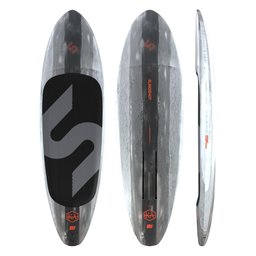
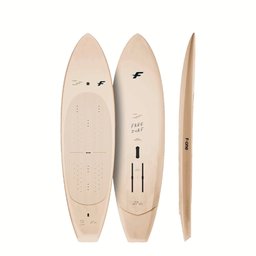
Check out the F-One Rocket Free Surf and Duotone Paradox SLS. These boards feature surf foil board outlines, extended just enough for efficient take-off with a pocket wing. F-One positions the Rocket Free Surf for carving in prone, pocket wing, and K-Wing, targeting intermediate to expert riders. They direct beginners to the Free Downwind. The Paradox takes specialization even further. It features a pointed nose, step tail, flat rocker, and weighs just 4.5 kg in the 75 L version. Yann Rifflet's test showed it takes off earlier and pumps better than the Skybrid 80 L, despite having 5 L less volume. However, it demands more balance when stopped and only includes a single front strap insert. Slingshot's parawing board, the Slingshot Project Drag Board, competes in this same arena. It offers six volumes from 50 to 114 L. All are designed for aggressive turns rather than pure take-off performance, according to Slingshot.
| Family | What It Changes | Who is it for? | Models in Stock |
|---|---|---|---|
| Versatile midlength | Early take-off, stable when stopped, also works for winging | Your first parawing board, one board for everything | Duotone Skybrid SLS 2027, Skybrid 2026, Skybrid SLS 2026 (sale), Skybrid D/LAB 2027, Armstrong Midlength MKII |
| Downwind | Straight-line glide, take-off in light wind and chop | Downwind, light wind, riders coming from SUP foil | F-One Rocket Free Downwind 2026 (bamboo, carbon) |
| Surf | Turns short, lightweight, requires balance | Advanced parawingers, waves and freefly | Duotone Paradox SLS 2026, F-One Rocket Free Surf 2026 (bamboo, carbon), Slingshot Project Drag Board |
Parawing Boards in Stock, Compared
Ten models, four brands. Rider weights, volumes, and programs come from the manufacturer specifications on our product pages. Prices are our catalog prices per size as of October 15, 2026, including sale for the Skybrid SLS 2026. Sizes in stock today are specified; the rest are by order.
| Model | Sizes | In stock on 10/15 | Manufacturer's program | Price | Test |
|---|---|---|---|---|---|
| Duotone Skybrid SLS 2027 | 60 to 100 L (5), 45 to 110 kg | 80 L, 90 L | Wing foil, parawing, Foil Assist | €2,199 to €2,299 | Not yet |
| Duotone Skybrid SLS 2026 | 45 to 130 L (8) | 80, 100, 115, 130 L | All-around wing foil | €1,434 to €1,609 (sale) | Not yet |
| Duotone Skybrid 2026 | 80 to 130 L (5) | 80 L | Freeride, freefly, parawing | €1,649 to €1,799 | Not yet |
| Duotone Skybrid D/LAB 2027 | 60 to 100 L (5), 3.4 to 4.1 kg | On order | Lightwind, freefly, downwind parawing | €2,999 | Kevin's Presentation (video) |
| Duotone Paradox SLS 2026 | 45 to 105 L (5), less than 55 to 115 kg | On order | Parawing downwind, wing freefly, Foil Assist, prone | €1,849 to €2,099 | Yann Rifflet |
| F-One Rocket Free Downwind 2026 | 85 to 124 L (5), 55 to 120 kg | 85, 95, 104 L | Downwind, pocket wing, K-Wing, SUP foil | €1,749 to €1,969 | Kevin (video) |
| F-One Rocket Free Downwind Carbon 2026 | 85 to 124 L (5), approximately 300 g less | 85 L | Downwind, pocket wing, K-Wing, SUP foil, Foil Assist | €2,179 to €2,309 | Not yet |
| F-One Rocket Free Surf 2026 | 47 to 91 L (8), 50 to 110 kg | 59, 71, 79 L | Prone surf foil, pocket wing, K-Wing, Foil Assist | €1,349 to €1,599 | Not yet |
| Armstrong Midlength MKII | 38 to 130 L (9), 3.65 kg in 38 L | 85 L, 100 L | Wing foil, prone, Foil Assist, SUP foil | €2,249 to €2,649 | Hydro Gav |
| Slingshot Project Drag Board | 50 to 114 L (6), rails or Tuttle | 95 L rails | Parawing, wing, downwind | €1,799 to €1,899 | Not yet |
Two boards from our lineup aren't listed in the table. The Rocket Free Surf Carbon 2026 is the carbon construction version of the Free Surf, ranging from €1,989 to €2,156, available by special order. The Armstrong Midlength FG 2025, the original version, is still available on sale from €1,217 to €1,609. Hydro Gav already considers it a huge success. The MKII offers a lighter feel and more forgiving touchdowns.
October 15th's Hot Deal: The Skybrid SLS 2026. Duotone updated the model year, but not the mission. The 2027 maintains the same intermediate board performance with more pronounced rail bevels. The 2026 is currently in stock in 80, 100, 115, and 130 L, priced at €1,574 (€1,609 for the 130 L) instead of €2,249 and €2,299. That's a 30% discount and €725 less than the 80 L Skybrid SLS 2027. For your first parawing board that will also pull double duty for winging, this is the best deal in the shop, while supplies last.
Our Top Picks
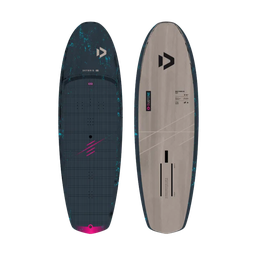 Duotone Skybrid SLS 2026
 Duotone Skybrid SLS 2027
 F-One Rocket Free Downwind 2026
 Slingshot Project Drag Board
 Duotone Paradox SLS 2026
 F-One Rocket Free Surf 2026
 Armstrong Midlength MKII
Which board for which profile?
If you're just starting out with parawing and already have a wing foil board that's your weight + 10 L or more, or even better, a light wind midlength, then stick with it for now. Focus your budget on the wing, a straight leash, and a helmet. You can upgrade your board next season. Our parawing comparison will help you choose the perfect one when you're ready.
Looking for a single board that excels at both winging and parawing? A versatile midlength is your answer. Check out the Duotone Skybrid SLS 2026 if your size is still available on sale. Otherwise, consider the Skybrid SLS 2027 in 80 or 90 L. For the lightest board with the most direct foil connection, starting at €2,499, the Armstrong Midlength MKII in 85 or 100 L is an excellent choice.
If you're into downwind riding, or your local spot often sees winds under 15 knots, the F-One Rocket Free Downwind 2026 is for you. It's in stock in 85, 95, and 104 L, ranging from €1,749 to €1,889. F-One rates it for riders from 55 to 120 kg, depending on the size. Our product sheet recommends a volume close to or greater than your body weight. The carbon version shaves off about 300 g per size, for an additional €430.
Already a proficient parawing rider and ready to carve up waves? The Duotone Paradox SLS is a great option; order it in the size Duotone recommends for your weight. Alternatively, the F-One Rocket Free Surf 2026 is in stock in 59, 71, and 79 L, with the 5'8 being the most affordable in stock at €1,391. For aggressive turns, the Slingshot Project Drag Board in 95 L at €1,899 is Slingshot's dedicated parawing board. None of these three are recommended as a first parawing board.
Coming from SUP foil? The Rocket Free Downwind, which F-One also advertises for SUP foil, lets parawing become your second engine without needing a new board.
What about the foil?
Your current wing foil will work fine to start. You need a Front Wing that generates lift at low speeds. Once the wing is packed away, the foil does all the gliding. A high aspect ratio Front Wing will maintain speed longer between bumps. F-One recommends elongated foils like the Eagle X or the Momentum with its pocket wings. Erwan Jauffroy, whose comparison we summarized on the blog, considers the Eagle X 900 as an all-discipline downwind foil. He finds it more forgiving than the Momentum for parawing. At Duotone, Hydro Gav believes the Crest D/LAB is perfectly suited for parawing. Power comes in bursts. Our wing foil guide explains surface area, aspect ratio, and mast length.
Your foil setup is just as important as the model itself. For parawing, move your foil forward in the tracks. Duotone lengthened the tracks on the Skybrid SLS 2027 specifically for this. This allows a more forward position for parawing and a more rearward position for fast winging. Always double-check your attachment. The Slingshot Project Drag is available with tracks or Tuttle. Other boards in our range feature double US tracks. The Skybrid D/LAB also features Deep Tuttle compatibility. If you're unsure, bring your foil in, and we'll help you out.
Things to consider before buying.
Manufacturer weight ranges are broad. Duotone, for example, lists 65 to 95 kg for an 80 L Skybrid SLS 2027, while F-One specifies 55 to 120 kg for their entire Free Downwind range. Your pumping skill, your foil, and your local spot will all influence these figures. If you're in doubt, give us a call with your weight and foil details.
A parawing board isn't designed for jumping. The Paradox features only one front strap insert. The Rocket Free Surf is marketed for carving. Hydro Gav clarifies that the Midlength MKII is neither a freestyle board nor a sinker. If you jump with both feet strapped, stick with a Skybrid.
Length impacts transport and storage. A Rocket Free Downwind 7'0 measures 213 cm, and the 7'8 is 234 cm. Measure your trunk and garage before ordering the largest size.
Our promotions apply to remaining sizes, not the entire range. As of October 15th, the Skybrid SLS 2026 is available in 80, 100, 115, and 130 L, plus 45, 60, 70, and 90 L. Models available by special order (Paradox, Skybrid D/LAB, Free Surf Carbon) require a lead time. We'll confirm this before finalizing your purchase.
FAQ: Choosing Your Parawing Board
Can you use your wing foil board for parawing?
Absolutely! A midlength board designed for light wind is ideal. You can also learn on a compact wing foil board that's at least your weight plus 10 L, though it will be more challenging. These compact boards reach their limits below 15 knots and in choppy conditions. In those situations, a longer board will get you up and foiling with less traction.
What's the right board volume for parawing?
For a midlength or downwind board, aim for a volume from your body size to your body size + 15 L. For example, a 75 L board works well for riders from 65 to 80 kg, while a 90 L board suits those from 80 to 95 kg. When it comes to parawing, we suggest choosing the upper end of the weight range recommended by Duotone. For F-One, look for a volume that's close to or even exceeds the rider's weight.
Should I choose a midlength or downwind board for parawing?
Go for a midlength if you want one board that handles both wing and parawing, like the Duotone Skybrid or the Armstrong Midlength MKII. If you're primarily focused on downwind riding, light wind sessions, or SUP foil, then a downwind board such as the F-One Rocket Free Downwind is your best bet.
Which parawing board is best for beginners?
A versatile midlength board at the higher end of the manufacturer's recommended weight range is perfect for beginners. As of October 15, 2026, you can find the Duotone Skybrid SLS 2026 in 80 to 130 L starting at €1,574 on sale, or the Skybrid SLS 2027 in 80 or 90 L for €2,299.
How much does a parawing board cost?
As of October 15, 2026, parawing boards range from €1,349 for an F-One Rocket Free Surf 2026 in 47 L to €2,999 for a Duotone Skybrid D/LAB 2027. Our in stock sizes are priced from €1,391 to €2,549, and the Skybrid SLS 2026 on sale starts at €1,574.
Can a parawing board also be used for wing foiling?
Yes, absolutely! Hydro Gav notes that an excellent parawing board almost always doubles as an excellent wing foil board. Yann Rifflet has even ridden the Paradox SLS with a wing in very light wind. The only exception is jumps with two straps, which remain the domain of classic wing foil boards.
Unsure about the right size or model?
Tell us your weight, your parawing, your foil, and the wind at your spot. We will tell you which board to take from those we have in stock.
Shop parawing boards Contact us Call us
Sources and limitations: Recommended volumes, dimensions, rider weights, and programs are sourced directly from manufacturer specifications from Duotone, F-One, Armstrong, and Slingshot, as featured on our product pages. On-water behavior insights come from tests published on this blog (Yann Rifflet on the Paradox SLS, Hydro Gav on the Midlength MKII and Crest D/LAB, Erwan Jauffroy on the Eagle X), Kevin's videos on the GlissEvolution YouTube channel, and the F-One K-Wing and Pocket Wing guide. Catalog prices by size, promotions, and GlissEvolution stock were recorded on 10/15/2026. Our volume guidelines are indicative; rider level, foil choice, and water conditions can all influence these benchmarks. Availability changes quickly, so a specific size may have sold out in the meantime.