GUIDE: HOW TO CHOOSE YOUR KITE SURF SPOT?
🎯 In short: This Guide
Choosing the right spot is crucial for the safety and enjoyment of your session. This guide reviews the 6 points to check before rigging: legislation and municipal decrees, wind direction, tide, crowd levels, hazards, and suitability for your skill level.
Live Conditions
GlissEvolution provides live wind data, high-resolution forecasts, tides, and webcams for every spot on its weather platform:
► All spots: Weather & spot guide (74 spots in France and Europe)
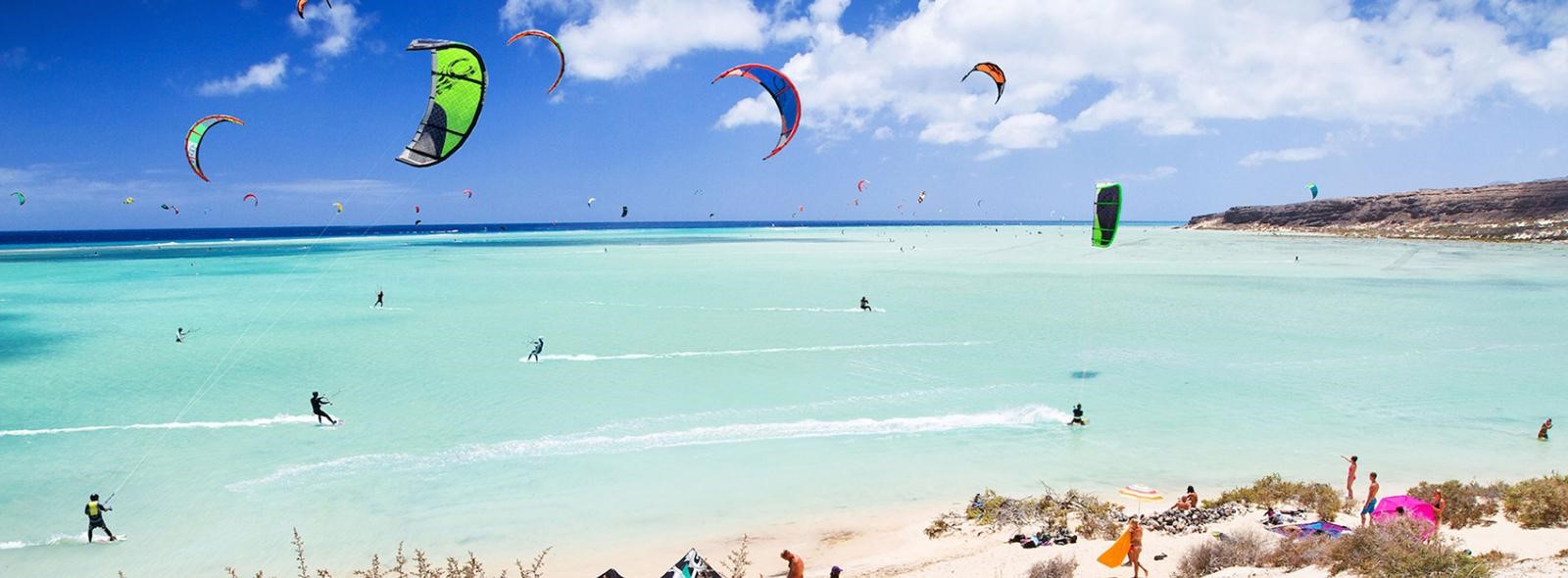
Choosing your kite spot is essential for a safe and fun session.
To kick off our series of articles dedicated to kiteboarding spots in the 44 region, we'll first look at the general external factors to consider before getting on the water. Kiteboarding, like all watersports, requires knowledge of many elements before starting your session and fully enjoying it. Then, we'll see how to choose your kiteboarding spot based on your skill level, experience, and the type of session you want to have.
In the second part, an article will be entirely dedicated to analyzing weather conditions. Finally, a list of some spots in the region will be revealed. The specific characteristics of each kiteboarding spot will be detailed in subsequent articles.
General considerations for kite spots
Before you can fully enjoy the sensations of freedom that only kiteboarding provides, it's always good to ask yourself a few questions about the spot. Each kiteboarding spot has its own characteristics: legislation, wind direction, crowd levels, and so on.
Kitesurf spot legislation
It's important to carefully analyze and respect all the different practice zones for a smooth session and to respect other beach users.
During the summer, some kitesurfing spots may have municipal decrees in effect, prohibiting kitesurfing in the area and during the period defined by the decree. Some kitesurfing spots are regulated zones reserved for kitesurfing schools. This doesn't even include oyster farms, marshes, or even nature parks.
Crowd levels, beach, and water at a spot
It's also essential to analyze the conditions of the kitesurfing spot before heading there. If you're lucky, the spot you plan to visit has a webcam: take a quick look before you go kiting!
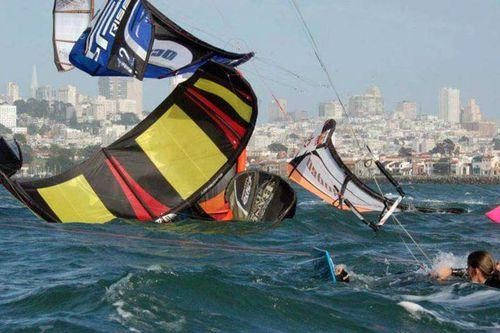
An overcrowded beach can quickly become problematic before you even get on the water. Preparing your equipment, like your kite, requires space and can quickly become inconvenient and dangerous for both you and other beach users.
The busy summer period might be the least suitable time to visit tourist beaches. As mentioned earlier, they risk being either prohibited for kitesurfers or simply overcrowded.
Tide for kitesurfing
Tides also play an important role in kitesurf. You must check the best conditions before going to your kitesurf spot. For example, a spot like Pont-Mahé at low tide will be impassable; there is no water. Some beaches are inaccessible at high tide. You will have no place to rig your kite, or the concentration of beachgoers will make a take-off or landing dangerous. This is not a second-hand issue, but a matter of the deck.
Wind evolution in kiteboarding
Wind is undoubtedly the most important thing to study before your session. No wind means no kitesurfing, and too much wind or overly gusty conditions pose a real danger!
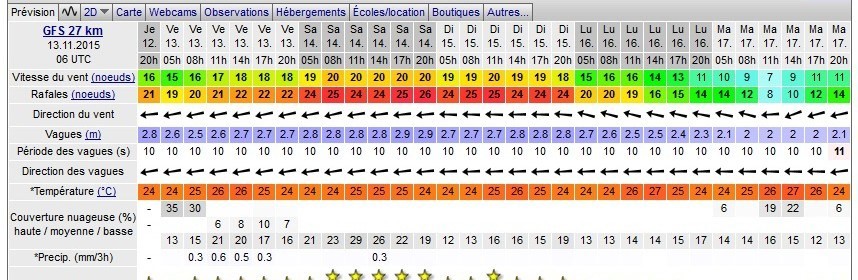
Before kiting, check the weather,wind conditions, and their foreseeable evolution using various marine weather websites like Windguru. The weather is the primary element of kitesurfing. Based on it, you will choose your spot and the surface area of your kite.
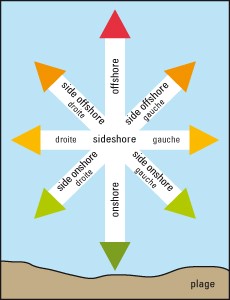
To ride, the wind must be oriented in such a way that it is onshore or side-shore at the spot.
Dangers of kiteboarding
Kitesurfing remains a dangerous sport if not practiced in the right conditions and with appropriate gear. Remember to equip yourself properly! That's why it's essential to take kitesurfing lessons when you're a beginner and learn the basic rules, such as "priorities on the water."
Before any change of direction, check the available space and ensure you won't inconvenience anyone around you.
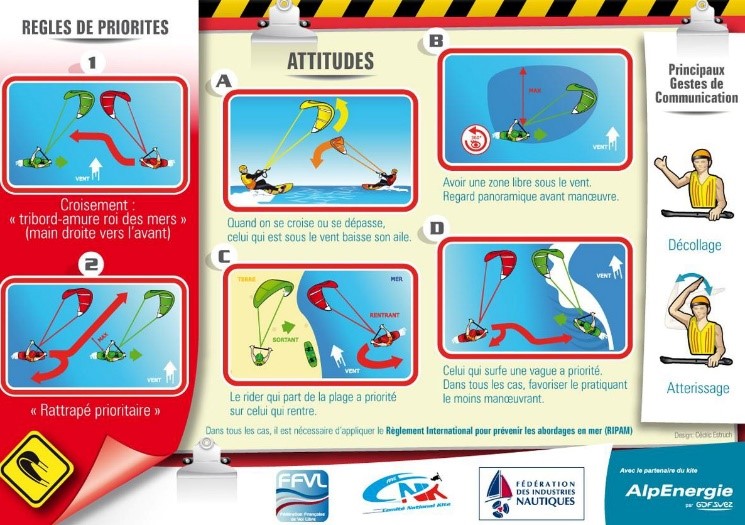
Aside from these few rules to know, danger also lies in understanding the spot itself. Let me explain: each kitesurf spot has its specificities. One might be infested with rocks, while another might have oyster farms posing a problem. A tip: make sure you know the spot at low tide. This will allow you to identify and locate potential dangers at your kitesurf spot.
An ideal kitesurf spot is a vast, clear area with no obstacles upwind or downwind. The presence of obstacles (walls, buildings, poles) represents a real danger because you could potentially be projected onto them.
Based on your kitesurf skill level
If you're a beginner new to this sport, I highly recommend heading to a kitesurf school.They'll guide you through your first steps and provide all the essential advice on kitesurf gear. This ensures your safety and that of others. You'll learn all the safety measures and systems, then how to steer the kite. You'll start your journey, and get ready for those first falls!
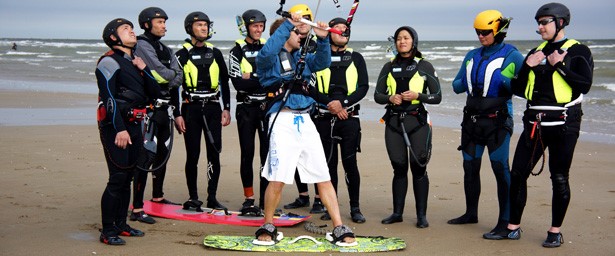
Always check out the kite schools near you or your vacation spot. There's no better way to learn proper techniques and enjoy yourself safely.
- If you are just starting out with range or simply getting back into the discipline with trade-in, consider supervised riding. This is for students who have already taken lessons, who can manage on their own, but who are not comfortable enough to ride alone at a kitesurf spot.
- Supervised riding takes place at the same time as a “lesson.” The instructor advises you at the start of the session, particularly on the size of the kite to take, on the areas of the spot to avoid, on the adjustment of the kite, then lets you ride with range with some informed advice throughout the session to refine your steering or your tricks.
- Never go kiting alone at a spot. If something unexpected happens, like a broken line or a bad jump landing, it's always good to have someone there to help you out and grab a drink with after the session! Choose spots where you can stand up; this will help you build confidence and progress without apprehension.
- If you're an advanced rider and already hooked on this sport, don't hesitate to explore the many disciplines kitesurfing offers. Whether you prefer directional boards or twintips, vary your riding by practicing both freestyle and Surf.
Kitesurf Disciplines
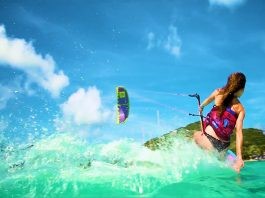
- Freeride: This is the most common form of kitesurfing. It's all about the ride! Freeride is about chasing sensations and excitement. It is also about pleasure and freedom.
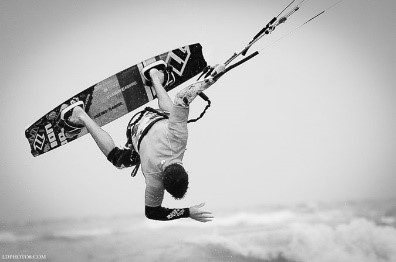
- Freestyle: Here, the kiter performs tricks while jumping, with the kite at the zenith. Two distinct styles exist: old-school freestyle, which harks back to the early days of kiting (rotations, big air, hang time, and grabs), and new-school freestyle, where tricks are executed with the kite in a low position.
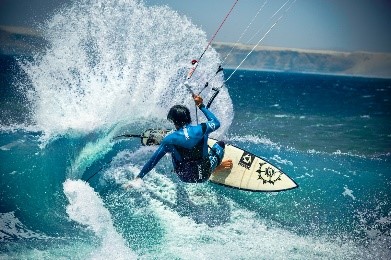
- Surf (wave): This discipline, sometimes called surfkite, is similar to traditional surfing. It's all about carving the best lines in the waves. For this style, directional boards or Surf boards are preferred.
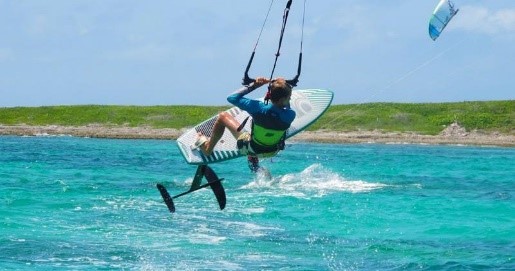
- Foil: Also known as foilboard, kitefoil involves riding with a foil attached under your board. The board lifts off the water's surface. This offers a unique ride feel. Kitefoil is often used in light wind conditions and by experienced riders for freestyle.
Kitesurf Riding Zones
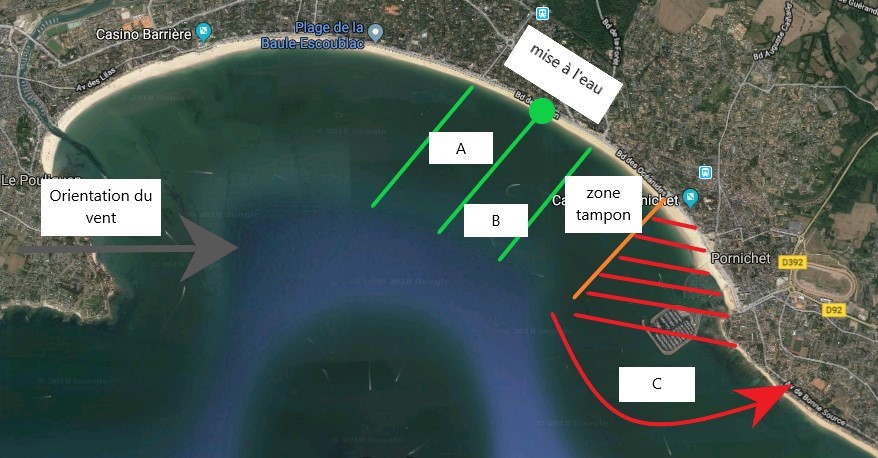
At every kitesurf spot, it's smart to analyze your riding area and define three practice zones before you hit the water.
- A: This first zone is where "everything is good." You'll have no trouble riding safely without putting yourself in danger.
- B: The second zone is a safety solution, a perimeter a bit closer to potential danger but without putting you in serious trouble. This buffer zone allows you to return to the beach and then head back to your main riding area.
- C: Finally, the last zone is your fallback option.
Example: Pornichet Spot
Kitesurfing has evolved tremendously in recent years, both in the quality of the gear (kites, harnesses, boards) and in training methods.
Kitesurf Weather Links:
- Windguru: https://www.windguru.cz/48506
- Tides: http://maree.info/117
- Webcam: http://www.labaule.fr/webcam
Useful Kitesurfing Links:
- One launch creates superb tutorials to help you discover and learn everything about the world of kite!
- North tutorials https://www.northkiteboarding.com/footer-navigation/north-kiteboarding-academy/
- Kite Association (La Baule): http://www.labaiekite.fr/
- Kite School (Pornichet): http://kite-evolution.com/
- Facebook GlissEvolution: https://www.facebook.com/glissevolution/
Frequently Asked Questions
What should you check before a kitesurf session at a new spot?
Six points: local regulations (summer municipal decrees, areas reserved for schools), wind direction, tide, beach and water body traffic, specific dangers (oyster farms, marshes, rocks), and the spot's suitability for your skill level.
Which wind direction is safest for kitesurfing?
Side-shore wind (parallel to the beach) is the safest. It allows you to return to shore. Offshore wind (from land) should be avoided without boat assistance. Full onshore wind complicates take-off and getting out.
Can you kite everywhere in summer?
No. Many municipalities issue decrees that prohibit or regulate kitesurfing during the summer (swimming areas, dedicated channels, specific hours). Check the spot's regulations before each summer session.
Where can you check live weather and wind conditions for spots?
GlissEvolution publishes live wind, high-resolution forecasts, and tides for 74 spots in France and Europe, with webcams available on glissevolution.com/meteo-guide-des-spots.
Key Features
| Section | Key takeaway |
|---|---|
| In short, this guide | Choosing the right spot is crucial for the safety and enjoyment of your session. |
| Picking the perfect kite spot is essential for a safe and fun session. | To kick off our series of articles dedicated to the kitesurf spots in 44, we'll first look at the general external factors you need to consider before... |
| General considerations for kite spots | Before you can fully enjoy the incredible freedom that only kitesurfing provides, it's always a good idea to ask yourself a few questions about the spot. |
| Kitesurf Spot Regulations | It's important to carefully analyze and respect all the different practice zones for a smooth session, and to be considerate of other beach users. |
| Crowd levels, beach, and water at a spot | Before you even head out, it's also essential to analyze the conditions at your chosen kitesurf spot. |
| Tide for kitesurfing | The tide also plays a significant role in kitesurfing. |
| Wind evolution in kiteboarding | Wind is arguably the most crucial factor to assess before any session. |
| Dangers of kiteboarding | Kitesurfing can be dangerous if you don't ride in the right conditions and with the correct gear. |
Frequently Asked Questions
In short: key takeaways from this guide
Choosing the right spot is crucial for the safety and enjoyment of your session. This guide covers the 6 essential points to check before rigging your kite: local laws and municipal decrees, wind direction, tide, how busy it is, potential hazards, and whether it suits your skill level.
Picking your kite spot is essential for a safe and fun session: here's what you need to know.
To kick off our series on the best kitesurf spots in the 44 region, we'll first look at the general external factors you should consider before hitting the water. Kitesurfing, like all watersports, requires you to understand many elements before you can fully enjoy your session.
General considerations for kite spots: key takeaways.
Before you can fully experience the freedom that only kitesurfing provides, it's always smart to ask yourself a few questions about the spot. Every kitesurf spot has its own unique characteristics, including local regulations, wind direction, and how crowded it gets.
Kitesurf spot legislation: key takeaways.
It's crucial to carefully understand and respect all designated riding zones for a smooth session, and to be considerate of other beach users. During the summer, some kitesurf spots may have municipal decrees in effect, which can prohibit kitesurfing in specific areas and during certain periods.
Key takeaways: traffic, along with beach and water conditions, at a spot.
Before you even head out, it's also vital to check the conditions at your chosen kitesurf spot. If you're lucky, the spot you plan to visit might have a webcam: take a quick look before you go kiting!
Tide for kitesurfing: key takeaways.
The tide also plays a significant role in kitesurfing. You need to research the best conditions for your chosen kitesurf spot.
Got a question about the gear mentioned here?
The GlissEvolution team rides what they sell. They are available to answer your questions in person at the Pornichet store or by phone.