F-One QuadX: Your Complete Guide to the New Fabric
You might have seen the name QuadX, or heard that F-One was skipping Aluula to move directly to something else. The truth is, this story began 4-5 years ago with Raphaël Salles, F-One's president, and it culminates in a fabric designed specifically for Kite and wing. This guide brings together everything we know about QuadX: its construction, how it compares to Aluula, dacron, and 3-layer fabrics, and real-world rider feedback. Kite and wing equipment is in our Kitesurf and Wing Foil worlds.
Main source: the excellent interview with Raphaël Salles by Erwan Jauffroy on the Water Sport Zone channel. Huge thanks to him for this content.
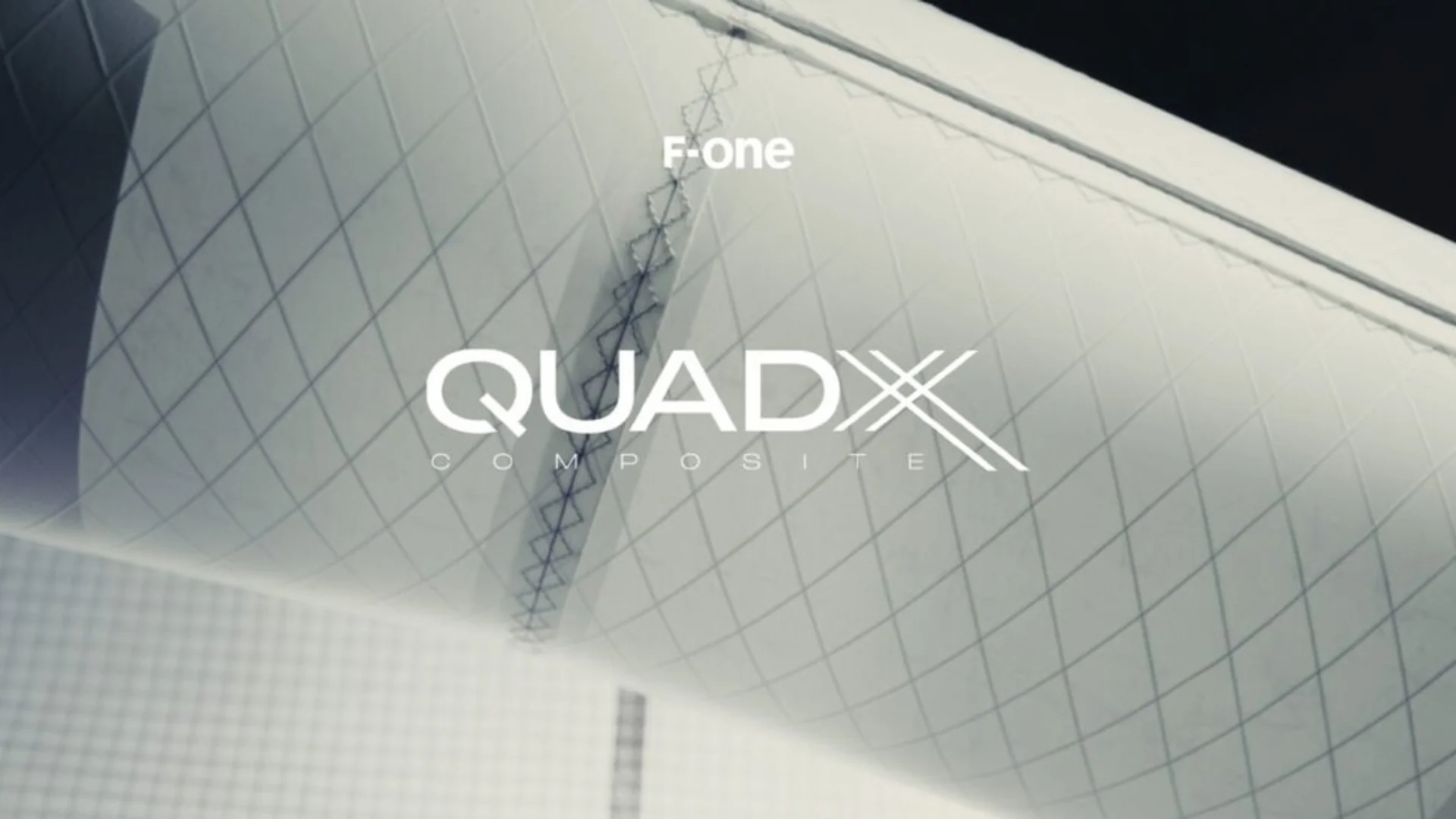
QuadX is a 4-layer laminated fabric (~120 g/m²) developed by F-One for the inflatable structures of wings and kites.
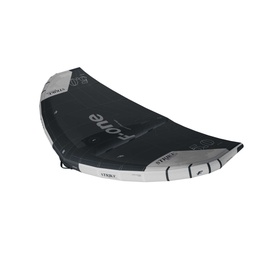
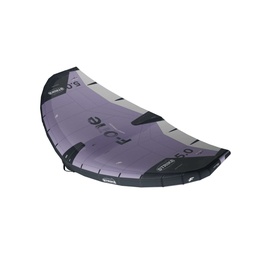
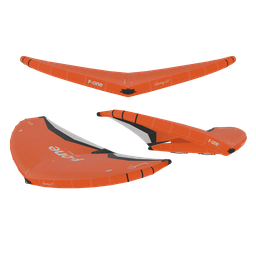
Its construction reverses Aluula's design. The PET film is hidden inside, sandwiched between a Dyneema (Ultra PE) fabric and a protective polyester, with X-reinforcements for bias. This results in elongation performance comparable to Aluula, better durability, and a price that's about 30% lower. The finished product is just as light, thanks to the absence of seam reinforcements. F-One uses it on the 2026 Strike QuadX (starting at €1,329) and the Banger kite.
The Leading Edge: The Core of Performance
Before we talk about fabric, it's important to understand why the industry invests so much R&D in inflatable structures rather than the canopy. Raphaël Salles explains it simply: a wing's Leading Edge is like a sailboat mast. It maintains the profile, provides stiffness, and determines performance. If it deforms, the entire profile changes. With it, power and stability are affected, as is the wind range. The same logic applies to a kite: the Leading Edge absorbs all aerodynamic stresses. A fabric that stretches means a kite that deforms in gusts. Steering then becomes tiring.
Dacron and Aluula: The Limits
Dacron: 30 Years of Dominance
Dacron is the historical material for inflatable structures. Dacron is reliable and affordable, and it is easy to work with. It performed well for nearly 30 years. But it reached its limits: its aspect ratio is too significant for current requirements. It deforms under load, which forces over-inflation to compensate, and the profile evolves over time.
Aluula: Raphaël Salles' Take
F-One might be the only brand that has never sold an Aluula kite. Their criticism: Aluula places the Ultra PE film on the outsideThis makes the fabric vulnerable to UV, friction, and especially seams. Sewing film tears it. Sewing film tears it, which means adding reinforcements to about 15% of the Leading Edge surface. These reinforcements add weight and partially negate the raw fabric's gain. Aluula weighs around 80 g/m², but in the finished product, the actual weight savings are much lower than the raw figure suggests. There's also durability: some feedback reported delamination of the film after 1-2 intensive seasons.
QuadX: The 4-Layer Recipe
Raphaël Salles compares laminate manufacturing to building a burger: choose your bun and meat. Then, add tomatoes and bacon, stacking the layers differently with different weights. QuadX gets its name from its four layers, and its key difference is fundamental: the PET film isn't on the surface (like Aluula or 3-layer constructions); it's hidden inside the sandwich. From inside to outside: Dyneema fabric (Ultra PE), PET film, Dyneema X-reinforcements, and a protective polyester fabric.
The Hidden Film: The Core Innovation
The film inside is the core of the technology. You can sew the fabric directly without damaging the film. This means no need for seam reinforcements, saving 15% of surface area and weight, and simplifying manufacturing. The outer polyester protects the film from UV and abrasion, unlike Aluula and 3-layer constructions where it's exposed (leading to delamination after 1-2 seasons). The raw fabric is about 120-125 g/m², but the weight of the complete wing is comparable to, or even lower than, an Aluula construction thanks to the absence of reinforcements.
A Discovery, Then 4-5 Years of Development
The story of QuadX began with a discovery on a shelf. While searching at a supplier, Raphaël Salles found an intriguing 4-layer laminate. He then spent 4-5 years fine-tuning the weight of each layer and testing dozens of combinations. QuadX isn't an off-the-shelf fabric; it's a custom development between F-One and its supplier.
The Fabric's "Breathing"
Another key point: QuadX "breathes." While exposed film constructions offer more rigid stiffness, QuadX can slightly deform under load and then return to its shape. When a gust hits, the wing absorbs the overload instead of transmitting 100% of the shock to the rider. In pumping, the fabric's return aids the movement. Raphaël Salles uses the image of a shock absorber: the fabric works with you, not against you.
QuadX vs. 3 Layers: Two Ultra-PE Philosophies
Many brands use 2 or 3-layer Ultra-PE (~85 g/m²) to reduce weight as much as possible. QuadX takes a different approach. It adds a layer to protect the film and reinforce the bias, which results in a higher fabric weight (~120 g/m²). Raphaël Salles believes that fabric weight alone isn't the right indicator. What truly matters is the weight of the complete wing. The absence of reinforcements on the QuadX compensates for the additional ~35 g/m². All fabrics are strong in warp and weft, but they perform poorly on the bias. The X-reinforcements correct this weakness. The shift to a 4-layer construction made the performance gain on the water truly significant.
Dacron, Aluula, 3-layer, QuadX Comparison
| Criterion | Dacron | Aluula (3 layers) | 3 layers | QuadX (4 layers) |
|---|---|---|---|---|
| Construction | Polyester weave | Film - UPE - Film | ~3 layers, exposed film | Polyester - PET Film - Dyneema + X |
| Fabric weight | ~170-180 g/m² | ~80 g/m² | ~85 g/m² | ~120 g/m² |
| Film position | No film | Exterior (exposed) | Exterior (exposed) | Interior (protected) |
| Aspect ratio vs Dacron | Reference (1x) | 5-6x less | Variables | 5-6x less |
| Bias resistance | Low | Moderate | Moderate | Reinforced (X) |
| Seam reinforcements | No | Mandatory (~15%) | Variables | No |
| Complete wing weight | Product Code | Comparable (reinforcements) | Lighter balance | Comparable to Aluula |
| UV / abrasion resistance | Good | Sensitive (exposed film) | Sensitive (exposed film) | Good (polyester exterior) |
| The fabric "breathes" | Yes | Limited | Limited | Yes |
| Durability over time | Good | Careful maintenance | Progressive stretch | Optimized (protected film) |
| Price level | Affordable | Very high | High | ~30% below Aluula |
QuadX advantages
- The 4th polyester layer protects the film from UV, abrasion, and damage to the seams. This prevents delamination, a common issue with exposed films.
- The X-pattern weave provides anti-stretch properties, maintaining stiffness in the bias.
- With no reinforcements needed, you save 15% on surface area and weight compared to Aluula.
- The fabric “breathes”, absorbing gusts and returning to its original shape.
- You get top elongation, 5-6 times better than Dacron and comparable to Aluula, all at a price that's about 30% lower.
Good to know
- While the raw fabric weight is higher (~120 vs ~80-85 g/m²), the overall weight of the complete wing remains comparable.
- Currently, QuadX is exclusive to F-One. It's also a recent technology, so long-term feedback over several seasons is still pending.
What it changes on the water
The QuadX feel
Raphaël Salles describes an immediate change in ride feel with the Strike QuadX. It's stiff enough to hold its shape, yet it breathes, absorbing gusts and assisting with pumping. This translates to healthier, more intuitive pumping because the fabric returns energy. You'll also experience an extended wind range, as the profile holds longer in underpowered conditions. Arm fatigue is reduced thanks to absorption instead of direct transmission, and performance is maintained over time without the progressive stretch seen in Dacron.
Inflation: a revealing indicator
A telling detail: the Strike QuadX inflates to almost 11 PSI, compared to ~9 PSI for a Dacron version. The fabric withstands more pressure without deforming. This results in a stiffer Leading Edge, a more stable profile, and more consistent performance when the wind picks up. The high inflation doesn't compromise comfort, as the fabric naturally absorbs variations.
QuadX on kites: Charles Brodel's Banger
QuadX isn't just for wings. Raphaël Salles mentions the Banger's development with Charles Brodel, a big air foil specialist and the only foil rider in the King of the Air. Charles had developed his Banger in Dacron and wanted to push its limits. His feedback with QuadX showed increased softness and control. This made it easier to transition from single to double loops with his 8m in 40 knots. QuadX offers the critical balance between deformation (handling) and return (stability for big air foil). Note: Brainchild technology (segment welding) works on kites but isn't yet planned for wings.
The F-One Strategy
For 4-5 years, F-One chose not to follow the Aluula trend, convinced that a better solution existed. With QuadX, the brand finally offers an alternative faithful to its vision: high-performance, durable, at a controlled price, industrially produced without compromise. The Strike QuadX 2026 is the same price as the old Aluula version, but with 100% of the structure in QuadX instead of 20-30% Aluula. Raphaël Salles reminds us that the fabric is not everything: the profile, the cut of the panels, and the positioning of the seams count just as much. QuadX is a tool, not a magic wand; its association with F-One's design expertise produces the result.
Who is it for? Our GlissEvolution opinion
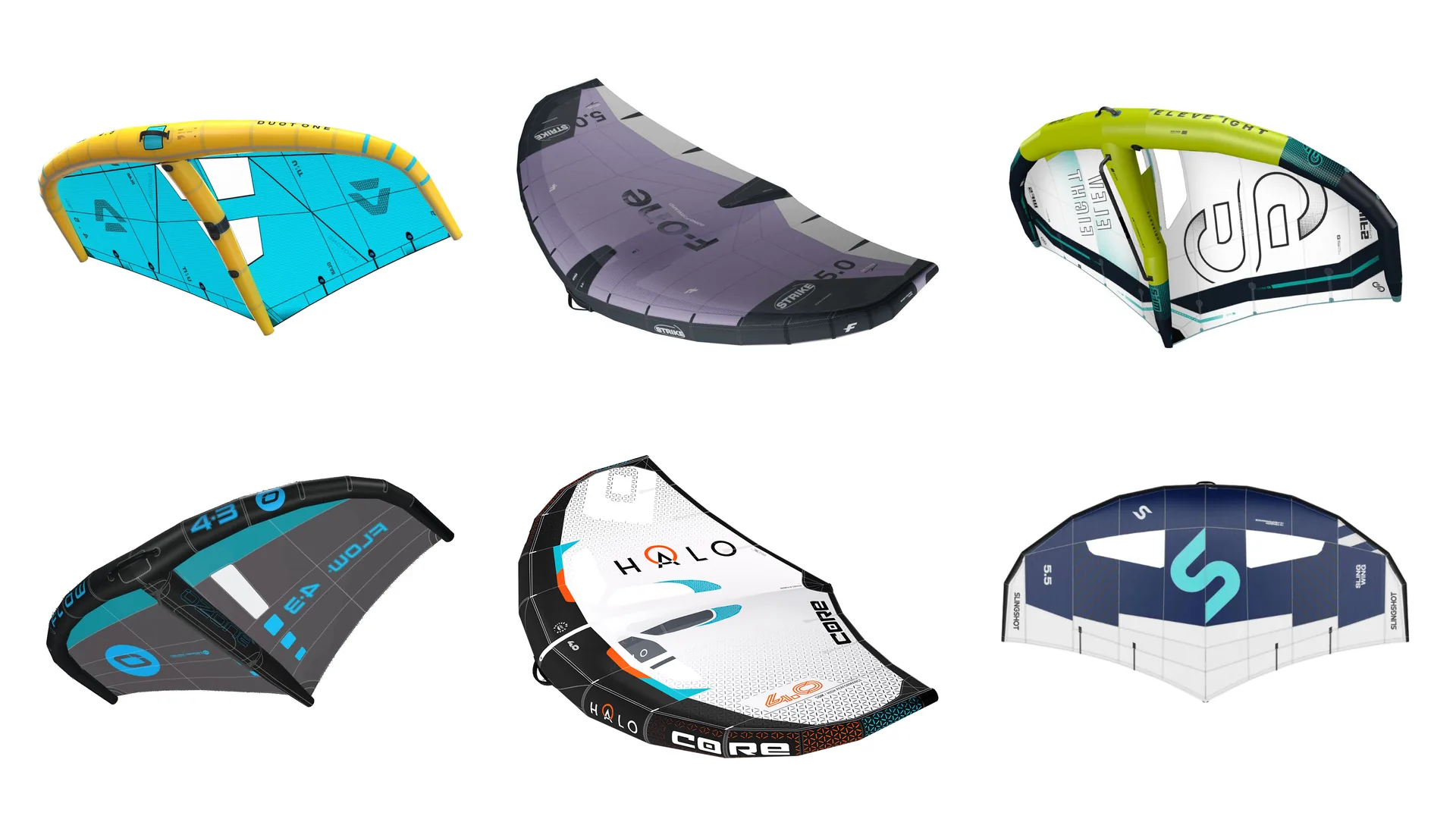
If you ride often, keep your gear, and want a wing that stays stiff and precise over time, QuadX clearly targets this need. The Strike QuadX 2026 is designed from the outset around this material. It features a 100% QuadX structure. If your number one criterion is the entry price, the Strike V6 in Dacron (from €999) remains an excellent choice, with all the shape improvements of this generation. And if you're in the Duotone, Reedin, or Eleveight ecosystem, their 3-layer constructions also have their qualities. We're here to help you compare based on your program and budget.
FAQ: QuadX F-One
What is F-One's QuadX?
This 4-layer laminated fabric (~120-125 g/m²) was developed by F-One for inflatable wing and kite structures. It features Dyneema (Ultra PE) fabric, a hidden internal PET film, X-reinforcements in Dyneema for bias, and an external protective polyester. Its unique feature is that the film is protected internally, unlike Aluula and 3-layer constructions where it is exposed.
What is the difference between QuadX and Aluula?
The construction is inverted. Aluula places the Ultra-PE film on the outside. This makes it fragile at the seams and requires ~15% reinforcements. QuadX hides it inside between two fabrics. Elongation is comparable, but QuadX requires no reinforcements, resists UV better, and costs about 30% less.
What is the difference between QuadX and 3-layer fabrics?
QuadX adds a 4th polyester layer that protects the PET film, and an X-pattern weave that reinforces the bias. While 3-layer constructions (~85 g/m²) are lighter in raw fabric, their exposed film ages faster. The weight difference narrows on the complete wing.
What is the price of the Strike QuadX 2026?
Starting from €1,329 at GlissEvolution, with 100% of the inflatable structure in QuadX. This is at the same price level as the previous Aluula version, which only contained 20-30% Aluula.
What are the concrete advantages on the water?
Experience healthier, more intuitive pumping, an extended wind range, and less arm fatigue. The Strike QuadX inflates to almost 11 PSI (compared to 9 PSI for Dacron). This provides a stiffer, more efficient Leading Edge. You'll also notice better gust absorption.
Is QuadX also available on kites?
Yes. Charles Brodel developed the Banger in QuadX. This design delivers increased softness and control. It makes it easier to transition from single to double loops with his 8m in 40 knots. The material combines deformation for handling with rebound for stability.
Is QuadX as performant as Aluula?
In elongation, both are very close (5-6x better than Dacron), with QuadX even being 10-15% superior in one direction. Its advantage: the fabric breathes and dampens wind variations better, whereas exposed film constructions offer less flexibility.
Let us help you choose your wing
Our team rides every model and knows the construction differences inside out. Call us or make an appointment. We'll help you find the wing that matches your riding style and budget, whether it's QuadX, Dacron, or another material.
Make an appointmentCall usEmail us
Sources: interview with Raphaël Salles (F-One president) by Erwan Jauffroy, Water Sport Zone channel, and F-One technical data. The quoted statements are faithful to the content of the original video. Compilation and formatting by GlissEvolution.
 F-ONE