Guide: Kitesurf Trip in Northeast Brazil
🎯 In short: This Guide
Ceará offers 30-degree weather year-round, with consistent 30-knot winds. It's a true downwind paradise, featuring spots like Paracuru, Taíba, Lagoinha, Icaraí, Jericoacoara, Camocim, and Atins. This guide by Adrien (GlissEvolution) covers all the essentials: gear, pousada accommodation, vehicle rental, and expert tips for a successful trip.
Live Conditions
GlissEvolution brings you live wind data, high-resolution forecasts, tides, and webcams for every spot on our weather platform:
► All spots: Weather & spot guide (74 spots across France and Europe). Kite and wing equipment is in our Kitesurf and Wing Foil worlds.
Kitesurfing in Brazil: Travel Guide by Adrien GlissEvolution
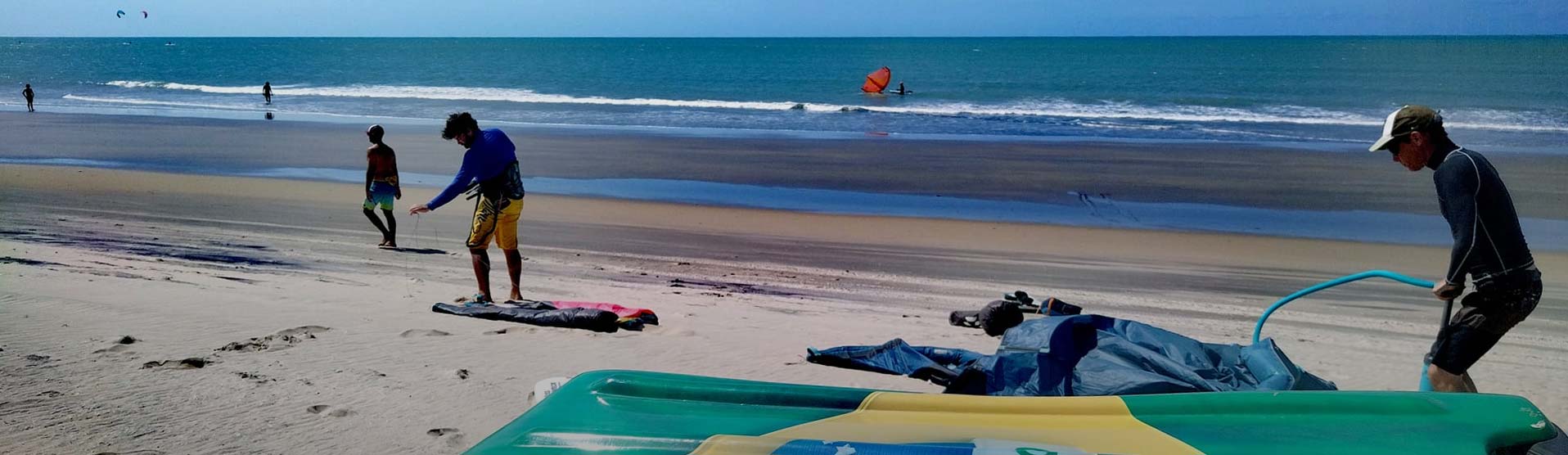
This is a trip report from Adrien of GlissEvolution and his three companions, detailing their kitesurfing adventure in Brazil. Discover our comprehensive guide for an unforgettable kite trip in the Northeast, specifically designed for kitesurfers. Let our experiences and advice inspire your journey.
► Why Choose Ceará for a Kite Trip?
Ceará offers a perfect blend of ideal wind conditions, diverse spots, natural beauty, and vibrant culture. Whether you're a beginner or a pro, it's a must-visit destination for any kitesurfer.
And don't forget the 30-degree mornings, noon, and nights, the 30 knots of consistent wind, and... the Caipirinha!
► Ceará is also the ultimate destination for downwinders!
A downwind run in Brazil is more than just a kite session; it's a way of life.Imagine gliding over waves on turquoise waters, passing deserted beaches and dunes, and small fishing villages. Each point offers a splendid new view until the next! And it can last all day!
► Essential Gear
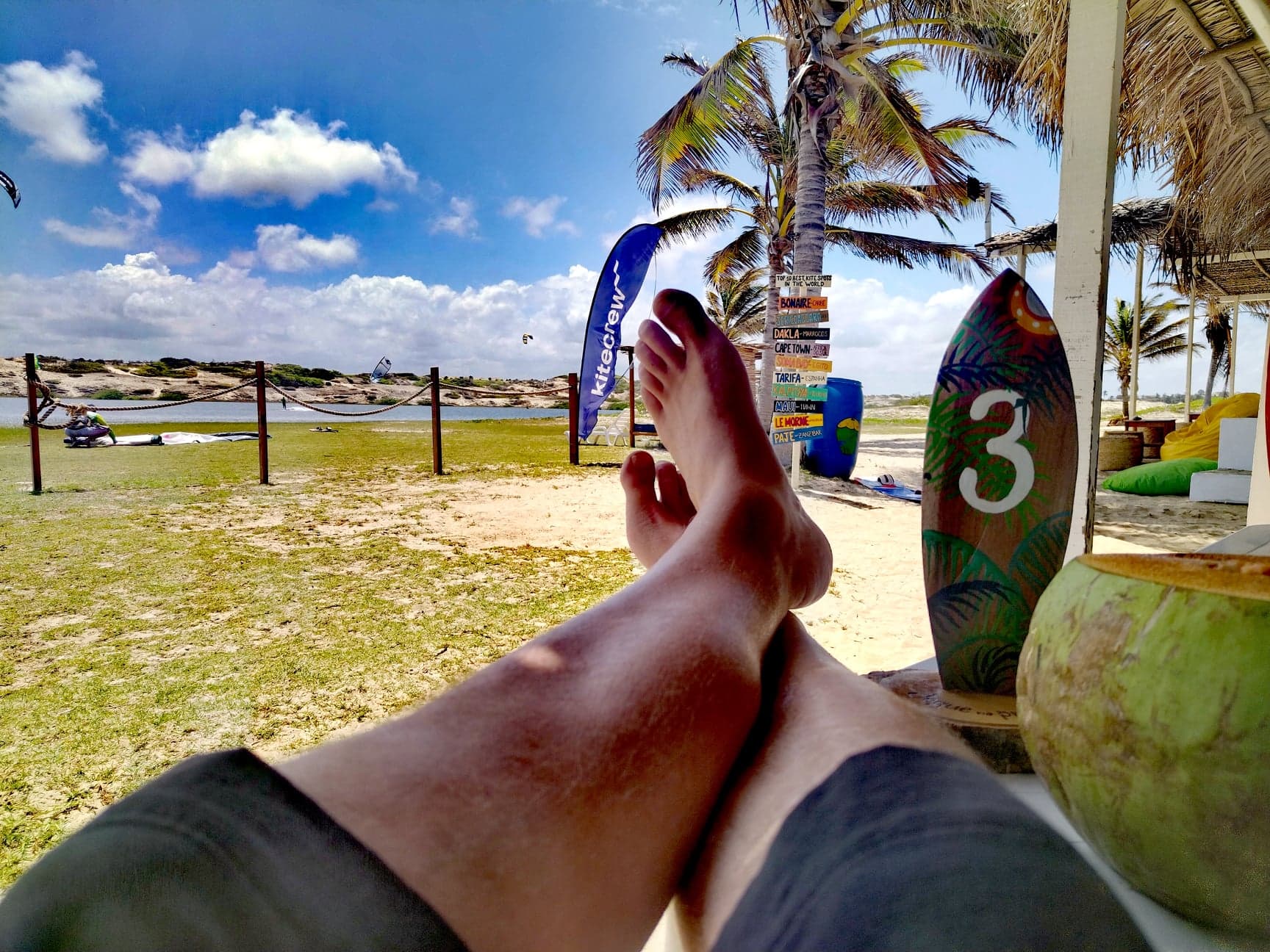
For our trip, we packed kites ranging from 6 to 12m², suitable for riders weighing 65 to 105kg. We opted for surfboards and twintips, leaving the funboard and wing at home. Don't forget sunscreen, after-sun lotion, a UV-protective lycra, earplugs, and a hat. We also brought two control bars per person, pigtails, spare fins, a repair kit, and a first-aid kit for a safe journey.
For wing foil sessions and funboard, we relied on local rentals, which worked out perfectly.
Our Quivers:
Adrien: Eleveight RS + V 12m² + Eleveight WS 8m², with a Duotone Volt surfboard.
Pierre: Duotone EVO/LAB 12m² + Duotone Evo SLS 9m², with Duotone Jaime + Duotone Fish boards.
Olivier: Duotone Evo SLS 12 & 9m² + Eleveight WS 7m², with Eleveight Process + Duotone Fish boards.
Arthur: Eleveight WS 9 & 6m², with an Eleveight Escape surfboard.
What you don't need:
- Wetsuit
- Sand recovery boards, if you're comfortable driving on sand.
- A radical wave surf kiteboard; a versatile or freestyle board will do the trick.
► Accommodation: Choosing a Pousada
- Warm and Personalized Atmosphere Pousadas, typical Brazilian guesthouses, offer a welcoming and friendly atmosphere, perfect for those seeking a more intimate stay. Their decor, inspired by local culture, captivates with charm and authenticity.
- The Kiter's Rendezvous These places are a true paradise for kitesurfing enthusiasts. In Brazil, gender parity on the water is notable, with a great mix of male and female kiters enjoying the ideal conditions.
- Strategic Location Often situated in key tourist areas, pousadas offer a more authentic experience. They provide easy access to the best spots, whether for beach activities, cultural discovery, or kite sessions.
- Many of these establishments are managed by Europeans, which often simplifies communication. This can also allow for monetary exchanges directly on-site, such as changing Euros to Reals.
- Don't miss the breakfasts! They are generally known for being hearty and delicious, a real bonus to start your day right.
- Contact pousadas directly for your reservation. By avoiding intermediaries like Booking, you could benefit from better rates and more personal contact.
In short, choosing a pousada for your stay in Brazil means opting for a comfortable and convivial experience, rich in culture, especially if you're passionate about kitesurfing!
For our first night, we picked a pousada right in the heart of Fortaleza. This meant we didn't need a car rental immediately after a long flight. We were in the tropics, so paperwork could take time, and driving at night is never a good idea.
► Vehicle rental
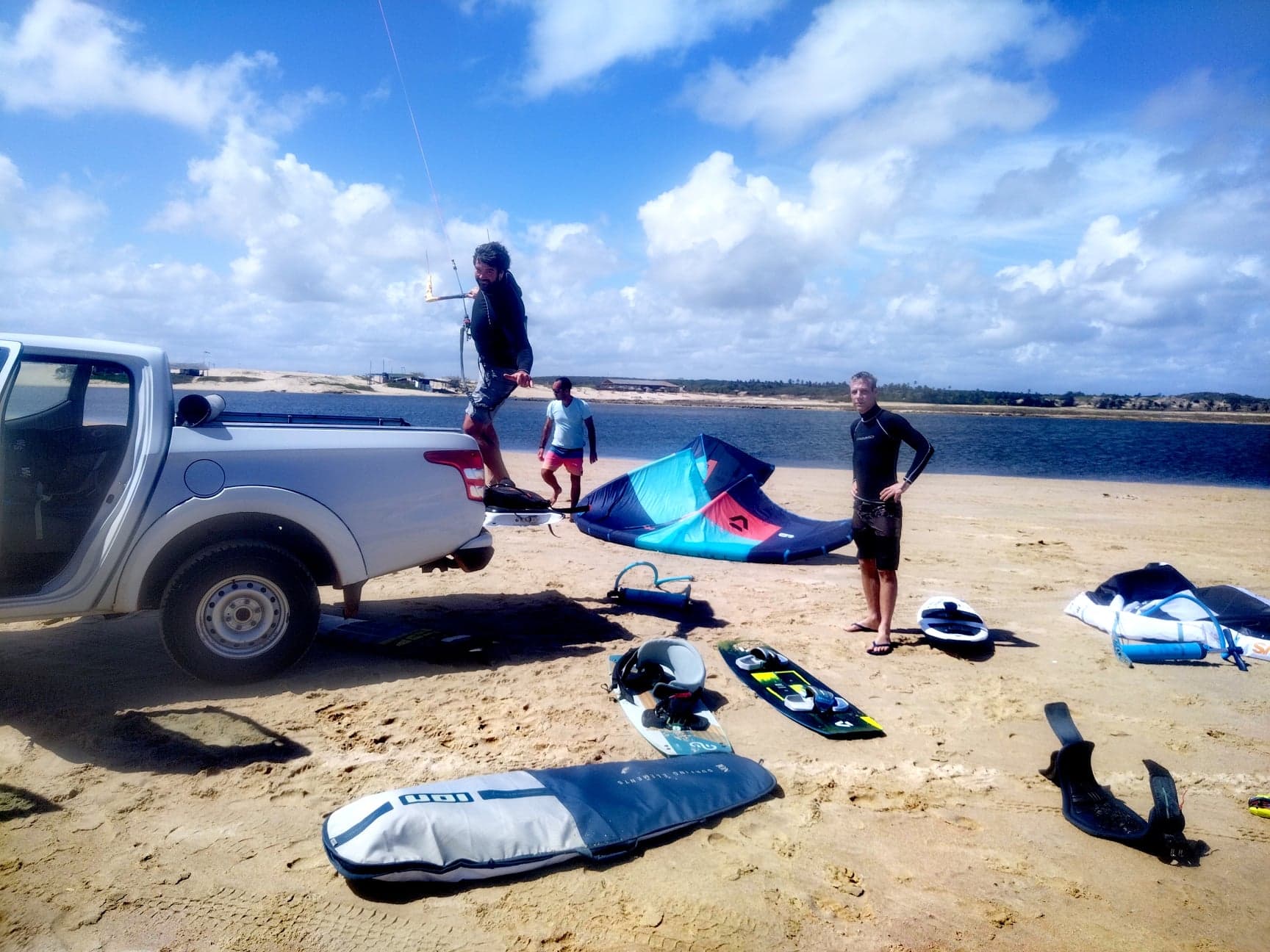
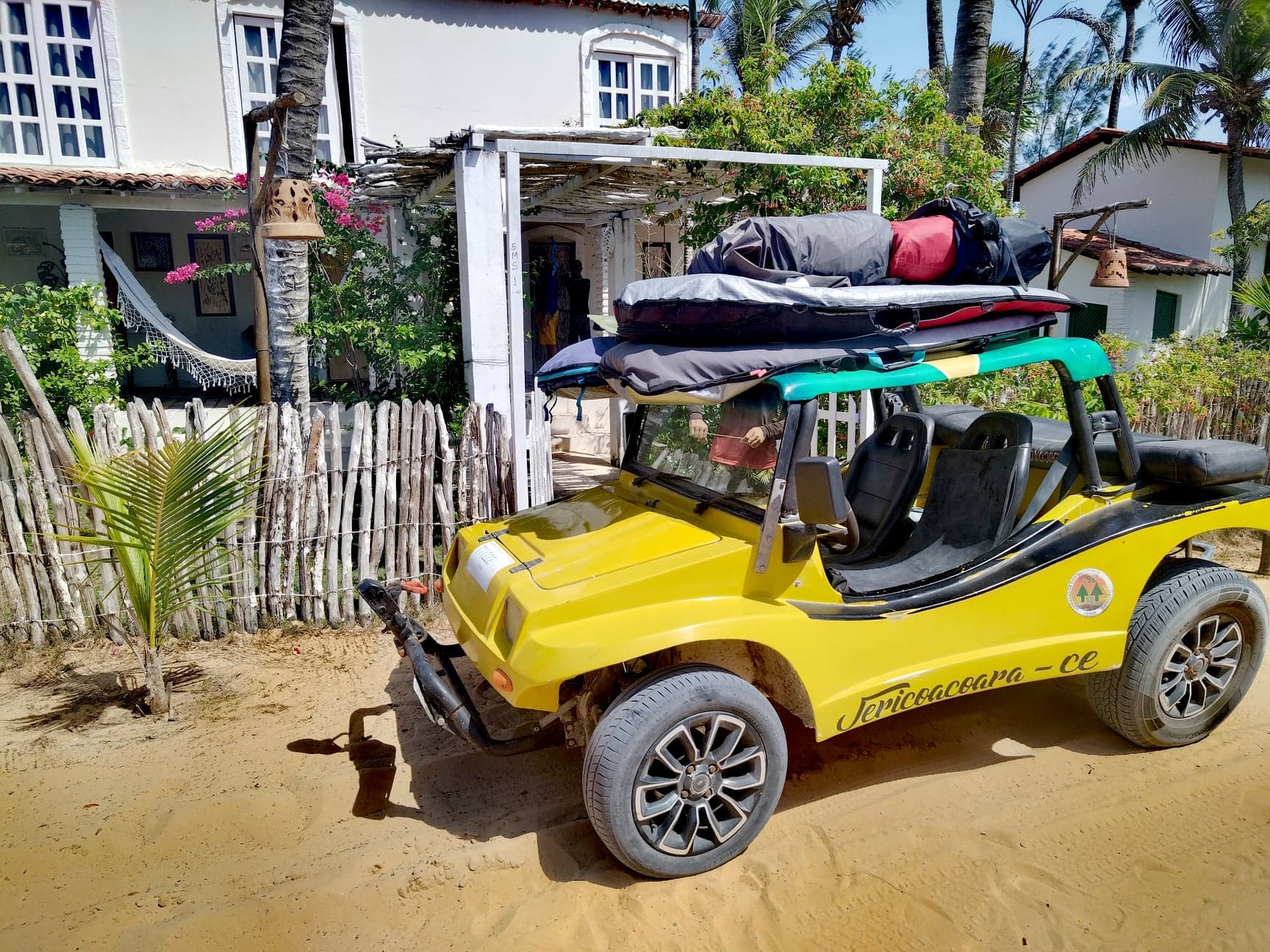
A 4x4 with a flatbed was the best choice for getting around. At just €20 per person per day, it was both economical and practical for navigating the Nordeste's roads and beaches. This also gave us maximum flexibility on our road trip.
So, you can easily go on an adventure without a guide.
The Map's me application makes everything simple. Even the smallest paths are marked, so you'll never get lost. Just remember that what looks like a national road is often a paved road riddled with potholes and speed bumps. These are rarely signposted and can be quite jarring!
Similarly, a 'road' might be a dirt track, and dotted lines indicate paths through dunes, beaches, or mangroves.
"Ultimately, on the beach, with deflated tires, 4-wheel drive, and a slow speed of 60 km/h in sixth gear will be the most comfortable and often the fastest choice."
Driving tips:
- In short, drive carefully. There are many speed cameras, and you don't want to break your back on a speed bump or pothole.
- Learn to drive in existing tracks, and don't mistake 4x4 tracks for buggy tracks!
- Switch to 4x4 mode if you have any doubts. Drive slowly in the sand with deflated tires. Don't stress about reinflating them; a gas station is always close to a beach exit.
- In Brazil, there's zero tolerance for drinking and driving.
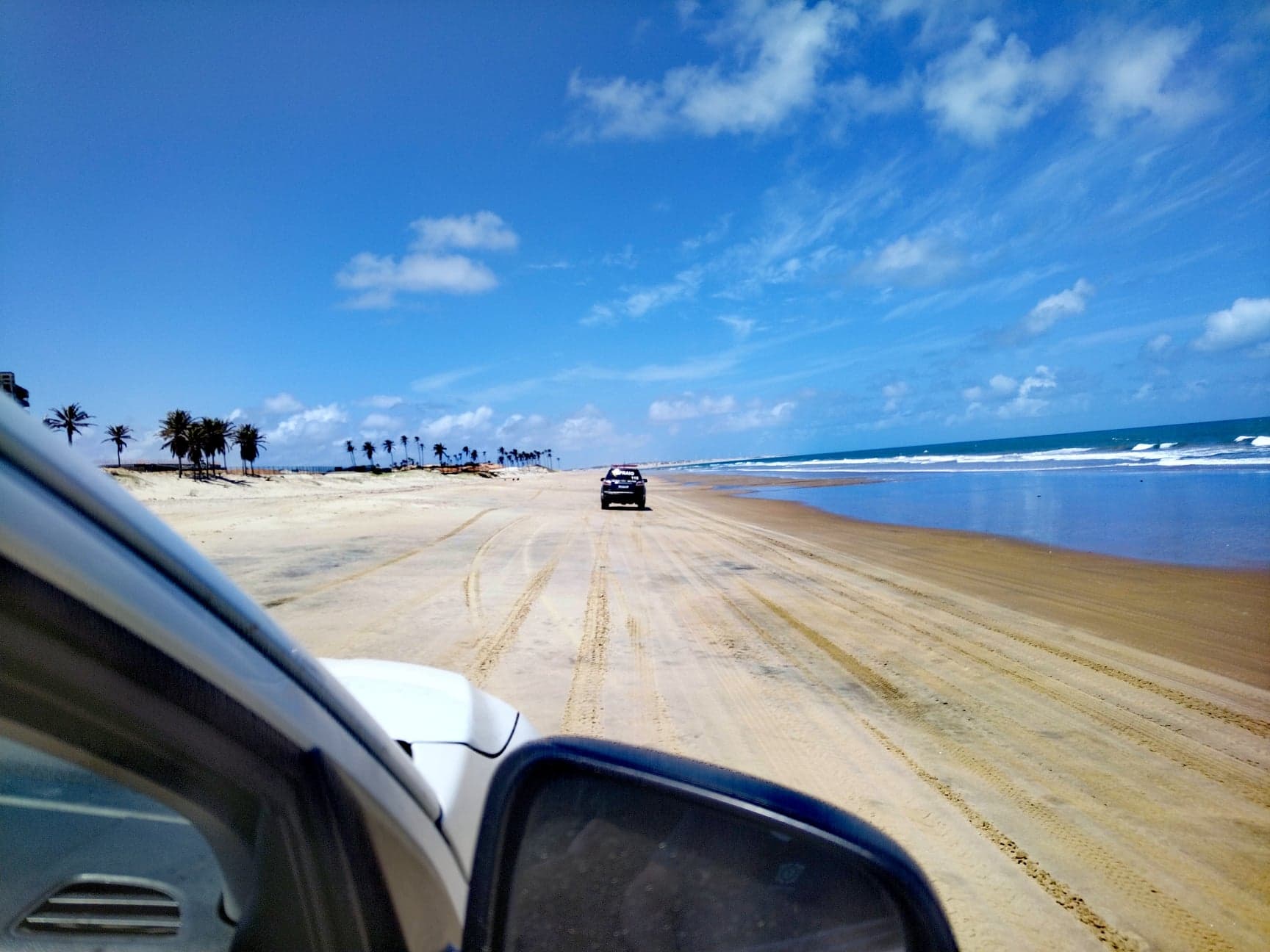
The travel itinerary
We chose to stay a maximum of 3 nights per spot, which allowed us to really explore each location. Keep in mind that getting to Atins can be time-consuming; expect an average speed of 65 km/h, whether you're on the road or the beach.
► Kite spots explored
We rode 15 spots in 15 days, including Paracuru, Taiba, Logaina, Jeri (Jericoacoara), Atins, and Camocim. Each spot has its unique charm, with ideal conditions for advanced riders and beginners alike. Once the wind picks up, it's time to ride!
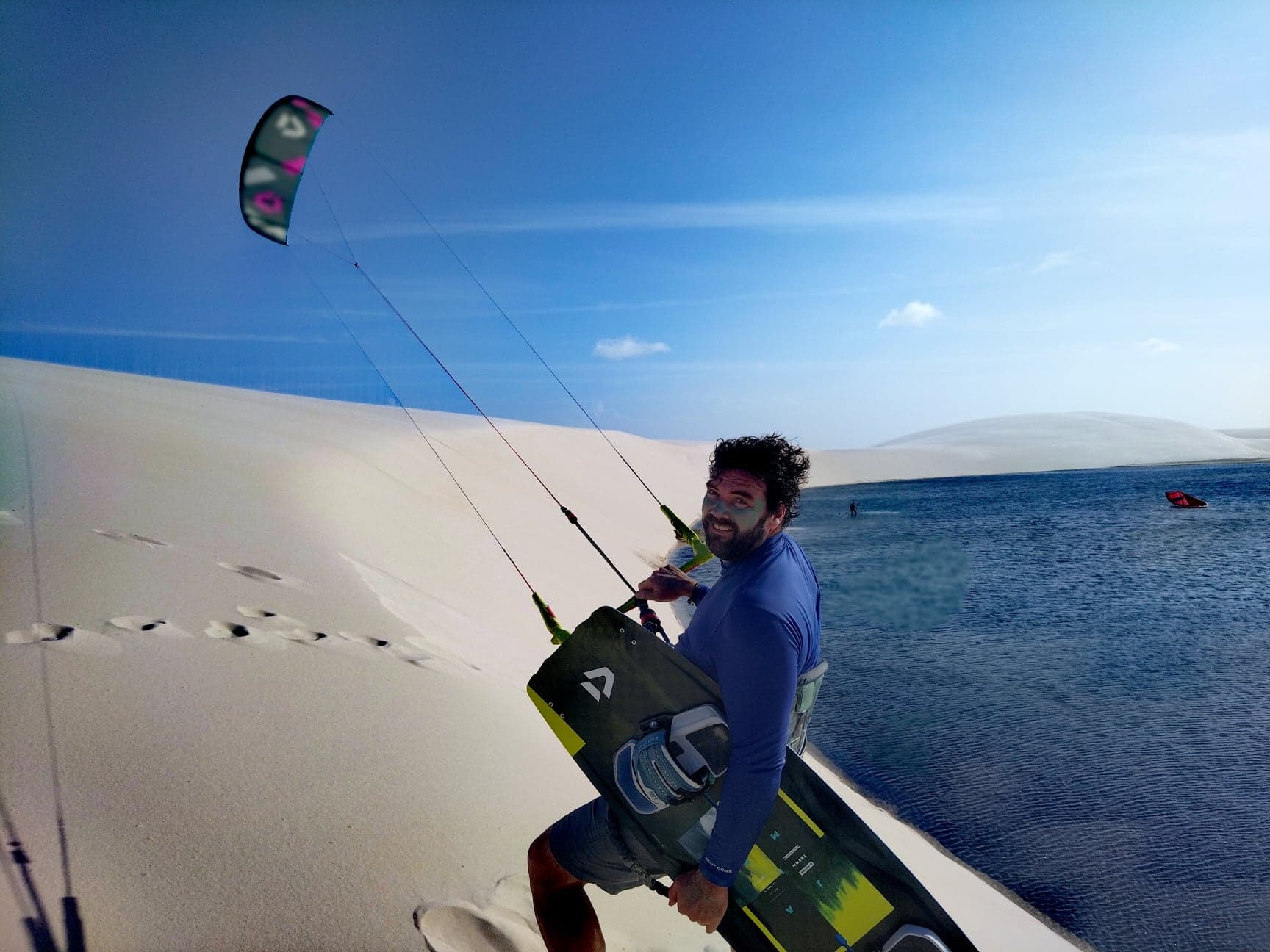
• Paracuru
This is a perfect spot to get started, with reliable wind conditions and a beautiful setting. A lagoon forms at low tide, which is perfect for flat water and freestyle. This lagoon is also great for wingfoil. As the tide comes in, small waves form, making it playful and fun. At high tide, the on-site restaurant/bar is a welcome sight.
• Taiba
This spot offers the winning Brazilian combo: lagoons perfect for progressing in freestyle, and the option to do a downwind run back to Paracuru.
• Lagoina
We recommend a downwind run to a river mouth that flows into the dunes, forming the Donkey Kite Lagoon. The lagoon's depth and salinity vary with rainfall. This spot is a small oasis where you can ride alongside donkeys grazing with their hooves in the water. Grab a grilled fish or octopus between sessions, then get back out there!
• Jericoacoara (Jeri)
Jeri is a must-see, with its stunning landscapes, consistent winds, and dunes. There's a wave reserved for windsurfers until the school closes at 5 PM. This means your kitesurf wave session lasts 30 to 45 minutes before you land your kite behind the point and enjoy Jeri at night.
Otherwise, you can enjoy some great downwinders to Praîa de Guriù or Tatajuba. Remember to stop for a mangrove crab on the way back; you don't want to miss out!
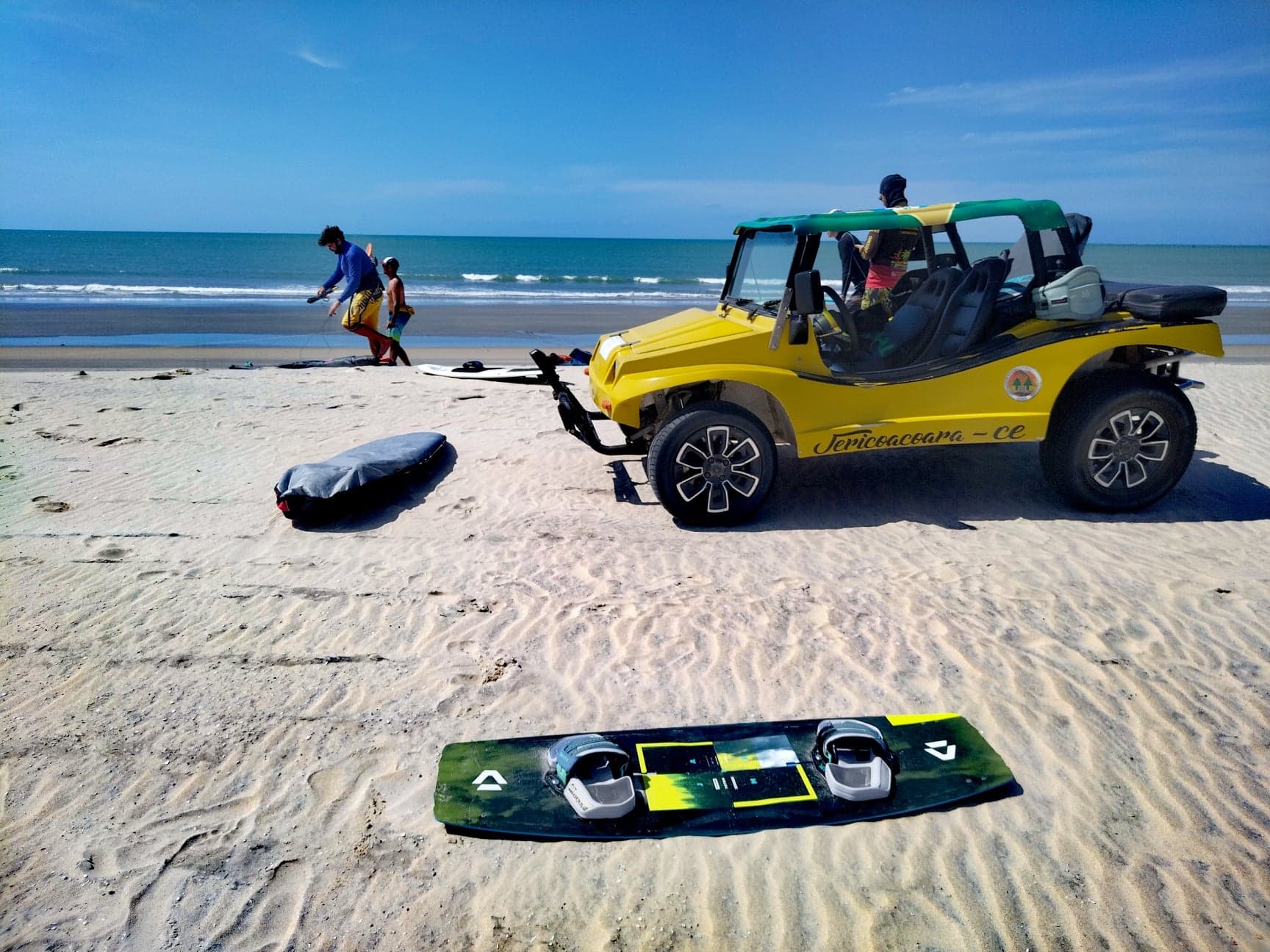
Cool Nights in Jericoacoara
Hey, want to know what it's like to spend a night in Jeri?
There's the romantic couple's option: Dune do Pôr do Sol, the perfect spot for sunset. FYI, it's not the original dune anymore, but if no one tells you, it looks just like the old one. Afterward, enjoy dinner, a stroll, and more if the mood strikes.
But among guys, after sunset, Jeri comes alive in a different way. Mobile bars, music, dancing, and light clothing... It's time to vibe to the Brazilian rhythm.
Quick Tips:
- Safety: Jeri is cool, but stay aware, especially at night.
- Dress Code: Stay cool and casual; it's hot, and the vibe is even hotter!
- Jeri is worth visiting on the weekend, but don't linger too long; it's easy to get lost there.
In short: Jeri by night is the perfect blend of chill, nature, and fun. It's like a party under the stars, with 100% Brazilian vibes. Ready to experience Jeri by night?
• Camocim, a little paradise!
This small fishing village in Brazil is nestled in the state of Ceará. It's not as well-known as Jeri, but trust us, it's a gem waiting to be discovered! Because it's less known than other spots, you'll have more space to yourself and less competition for the best waves.
Camocim is blessed with constant, strong winds, making it ideal for kitesurfing and windsurfing. The right-hand wave breaks from the point to the middle of the bay and is side-off, just perfect.
Camocim is a dream spot for kitesurfing and windsurfing enthusiasts. It's also a great place for anyone looking to discover authentic Brazil, tranquil and beautiful. If you're a fan of watersports and chill vibes, this little corner is for you!
• Atins, the truth is elsewhere
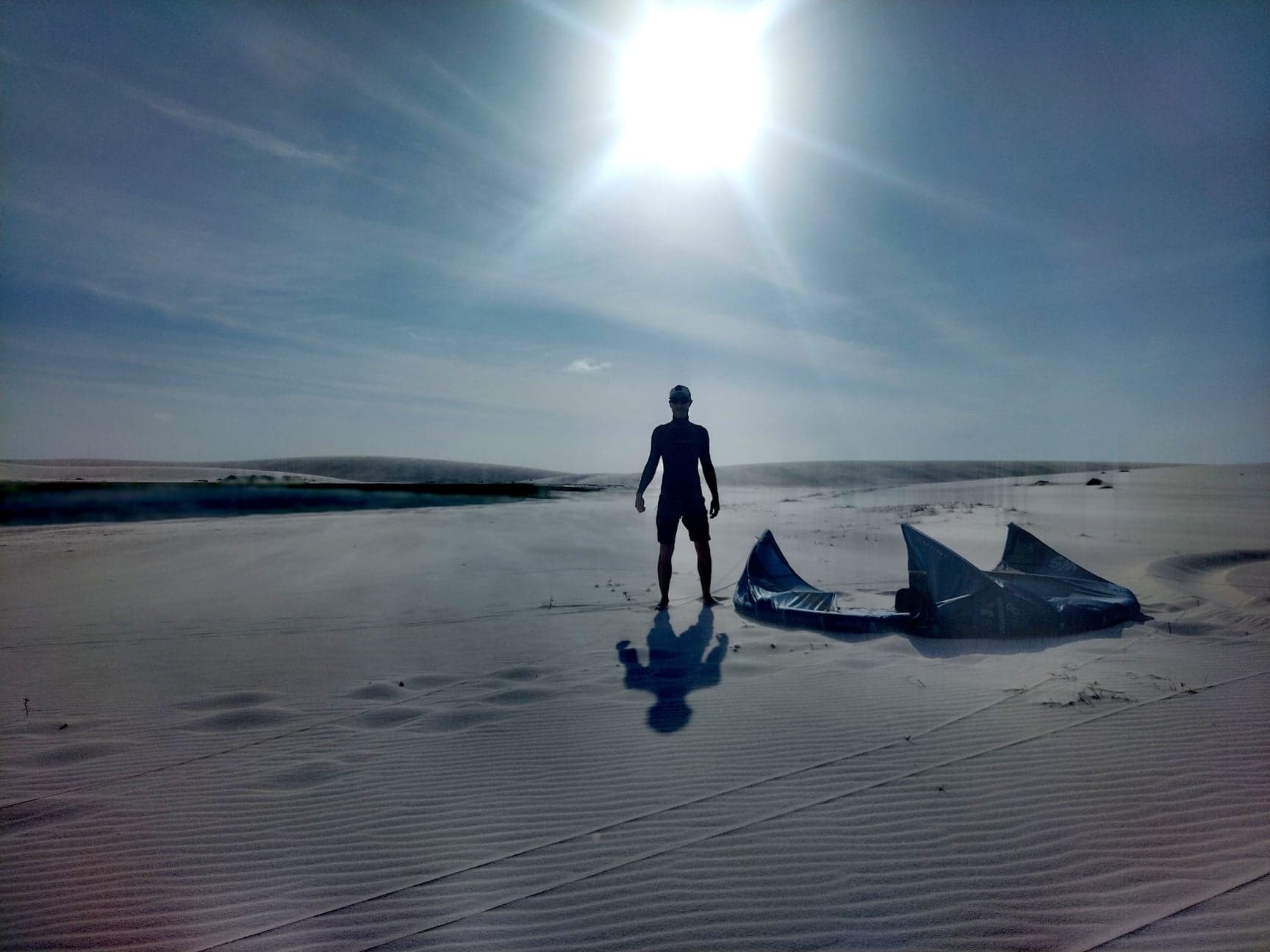
Though more remote, its spots are worth the detour for their exceptional natural beauty. If you knew Jeri more than 15 years ago, you'll find that same atmosphere of a fishing village with sandy streets.
In Atins, we found life very hard. Breakfast, kite in the river, kite at sea in the estuary waves, kite in the Lençois Maranhenses, nap, aperitif, restaurant... it's not easy to organize and sequence activities correctly.
Kitesurfing in the dunes of Atins is a strange and magical experience. For your information, prioritize the wet season to have the lagoons full.
To be honest, we were almost the only tourists. In December, the wind is less reliable, so the village almost exclusively comes alive at this time with Brazilians who come for a romantic weekend.
► Tips for a great kite trip in Brazil:
- Leave Fortaleza if you are concerned about safety.
- Don't kite for 5 hours on the first day.
- Take a buggueiro for your downwinds. It's almost impossible to rent a buggy anyway, so opt for the buggueiro. This lets you bring a spare kite if the wind picks up, carry water, and go where you wouldn't dare go alone. PS: The guys know how to launch and land kites.
- English isn't very useful with the locals.
- We all kited with all our kites. Sometimes between 11 and 12m² in the morning and 6 to 9m² in the afternoon.
- Protect yourself from the sun.
- Don't drive too fast to avoid back pain in the car, and there are many speed cameras.
- Do not drink tap water.
- Don't exchange money at the airport; credit card fees are often better than the exchange rate, even directly with restaurant owners or pousadas.
- Do not cheat on luggage weight when returning to Fortaleza.
► Our favorites:
► About Adrien Glissevolution
Adrien Glissevolution, a kitesurf enthusiast, shares his experiences and advice to help you have unforgettable adventures.
Find his travel guides:
For more information on equipment and travel, visit Glissevolution.
Frequently Asked Questions
Why choose Ceará for a kite trip?
Ceará offers a great mix of conditions and diversity. You'll find consistent winds around 30 knots and temperatures of 30 degrees morning and evening. There's a succession of spots, including the ocean and lagoons, as well as waves. The region is also known for its downwind culture, stretching from Paracuru to Atins, passing through Jericoacoara.
What gear should you bring to the Nordeste?
Bring kites from 6 to 12 m² depending on your body size, along with surf and twintip boards. Each person should have two bars, pig tails, spare fins, a repair kit, and a first aid kit. For protection, pack anti-UV lycra, sunscreen, a hat, and earplugs. Wing and funboard rentals are available on site.
How do you find accommodation and get around there?
Stay in a pousada, which are small local accommodations that include breakfast. Use a rental car or buggy to move between spots and follow downwinds. You can arrange return transfers from downwinds with a local buggy or 4x4.
Where can you check spot weather before you go?
For France and Europe, check the GlissEvolution Weather & spot guide platform. For Ceará, local forecasts like Windguru are the go-to reference on site.
Key Features
| Section | Key takeaway |
|---|---|
| In short, this guide | Ceará features 30-degree weather year-round, consistent 30-knot winds, and is a true downwind paradise. Explore spots like Paracuru, Taíba, Lagoinha, Icaraí, Jericoacoara, Camocim, and Atins. |
| Kitesurf in Brazil: Travel Guide by Adrien GlissEvolution | This is a report on a kitesurf trip to Brazil by Adrien from GlissEvolution and his three companions. |
| Why Choose Ceará for a Kite Trip? | Ceará offers a perfect blend of ideal wind conditions, diverse spots, natural beauty, and vibrant culture. |
| Above all, Ceará is the land of downwind! | A kite downwind in Brazil is more than just a kite session; it's a lifestyle. |
| Essential Gear | For our trip, we brought kites ranging from 6 to 12m², suitable for riders weighing 65 to 105kg. |
| Our quivers | Adrien rode an Eleveight RS + V 12m² and an Eleveight WS 8m², with a Duotone Volt surf. Pierre used a Duotone EVO/LAB 12m² and a Duotone Evo SLS 9m², with Duotone Jaime and Duotone Fish boards. Olivier rode a Duotone Evo… |
| What you don't need | You won't need a wetsuit, sand recovery boards (if you're comfortable driving on sand), or a radical wave kite surf board; a versatile or freestyle board will do the trick. |
| Accommodation: choose a pousada | Pousadas, typical of Brazil, offer a warm and friendly atmosphere, perfect for those seeking a more intimate stay. |
Frequently Asked Questions
In short: key takeaways from this guide
Ceará offers 30-degree weather year-round, with consistent 30-knot winds. It's a true downwind paradise, featuring spots like Paracuru, Taíba, Lagoinha, Icaraí, Jericoacoara, Camocim, and Atins. This guide by Adrien (GlissEvolution) covers all the essentials: gear, pousada accommodation, vehicle rental, and expert tips for a successful trip.
Kitesurfing in Brazil: Travel Guide by Adrien GlissEvolution: key takeaways
This trip report details a kitesurfing adventure in Brazil by Adrien from GlissEvolution and his three companions. Discover our detailed guide for a memorable kite trip in the Nordeste, specially designed for kite surf riders.
Why Choose Ceará for a Kite Trip?
Ceará offers a perfect blend of ideal wind conditions, diverse spots, natural beauty, and vibrant culture. Whether you're a beginner or a pro, it's an essential destination in any kitesurfer's life.
Ceará is also the land of downwinders! Here's what you need to know
A downwind kite trip in Brazil is more than just a kite session; it's a lifestyle. Imagine gliding over waves on turquoise waters, passing deserted beaches and dunes, and small fishing villages.
What should you know about essential gear?
For our trip, we brought kites ranging from 6 to 12m², suitable for riders weighing 65 to 105kg. We opted for surfboards and twintips, leaving funboards and wings aside.
Our quivers: what you need to know
Adrien rides the Eleveight RS + V 12m² and Eleveight WS 8m², with a Duotone Volt surfboard. Pierre's setup includes the Duotone EVO/LAB 12m² and Duotone Evo SLS 9m², paired with Duotone Jaime and Duotone Fish boards. Olivier hits the water with Duotone Evo SLS 12 & 9m² kites and an Eleveight WS 7m² wing, on Eleveight Process and Duotone Fish boards. Arthur prefers the Eleveight WS 9 & 6m² wings, and an Eleveight Escape surfboard.
Got a question about the gear mentioned here?
The GlissEvolution team rides what they sell. They are available to answer your questions in person at the Pornichet store or by phone.
Sources and limitations
Seasonal and destination benchmarks come from the Secretaria do Turismo do Ceará. Wind, tide, access, and safety conditions change depending on the spot and time of year. Always check local forecasts, current regulations, and instructions from schools or local authorities before riding.