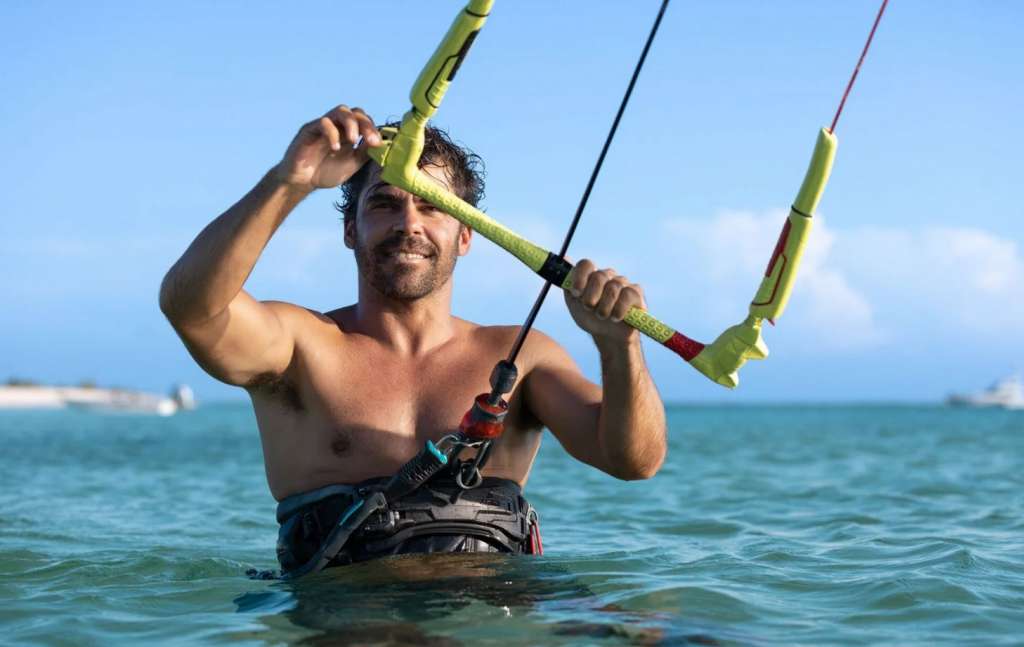
Guide updated January 2026 Choosing the right bar width and the right length of lines is essential for precise steering of your kite. The bars compared are in the Kite Bars section of the shop.
In summary
- An ill-suited bar can reduce precision, limit comfort, or even pose safety issues.
- In this guide, we'll explain step-by-step how to choose the ideal size and what criteria are important.
- 🎯 In short: A kitesurf bar is chosen based on your kite's size. Opt for a narrow bar (38-45 cm) for smaller kites (4-10 m²), and a wide bar (45-52 cm) for larger kites (10-17 m²).
- Bar width directly influences reactivity and steering precision.
Guide updated January 2026
Choosing the right bar width and the right length of lines is essential for precise steering of your kitesurf kite. An ill-suited bar can reduce precision, limit comfort, or even pose safety issues. In this guide, we explain step-by-step how to choose the ideal size and what criteria are important.
🎯 In short: This Guide
A kitesurf bar is chosen based on your kite's size: a narrow bar (38-45 cm) for small kites (4-10 m²), a wide bar (45-52 cm) for large kites (10-17 m²). Bar width directly influences reactivity and steering precision. This guide helps you find the optimal setup for your quiver. Written by the GlissEvolution team, with 21 years of watersports expertise in Pornichet.
In 30 seconds
- Kites 4-10 m² → Narrow bar (38-45 cm) for precision and comfort in strong wind
- Kites 10-17 m² → Wide bar (45-52 cm) for more leverage and better low-end power
- Varied quiver → Adjustable bar (38/45 or 45/52 cm) or two separate bars
- Short lines (20-22 m) → Maximum reactivity, freestyle, strong wind
- Long lines (24-27 m+) → More power in the low end, foil, race
Summary
- The fundamentals: what is a “bar size”?
- Why bar width should vary depending on the kite
- Recommendations: kite ↔ width correspondence
- Length of lines: an often-overlooked factor
- The latest bar technologies
- Other criteria to consider
- Practical advice and pitfalls to avoid
- Frequently Asked Questions
- Our selection of bars
The basics: what is a "bar size"?
The size of a kitesurf bar refers to the width between its two ends, generally ranging from 38 to 55 cm depending on the model.
A wide bar (50-55 cm) offers more leverage. Even the slightest hand movement causes a significant change in the lines' angle, resulting in a kite that turns quickly and reacts strongly.
A narrow bar (38-45 cm) requires larger movements to achieve the same reaction. This makes steering smoother and more precise, especially in strong wind.
✅ Key takeaway
The larger the kite, the wider the bar should be. And vice versa.
Why bar width must vary with kite size
There is no "universal" bar that perfectly suits all kites. Here's why:
Small kites (less than 10 m²) are naturally very lively. If you use a control bar that’s too wide, even the slightest input will make the kite uncontrollable, especially in strong wind. Think of it like power steering that’s too loose in your car: you lose precision around the center.
Large kites (11 to 17 m²) have a greater wingspan and react more slowly. A wider bar helps compensate for this. It gives you more responsiveness.
Riding comfort: A properly sized bar improves stability and reduces vibrations while riding, especially in choppy conditions.
Real-world example
An 8 m² kite controlled with a 55 cm bar will feel too twitchy and unpleasant. Switch to a 42-45 cm bar, and it becomes more stable and enjoyable to control.
GlissEvolution recommendations: kite ↔ bar width correspondence
| Wing Size | Recommended bar width | Why? |
|---|---|---|
| 4 to 9 m² | 38 to 45 cm | Precision and comfort in strong wind |
| 10 to 17 m² | 45 to 52 cm | More leverage, better low end |
| Varied quiver (e.g., 5-15 m²) | Adjustable bar (38/45 or 45/52 cm) | Versatility without needing multiple bars |
| Complete quiver on a budget | Two bars (small + large) | Maximum optimization for each kite |
Specifications
Narrow bar: 38-45 cm | For: 4-10 m² kites | Advantage: precision, comfort in strong wind
Wide bar: 45-55 cm | For: 10-17 m² kites | Advantage: responsiveness, low end
Length of lines: an often overlooked factor
Bar width isn't the only factor. The length of lines also influences your kite's responsiveness and power:
Short lines (20-22 m): These offer maximum responsiveness, making them ideal for freestyle and strong wind riding.
Standard lines (22-24 m): The best compromise for most situations, these are used in the majority of cases.
Long lines (27-30 m and more): You'll get more power at the low end, often used for foil or race disciplines.
Warning
A small kite with lines that are too long will feel slow and unpleasant to steer. Conversely, a 14 m² kite with short lines won't have enough wind window to throw big loops.
The latest bar technologies
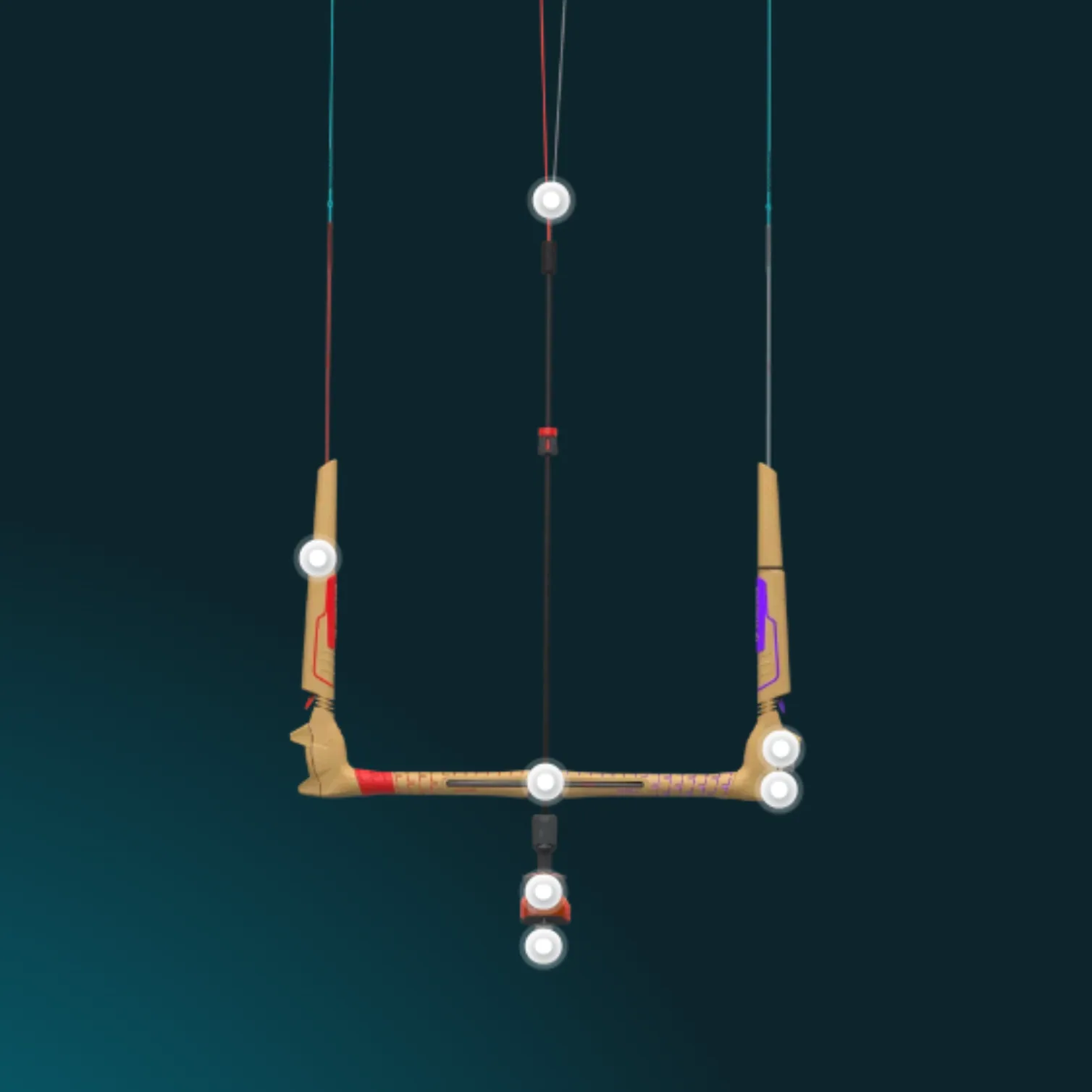
Click-In Safety System: This mechanism lets you reconnect your chicken loop with a simple click, complete with visual confirmation (like on the Duotone Click Bar). It's faster and safer.
Center Part Bearing: An integrated bearing in the center reduces friction on the depower line, giving you smoother steering and better longevity.
Adjustable bars: More and more models offer two sizes in one bar (e.g., F-One LINX: 38/45 cm or 45/52 cm). This is perfect for riders with varied quivers.
Adjustable V-Split: This feature allows you to set the height of the front lines' separation point (low V or high V), so you can adapt the bar to different types of kites.
High-performance lines (SK99, FLITE99): The latest generation fibers are more resistant and have less aspect ratio, resulting in more direct steering.
These innovations offer a real advantage, especially for riders looking to optimize their quiver and improve their riding comfort.
Other criteria to consider
Your chicken loop should match your riding style: a short one for freeride, a sliding one for surf, and a reinforced one for freestyle. Freestylers can pick between the freestyle chicken loop (standard size) and the wakestyle chicken loop (wider) for easier unhooking.
A sheathed depower line protects against wear and reduces friction. At GlissEvolution, we highly recommend it. The slight price increase is worth it to avoid frequently replacing the line.
Check the compatibility of your bar with your kites, paying attention to connector diameter and V-split type.
Practical Advice and What to Avoid
✅ Best Practices
- For a complete quiver, having two bars (a small and a large one) is always the best solution.
- If your quiver is 5-12 m², opt for the small bar.
- For a quiver of 9-15 m², prioritize the large bar.
- If you're buying your first kite, a 9-10 m² model, choose your bar based on the kite that will eventually complete your quiver.
Pitfalls to Avoid
- Don't choose a bar just to "cover all your kites" if it isn't adjustable.
- Avoid using a 55 cm bar on an 8 m² kite; your steering won't be precise enough.
- Do not overlook the length of lines according to your riding discipline
Always consider your riding style:
- Freeride → stability
- Freestyle → reactivity
- Big Air → leverage and power
- Foil → precision and smoothness
Explore Our Selection of Kite Bars
All brands: Duotone, F-One, Eleveight, Core, Slingshot, Flysurfer…
View kite bars Bar accessoriesFrequently Asked Questions
What bar size for kitesurf beginners?
When you're starting out, choose your bar based on the size of your beginner kite. Typically, a 10-12 m² kite pairs perfectly with a 45-50 cm bar. If you opt for an adjustable bar, you'll be all set as you progress.
Can one bar work for my entire quiver?
If your quiver is narrow (e.g., 9-12 m²), an adjustable bar may be enough. For a wide quiver (5-15 m²), two bars will truly optimize your steering on extreme sizes.
What lines length for kitefoil?
Foil riders often use longer lines (up to 27-35 m) to increase the wind window and get smoother pull. Extensions are available to adapt your bar.
Sheathed or unsheathed depower line?
We recommend the sheathed depower line. It protects the rope from chafing and prevents frequent replacement. The extra cost is minimal, and durability is much better.
Which chicken loop for freestyle?
For freestyle and unhooked riding, choose a freestyle or wakestyle chicken loop (wider). It makes re-hooking easier after tricks. For freeride or foil, a short chicken loop is enough.
Are bars compatible across brands?
Most 4-lines bars are cross-compatible between brands. Always double-check the connector diameter and the V-split type. If you're unsure, contact us with your gear's product codes.
Our Selection of Kitesurf Bars
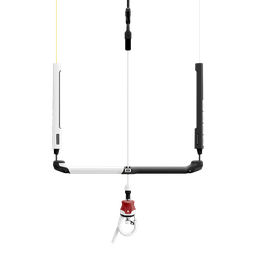
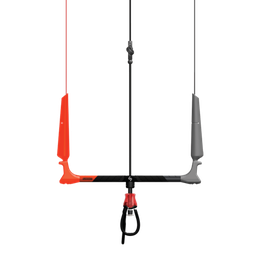
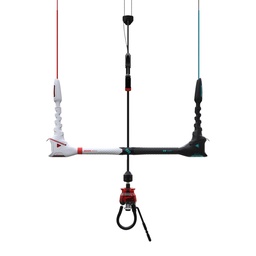
GlissEvolution's Take
Kitesurf bar: "Matching your bar size to your kite is crucial for precise, comfortable steering. For a versatile quiver, an adjustable bar or two dedicated bars makes all the difference."
Also Read
- 2026 Guide: How to Choose Your Kitesurf Kite
- Complete Guide: How to Choose Your Kitesurf Twintip
- Guide: How to Properly Adjust Your Kitesurf Kite Bridles
Related guides
- Getting Started in Kitesurfing: The Complete Guide to Begin
- Kitesurfing: Which Discipline to Choose? Freeride, Wave, Freestyle, Foil
- Choosing Your Kitesurf Gear: The Complete Hub for Kite, Bar, Board, Harness
- Choosing Your Kite: Sizes, Programs, and Brands
Need personalized advice?
We'll help you choose the right bar for your skill level and quiver. We'll also help you choose it for your riding style.
Pornichet Store, 2C Avenue du Gulf Stream, 09 62 64 74 77
Tuesday to Saturday: 10 am-1 pm / 3 pm-7 pm
Limitations of these guidelines
Bar width and line length alone aren't enough to confirm a setup. Always check your kite's manual, the release system, the V of the front lines, line length, and connectors before you hit the water.
These guidelines were developed by the GlissEvolution team, based on common configurations and manufacturer manuals. Your kite and bar manuals always take precedence.
Got a question about the gear mentioned here?
The GlissEvolution team rides what they sell and is ready to answer your questions directly.